
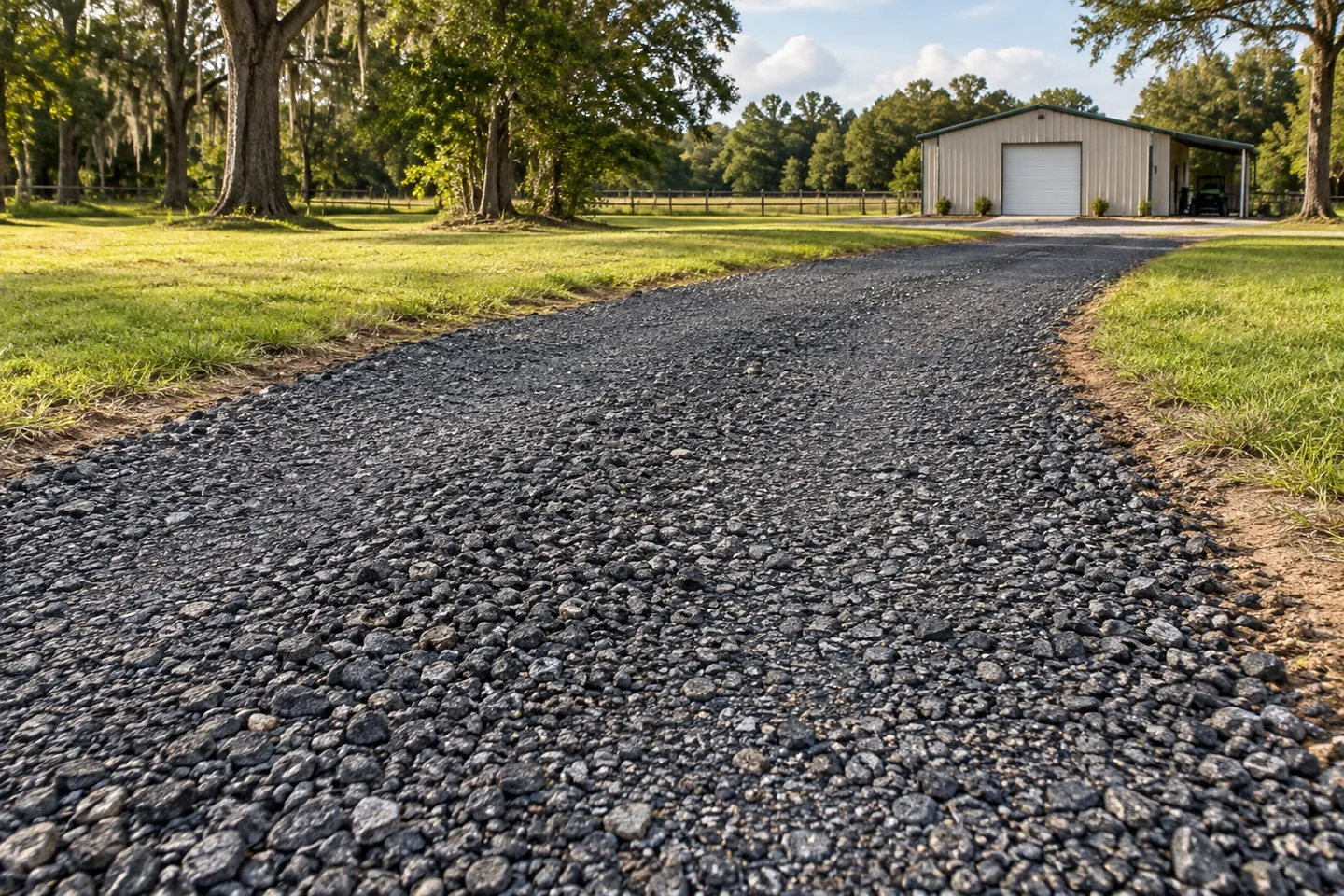
Millings describe recovered pavement material
Asphalt millings are material recovered when existing asphalt pavement is milled. The resulting material can be discussed for different reuse purposes, so the word does not identify a complete driveway construction by itself. It also does not mean that a granular surface at a property is the same as newly produced asphalt pavement. When an estimate mentions millings, ask what material will be supplied, what preparation and placement are included and what finished use the proposal is intended to serve. The material description and the installation scope should remain distinct.
The related term reclaimed asphalt pavement is broader and can appear in discussions of produced asphalt mixtures as well as recovered material. Do not assume every reclaimed-material offer is a millings access-surface proposal or that every millings proposal includes a new paved wearing surface. Ask the contractor to describe the actual result in ordinary language. A photograph showing dark granules can explain the material without proving the material source, processing or suitability.
Identify the use before choosing an access-surface option
Begin with what the area must do, rather than selecting a material solely because a low price was advertised. Describe household vehicles, parking, customer access, deliveries and the routes people walk. Include the entrance and retained surfaces on a simple sketch. Ask whether the proposed result fits those uses and what limitations need to be understood. The assessment should connect the recommendation to the property. A material that appears on a neighboring access route does not establish that the same scope, preparation or finished arrangement suits your location.
If the property already has a granular surface, explain the observations that prompted the request. Record where loose material, unevenness or water affects use without diagnosing the cause. Give the contractor broad photographs showing edges and connections, then closer views of the concern. If the existing area is paved, distinguish it clearly from any proposed extension. This prevents a discussion about a new granular parking area from being confused with replacement of an existing asphalt driveway. Keep optional areas separately identified so the quoted footprint and intended result remain understandable.
Make preparation and boundaries part of the proposal
Ask the contractor to describe the preparation included for the proposed location and how unresolved conditions will be handled. A price for material delivery alone is different from a price for an assessed installation. Clarify who is responsible for defining the work area and how changes are approved. Avoid relying on a generic rule that a particular amount of material will suit every driveway. The relevant quantities and construction decisions need the actual site and intended use, while the owner needs a clear written scope rather than a borrowed specification.
Retained concrete, public-road approaches, shared entrances and lawn edges all help define the work boundaries. Show those relationships in the inquiry and identify features that must remain. Ask what is included at each connection and whether another approval or review is needed. Do not assume ownership or permission because surfaces meet. Where the access route approaches a ditch or drain feature, record its visible arrangement without prescribing alterations. A millings proposal should not silently include or exclude changes to those features; the agreement should make the relationship explicit.
Discuss water, loose material and appearance as specific questions
If water collects or travels across the area, document when it was observed and which use it affects. Ask whether the proposed installation addresses that observation or leaves a separate question for review. Do not assume a recovered-material surface establishes a drainage solution. A dark granular layer may change appearance without proving what lies beneath or how water will behave afterward. Keep the contractor's recommendation and any exclusions in the project record so that the finished color cannot be mistaken for closure of every original property concern.
Ask what surface character is intended and what routine observations should prompt follow-up. A granular access surface should not be sold through an image of seamless newly paved asphalt without explaining the difference. Likewise, the presence of reclaimed binder in recovered material does not by itself establish that the installed surface is equivalent to a produced and placed asphalt mixture. Avoid universal claims that millings will always behave one way, become a particular finish or need no attention. Any performance promise should be supported by the actual proposed construction and written agreement.
Compare alternatives and retain a useful handoff
When weighing millings against another option, compare the same requested function and footprint. Ask what preparation, placement, retained connections and maintenance expectations each offer includes. A lower initial total may describe a different finished product rather than a cheaper version of identical paving. Keep optional future work recognizable as optional unless it is actually included. If the owner expects a later paved surface, ask how that expectation affects the current plan instead of assuming the first installation automatically forms a suitable foundation for any future construction.
At handoff, review the installed area against the accepted scope and obtain the actual instructions for use and follow-up. Retain dated photographs that show the connections and broad footprint, not only the material close up. If a later concern develops, record its location, timing and effect on access. A photograph cannot establish hidden preparation or material compliance by itself. Good records allow the contractor to review the specific issue while preserving the distinction between the installed scope, future recommendations and any performance commitments that were genuinely part of the agreement.
Use a millings-versus-paving decision record
Start with the function the area must serve and the finish the owner expects. Include parking, deliveries, pedestrian routes and any future paving goal. Ask the contractor to explain whether the proposed millings installation matches that request. Record the answer in ordinary language rather than relying on a smooth-pavement example image. The material term should help explain the proposal, not conceal the difference between a granular recovered-material surface and another type of completed construction being considered.
In the pricing field, distinguish material delivery from preparation, placement and the rest of the assessed installation. Mark the included footprint and optional areas on a sketch. Ask what happens if site review changes the recommendation or quantity and who approves the change. Compare another offer using the same requested function and boundaries. A cheaper total may represent a different finished result, so keep the actual tasks and limitations visible before deciding whether the prices are genuinely comparable.
In the connection field, photograph retained concrete, road approaches, grass edges and any relevant drain or ditch feature. Ask what the work includes at those locations and who resolves approval questions. Record water observations with timing and context, without assuming the material corrects them. If a future paved surface is part of the owner's plan, ask how that changes the current proposal. Do not treat an initial recovered-material installation as an automatic foundation for any later project regardless of assessment.
Finish with the actual use instructions, maintenance expectations and follow-up contact. After work, keep dated photographs showing both the overall footprint and individual connections. Record later concerns by location and effect rather than judging composition or concealed preparation from an image. Any promised performance should remain in the agreement where both parties can find it. The decision record should explain the installed scope and outstanding choices, while leaving unsupported claims about universal behavior or a guaranteed future surface out of the property file.
Questions about asphalt millings
Meaning in plain language
Asphalt millings are pieces of existing pavement produced during milling. A millings surface differs from newly placed asphalt pavement and may have different maintenance and finish expectations.
A practical example
If loose reclaimed material is proposed for an access area, clarify how it differs from a bound asphalt pavement and how drainage and maintenance will be managed.
Use the term in your project discussion
Clarify the desired finish, drainage and use before comparing alternatives.
Details that matter
- Surface expectations
- Dust or loose material
- Traffic
A mistake to avoid
A millings driveway should not be described as identical to a paved asphalt driveway.
Continue with the right next step
Property conditions determine the final scope. These planning notes do not replace a site evaluation. How to use our pavement guidance