
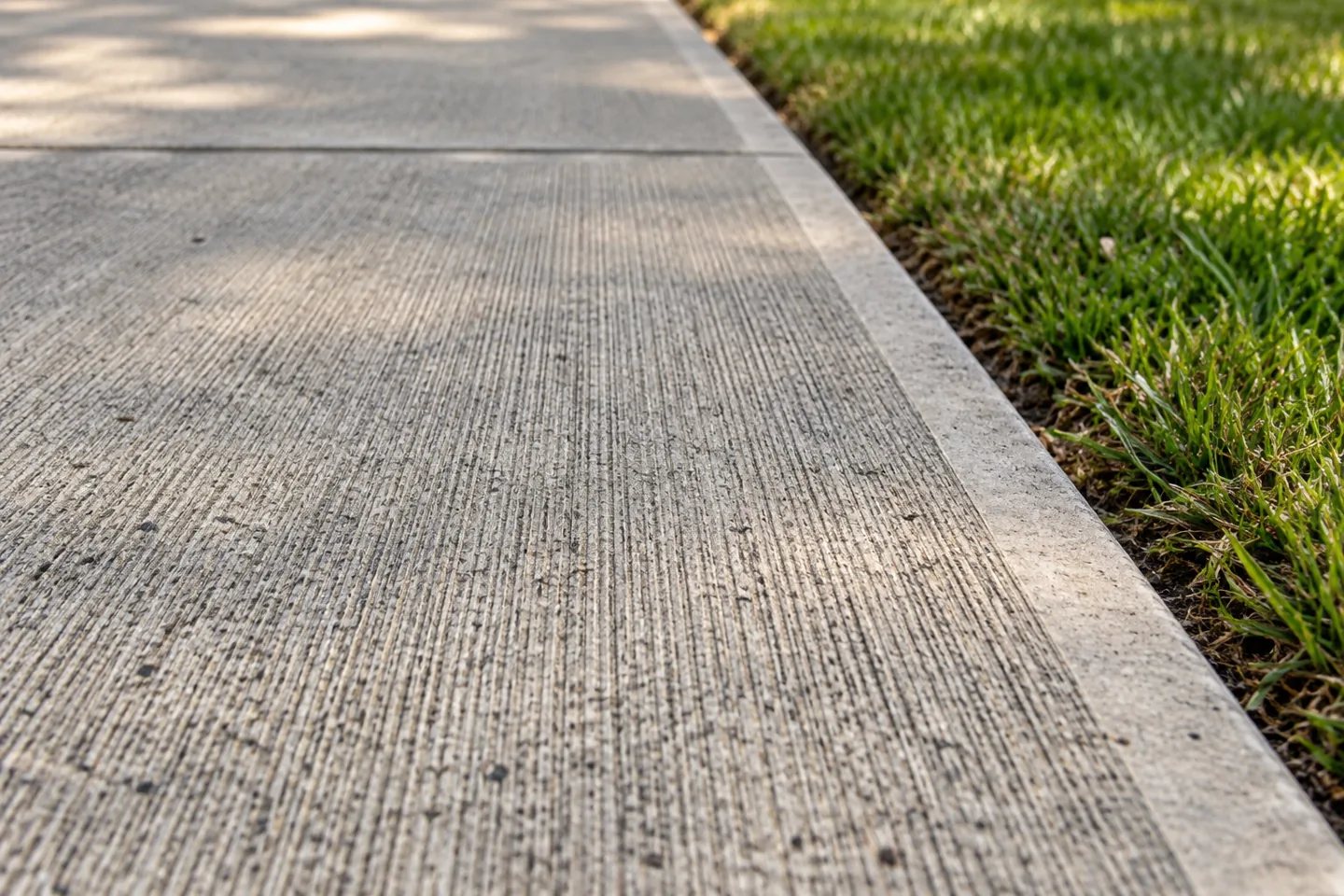
Broom finish describes a surface texture
A broom finish is a textured finish made during concrete finishing. The term concerns the visible surface rather than the entire pavement element. It does not describe the support, section, reinforcement or joint plan beneath and within the slab. An owner can prefer the appearance while still needing a complete explanation of the proposed concrete work.
Ask the contractor what texture is intended for the actual walking or driving use and how that expectation will be communicated. A short phrase in an estimate can leave uncertainty about appearance at edges, joints and transitions. This guide helps an owner discuss those details. It does not provide finishing instructions or establish a performance classification from a photograph of textured concrete.
Use an example to explain preference, not to invent a specification
A reference photograph can show the general appearance an owner likes: a finer texture, a more pronounced line or a particular relationship to a smooth border. Identify what the example is meant to communicate. Do not assume the same image also establishes dimensions, finish performance or the complete construction details for another property.
Ask the contractor to explain which visible features of the reference are included in the proposal and which may differ. Lighting, weathering and distance can change how texture looks in a photograph. Where appearance is important, a clearer agreed reference is more useful than a vague request for a nice finish. Keep that reference with the accepted scope so it remains part of the shared conversation.
Direction, borders and joints affect the visible pattern
Discuss the intended direction of the texture and how it relates to the area as a whole. A walkway, driveway and irregular pad may present different visual questions. Ask how the surface is intended to look near edges and around retained features. The owner can state a preference while the responsible professional considers the actual finishing work.
Also ask how the finish relates to the planned joints and any border treatment. A smooth-looking edge or framed panel in a reference image should not be silently assumed to be included everywhere. Mark the locations that matter to the appearance. Clarifying those details before placement is more practical than trying to redefine the visible pattern after the surface has been completed.
Describe the people and activities using the surface
Explain whether the area serves everyday walking, carts, vehicle parking or another actual use. Mention entrances and routes that connect to the proposed concrete. A contractor can discuss a more relevant finish when the activity is clear. A surface choice should not be made solely from a close-up photograph that excludes the way the property will be used.
Texture alone does not establish slip performance or accessibility. A route may have separate questions about grade, changes in level, joints, drainage and clear space. Identify those concerns rather than expecting the word broom finish to resolve them. If a particular assessment or project requirement applies, clarify who is responsible for it and how it is addressed in the accepted scope.
A finish does not replace drainage and transition planning
Show where the concrete meets a doorway, asphalt surface, existing sidewalk or another retained feature. Ask how the completed elevations and connections are intended to work. The texture description does not establish where water will travel or whether a transition is suitable. Those questions need to be visible in the proposal discussion.
If water or an uneven crossing is already a concern, document the location and timing separately from the finish preference. Ask whether the quote includes assessment or correction of that issue. A new textured surface should not be assumed to fix a problem outside the stated scope. Keep the desired appearance and the practical surface outcome connected without treating them as the same decision.
New work may look different from retained concrete
A new panel can contrast with older concrete in color, texture and weathering. Ask about that relationship before accepting a partial replacement. The owner should understand whether the work is intended to coordinate generally with neighboring panels or whether a more specific appearance commitment is actually included. Do not assume a repair will disappear visually.
Photograph the surrounding concrete in ordinary daylight when discussing a match. Explain whether you care most about the texture, edge treatment or overall consistency. A contractor may need to clarify the limits of a reference based on existing weathered surfaces. Keeping expectations specific is more useful than promising that every new and old area will look identical from all angles.
Keep curing and return-to-use instructions separate
A textured finished surface is not proof that the concrete is ready for walking, parking or another activity. Ask how care and access instructions will be provided for the actual project. The finishing description, curing responsibilities and permission to use the area are related project conversations, but they should not be combined into an assumed timetable.
Plan where vehicles, deliveries, children and pets will be while the area is protected. For a business, identify who will redirect other users and communicate changes. Follow the current instruction from the responsible project contact rather than relying on the appearance of the surface. If access needs change, ask for clarification before moving a barrier or using a route that remains restricted.
Later coatings and cleaning plans should be disclosed
Tell the contractor if the concrete is intended to receive a later coating or other surface treatment. The finish and later system need coordination rather than an assumption that any product can simply be applied over any texture. Ask which party addresses compatibility and preparation for that later work. Do not interpret this guide as a product recommendation.
Likewise, ask for the supplied care and maintenance instructions instead of choosing an aggressive cleaning method from a generic suggestion. If a concern about texture or appearance develops, document it before altering the surface. A changed surface can be harder to review against the intended finish. Keep any later work record with the original scope so the sequence remains understandable.
Compare finish wording alongside the full concrete scope
When evaluating quotes, place the finish description beside removal, support preparation, concrete section, joints, connections and access arrangements. Two offers that both say broom finish can still cover different areas and different work. Ask about missing items before treating the prices as equivalent versions of the same project.
If a reference image, border detail or specific appearance preference matters to approval, make sure it is acknowledged in the accepted description. Also clarify the process for changes if conditions differ during preparation. A complete scope comparison focuses on what will actually be built and how it will be used, rather than choosing a contractor from one familiar surface-finish phrase.
A useful owner example and inquiry
Imagine replacing a short walkway beside an older driveway. The owner likes a reference with a neat texture and smooth panel borders. The inquiry should show the whole walkway, existing concrete, doorway and adjoining pavement, then identify which appearance features matter. Ask the contractor to explain the included finish and how it meets those retained boundaries.
Send the address, use, labeled photographs and any planned later treatment with the request. After completion, retain the accepted reference, scope and care instructions with dated views in ordinary light. If another question develops, describe whether it concerns texture, color, a joint or a transition. That precision supports a useful follow-up without assigning a performance result or hidden cause from the visible finish alone.
A concrete comparison example
A useful finish record can be brief: identify the reference image, state which texture or border it illustrates and note any agreed limits. Keep the actual slab area and retained connections on the same record. This avoids an appearance preference being mistaken for a complete construction specification or a guarantee about a surface performance that was never assessed.
Questions about broom finish
Meaning in plain language
A broom finish adds texture to a concrete surface during finishing. Appearance, traction, drainage and intended use should be considered together.
A practical example
A finish sample concerns surface texture; it does not substitute for decisions about support, section, joints and water movement.
Use the term in your project discussion
Discuss the expected finish with the specific walking or driving use.
Details that matter
- Pedestrian use
- Finish direction
- Water movement
A mistake to avoid
Surface texture alone does not establish accessibility or slip performance.
Continue with the right next step
Property conditions determine the final scope. These planning notes do not replace a site evaluation. How to use our pavement guidance