
Describe the sheen before assigning a diagnosis
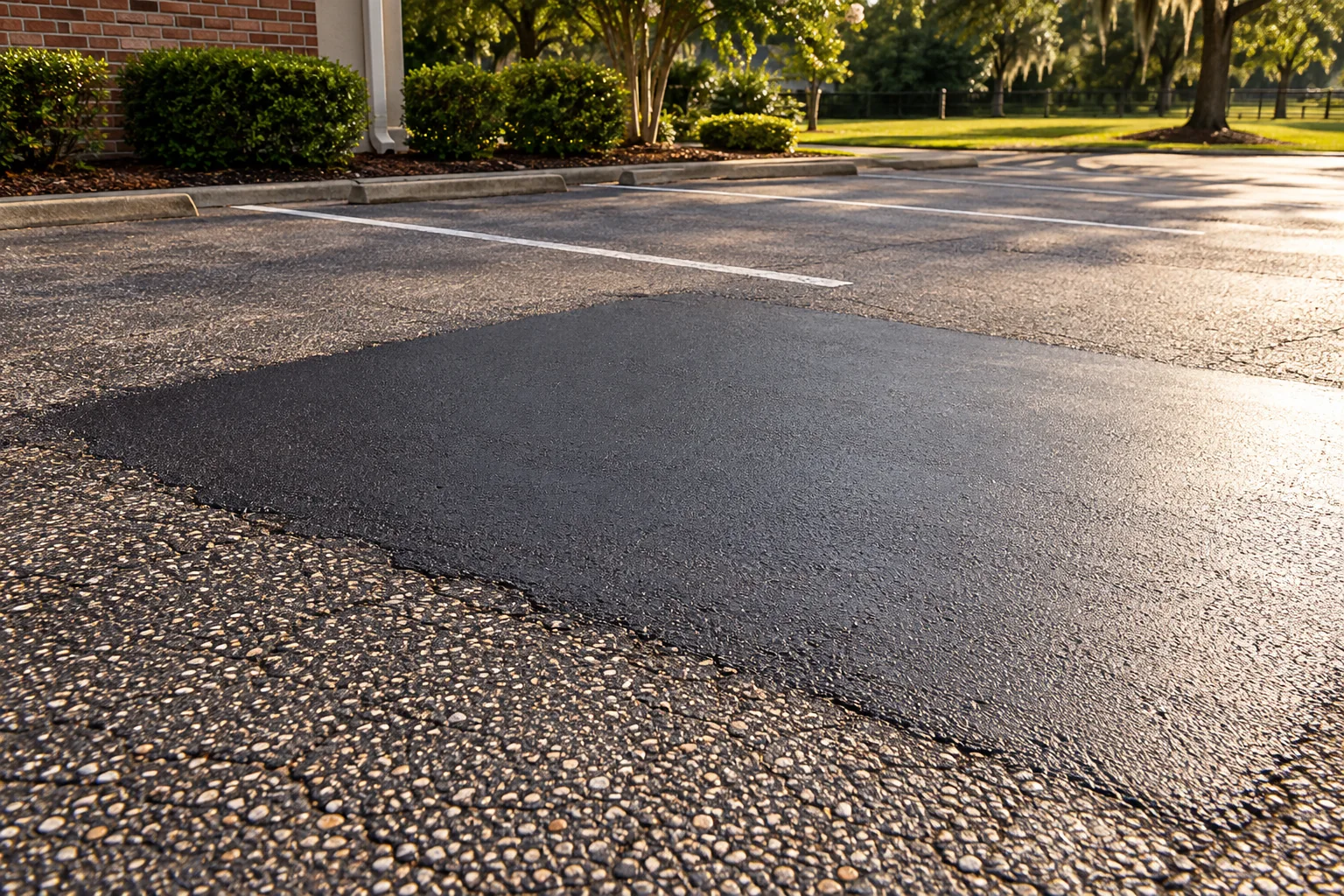
A shiny asphalt area deserves a surface-condition review rather than an automatic treatment for ordinary fading. Describe where the sheen appears, what surrounds it and when you noticed it. The concern may be visible only from a particular angle or more apparent under certain weather conditions. A photograph can locate the observation without establishing the cause.
FHWA's distress terminology includes bleeding, where excess binder at the surface can obscure texture and appear reflective. That is background vocabulary, not a diagnosis of every glossy private driveway or parking area. A surface photograph does not distinguish every possible material, treatment history or site condition. Ask the evaluator what observations support the actual finding.
Tell the contractor why the condition concerns you. A visual difference, an observed change under normal vehicle use and a reported operational problem are different information. State what you have actually seen rather than testing traction or driving repeatedly across the spot to create evidence. The site review can then address the surface and the appropriate next decision.
Record the location, weather and surrounding texture
Take a wide photograph showing the affected portion of the driveway or lot and a closer view that includes the transition to surrounding pavement. If the appearance changes with viewing angle, explain that. Keep the location clear on an overall image so the evaluator can distinguish one glossy patch from several areas with different patterns.
Note the approximate date, time and weather conditions you know. Say whether the pavement was dry when photographed and whether rain or a known spill was present. Do not estimate a surface temperature from the air temperature or identify a substance based solely on its color. Useful context does not require invented measurements.
If genuine photographs under different conditions are available, retain their timing and compare the same location. A change in light can change a photograph's appearance, so describe observations separately from the image. There is no need to touch a hot surface, collect material or perform a friction test for an initial request. Ask what examination is appropriate for the property.
Include traffic use and known treatment history
Identify whether the shiny area is in a wheel path, a turning area, a parking position or a less-used part of the surface. Explain actual braking and turning movements without assuming that their presence proves the cause. The relationship between use and location is useful information for the review, particularly if the concern affects a busy entrance or a necessary route.
Share known paving, patching, resurfacing or coating records for the affected area. A dark patch may be related to a documented activity, but appearance alone does not establish what was installed. If records are missing, say so. The contractor needs to know which facts are confirmed before recommending a surface activity or further investigation.
Describe any known spill separately from the sheen concern. Do not call every reflective area oil, and do not assume that every dry glossy area is the same pavement distress. If the material is unknown, identify it as unknown. A clear description helps avoid selecting a cleaning or coating process against a diagnosis that has not been established.
Ask for a condition explanation before a treatment
The recommendation should explain what the provider believes is occurring and what information supports that view. Ask whether more examination is needed before choosing maintenance or repair. This is different from demanding a definite diagnosis from photos. A useful initial conversation can identify uncertainty and the specific next step needed to resolve it.
Do not assume that adding another dark surface treatment is suitable because the surrounding pavement looks faded. The glossy location and the rest of the area may need different consideration. Ask how the proposed activity relates to the observed texture and known history and whether any area should be excluded pending review.
This guide does not prescribe a mixture adjustment, surface material, repair depth or application rate. Those decisions require the actual site findings and the provider's appropriate technical process. The owner's role is to provide accurate history, identify operational needs and obtain a scope that explains its purpose and limits before authorizing work.
Compare the affected area with the full project
If a broader maintenance or resurfacing project is being considered, make the glossy area visible in that planning discussion. Ask whether it changes preparation, treatment selection or repair boundaries. An estimate for the entire lot should not leave a known surface concern hidden inside a generic line item that the owner cannot interpret.
Compare alternatives by the condition they are intended to address. A proposal for a localized concern and one for broader rehabilitation can differ substantially in function and retained conditions. Ask what each includes, what remains uncertain and what evidence would change the recommendation. Price alone cannot explain those differences.
Clarify how findings during authorized work would be handled. The proposal should identify who receives the information and how a change is approved and priced. A surface view may not settle every relevant condition before work. An understandable change process lets the owner review new information without treating every uncertainty as either automatically included or a reason to accept an unexplained additional charge.
Plan operations without unsafe demonstrations
Tell the contractor which access routes and parking areas are necessary for the property. If site management has a concern about normal use, discuss appropriate interim arrangements with the responsible parties. Do not ask someone to brake sharply, turn aggressively or walk across a suspect surface as a demonstration for the quote.
Discuss any work closure and how users will be directed around it. The route and timing matter when the affected area is near an entrance or shared travel lane. Agree who communicates with household members, tenants or delivery providers and how changes in the sequence will be handled.
Follow the actual provider's instructions for reopening and use after any activity performed. Do not assume readiness from appearance or adopt a waiting period from another project. Keep the release and any restrictions with the scope, especially if several activities or providers are involved. A clear operational handoff is part of a useful completed project.
An example of keeping observations distinct
Suppose an owner sees a glossy patch on a dry warm afternoon and also has a known oil stain in a different parking position. Present the two locations separately. Give the contractor the actual spill history for the stain and the weather and appearance observations for the glossy patch. Ask what each area needs before a broader maintenance project is finalized. If both are described in one estimate, identify any difference in preparation, suitability or pending review. A similar dark color does not establish the same condition, and an image of one location should not be used as evidence for the other. This approach gives the provider a clear starting point and lets the owner understand the recommendation without performing a surface test or assigning a diagnosis from reflection alone.
Retain the condition record and agreed next step
Keep the original photographs, known weather observations and treatment records with the proposal. At closeout, identify the work boundary and any excluded or deferred area. Genuine completion photos should relate to that record rather than serve as proof that every surface mechanism or future performance question has been resolved.
If the sheen or another concern changes later, record its location and timing and share the observation with the provider. Describe any known new spill or activity without inferring the cause from one image. The earlier scope and actual history make that follow-up more useful than assuming every reflective appearance represents the same condition.
Contact Asphalt Solutions with the property address, safe photographs and known surface history. Most jobs are reviewed and carried out at customer job sites. Visits to the Slidell contact location require an appointment, and the listed hours mainly describe phone availability. Call or text to discuss the concern and the next property-specific review step.
Questions about shiny asphalt in hot weather
The direct answer
Shiny areas may warrant a review of binder at the surface, traffic and temperature conditions. A visual finish alone cannot determine what treatment is appropriate.
What to discuss before choosing a repair
Discuss whether additional surface treatment would help or complicate the condition.
What to observe and record
- Show shiny and normal areas
- Record when it appears
- Note braking and turning movements
A mistake to avoid
A shiny dark finish should not automatically be treated as superior pavement.
Continue with the right next step
Property conditions determine the final scope. These planning notes do not replace a site evaluation. How to use our pavement guidance
Background reading: FHWA pavement distress terminology. General guidance does not replace evaluation of the actual property.