
The decision in plain language
Roof runoff and the proposed pavement connection need to be discussed together.
The situation to discuss
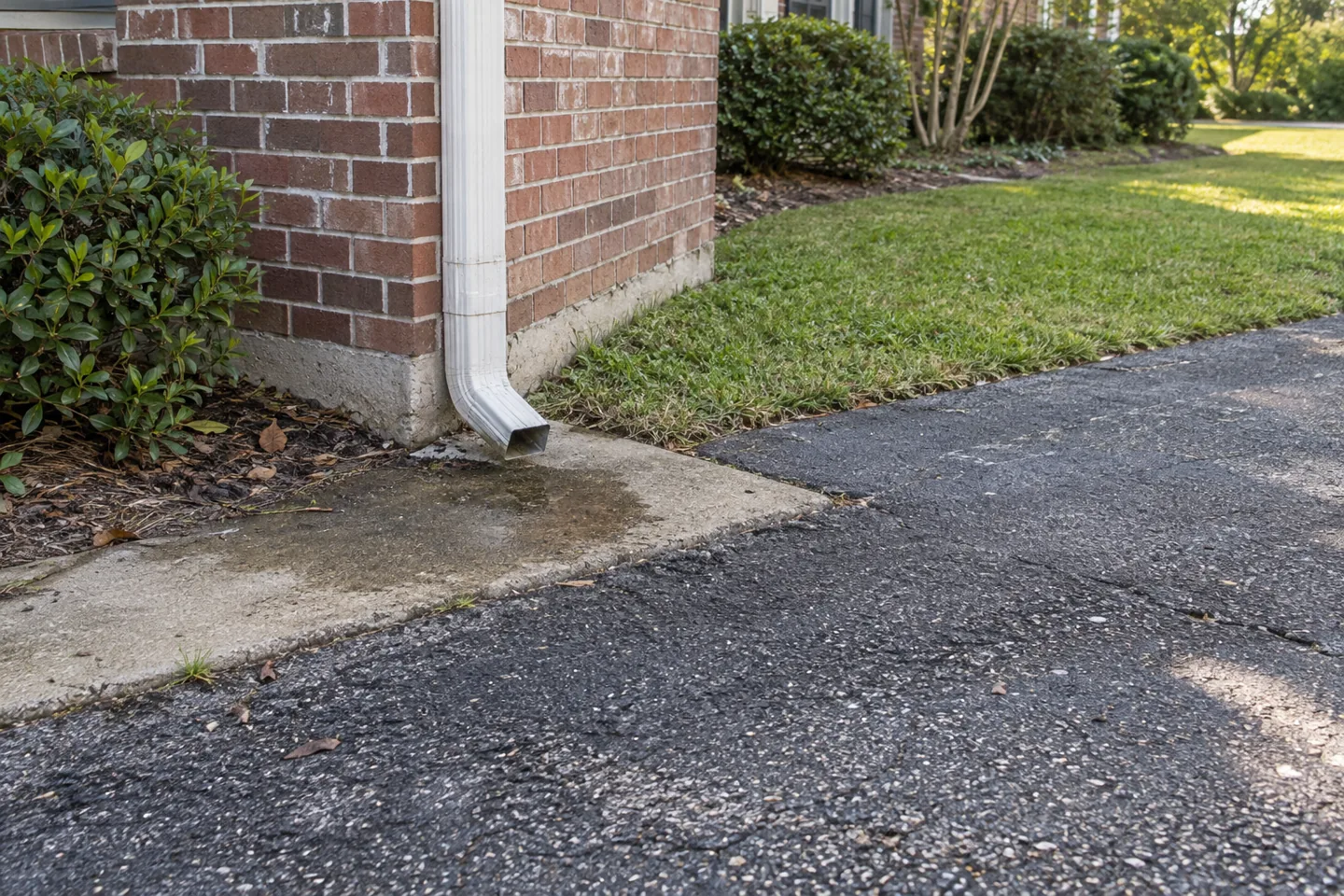
Show where the downspout discharges and how water moves across the driveway. Clarify whether outlet changes are in the paving scope or a separate trade.
Your five-point decision sheet
Use these headings on a simple sketch or in your project notes. Under each one, write the actual property observation, the question you still need answered and the person responsible for the decision. Leave an unknown item marked as a question instead of assuming it is included.
- Where is the visible outlet relative to the requested pavement area?
- What connection information is confirmed and what remains unknown?
- Which roof-water or drainage tasks belong to a separate provider?
- What observation timing and actual use matter to the estimate?
- Which retained-feature limits and coordination steps are accepted?
What not to assume
A patch beside the outlet does not change where roof water is discharged.
Turn the discussion into a clear work boundary
Keep a copy of the marked site sketch with the estimate. Identify the area being authorized and any adjoining feature that must remain protected or available. If the contractor recommends an investigation or a separate trade, record that next step before treating the proposal as a final solution. A planning guide helps you ask questions; it cannot establish hidden conditions from photographs.
When a decision changes the work, request an updated description showing what was added, removed or deferred. Confirm how any additional quantity will be measured and approved. Make sure the person giving the approval has authority for that part of the property. This prevents a useful site conversation from becoming a different job than the one the owner expected.
Bring the right information to the visit
Send your address, the overall project goal and photos showing this specific connection or operating area. Include a wide view for context and a closer view of the detail under discussion. Describe any timing or access constraint that affects the decision. Avoid placing yourself in traffic or entering inaccessible structures to collect information.
Locate the outlet and requested pavement area
Provide a wide photograph showing the driveway or parking section in relation to the building and visible downspout outlet. Use recognizable fixed features and the same section name in the estimate discussion. Explain where the proposed pavement work begins and ends and whether the outlet is inside or beside that area. A close image of a wet surface may not show how it relates to the roof-water question. The contractor needs a located request and the owner needs a clear reference for discussing retained features, offered pavement work and any separate building-service matter before accepting a proposal.
Describe the visible arrangement as it exists
Record the position of the visible downspout and outlet using ordinary property views. State what the owner actually knows about its connection and keep uncertain information distinguishable. A pipe disappearing beneath a surface does not reveal its entire route or condition. If a relevant drawing or provider record is available, identify its source and limitations when sharing it. This gives the estimate conversation useful existing information without replacing a needed assessment with a guess. Ask which feature questions must be resolved by the responsible building or drainage provider before they become assumptions in the pavement scope.
Keep roof-water and pavement tasks separate
Ask the proposal to distinguish the requested pavement work from any downspout, gutter or drainage-system task being considered. The presence of an outlet beside the driveway does not establish that the paving price includes changing it. Identify the contact who coordinates with the responsible building-service provider and record any separate work already agreed. Keeping those responsibilities clear helps the owner understand what has actually been priced. It also allows the contractor to discuss retained features and work limits without silently accepting an equipment or water-routing decision that belongs to another provider's review of the actual property.
Document timing when water is observed
If the owner has relevant photographs after rain or another known event, record the date, location and time or general window of observation. Explain whether the image shows water at the outlet, on the pavement or beside a retained feature. Keep the observation separate from an unverified diagnosis of its source or effect below the surface. Consistent views can support a focused question without establishing every connection. Share the actual information with the contractor and responsible provider so the proposed pavement review starts from what was observed rather than a confident explanation inferred from one close photograph.
Show the affected use of the property
Explain whether the outlet area is beside a garage approach, customer walkway, ordinary parking or another use relevant to the requested work. Identify the pavement section and the concern the owner wants considered first. A contractor can review the proposal more effectively when the owner connects the water observation with actual property use instead of simply requesting a different-looking surface. Keep practical access needs confirmed and make uncertain arrangements clear. This does not decide the appropriate repair or water-routing design; it gives the responsible parties a more useful starting point for assessing the site and discussing the offered scope.
Identify who coordinates another provider's work
Name the property contact who can confirm the existing building-service arrangement and obtain a response from the relevant provider. Keep that role distinct from the person who approves the pavement contract when they differ. If separate work is proposed before or after paving, ask the parties to review the sequence and retained features for their actual tasks. Do not assume two providers can use the same narrow area at the same time. Record the agreed coordination and the question that remains unresolved. This gives the owner a practical path for a decision without turning a pavement worksheet into instructions for changing roof-water equipment.
Review boundaries beside the retained outlet
Ask how the proposed pavement work ends near the visible outlet or connected retained feature. Use fixed landmarks, photographs and the provider's confirmed information to make that limit recognizable. Identify which feature stays in place and whether another item is deliberately outside the scope. If an unclear boundary affects preparation or the work sequence, resolve it before the date is approved. Keep the explanation with the proposal rather than relying on an informal recollection later. A clear edge-of-work discussion helps distinguish a completed pavement section from an unresolved roof-water or drainage-system question beside it.
Ask what the offered scope addresses
Before approval, explain the observed concern and ask the contractor how its proposed pavement work relates to that concern. Identify preparation, included items, retained features, exclusions and any separate review needed. Avoid treating an attractive surface finish as proof that every water question has been resolved. Keep the provider's actual explanation and the owner's decision together in the file. If information from another provider changes the proposed work, identify the approved revision and its effect on boundaries or scheduling. The agreement should describe the actual offered response instead of leaving roof runoff as an undefined expectation attached to a general driveway price.
Keep preparation and access instructions specific
Ask which ordinary movable owner items or parked vehicles need to be cleared from the agreed section and who performs that task. Keep fixed building features and specialized provider preparation distinct from routine clearing. State the location and deadline confirmed for the owner's responsibility. The contractor should receive a recognizable description of the area the property has agreed to provide, with the retained outlet and coordination questions still visible. If the arrangement changes, update the affected instructions through the approved contact path instead of assuming a previous driveway preparation message covers a different provider's later task.
Save the connected property record after work
Keep the accepted pavement limits, visible outlet photographs, confirmed provider information, coordination decisions and provided instructions together. Identify any separate building-service task or drainage question that remains open. If a later water observation matters, add its date, location and recognizable view without converting it into a hidden-condition diagnosis. For an estimate conversation, send Asphalt Solutions the address, pavement and outlet photos, actual observation timing and authorized contacts. Explain the requested work and the particular connection question needing review. A focused file supports the project discussion while preserving the difference between pavement work and the responsible provider's roof-water decisions.
Questions before you approve the work
Discuss the actual property and work limits
Send the property address, current photographs, intended use and access needs. Keep planning with these related decisions.
- Recording a puddle after different rain events
- Checking a pavement edge beside a drainage ditch
- Drainage and connection decisions
General roof-water background: EPA green infrastructure information. This owner worksheet does not prescribe an outlet change for the property.
Reviewed October 14, 2026. Owner preparation guidance; the accepted proposal defines the actual work.