
Match the issue list with the current authorization
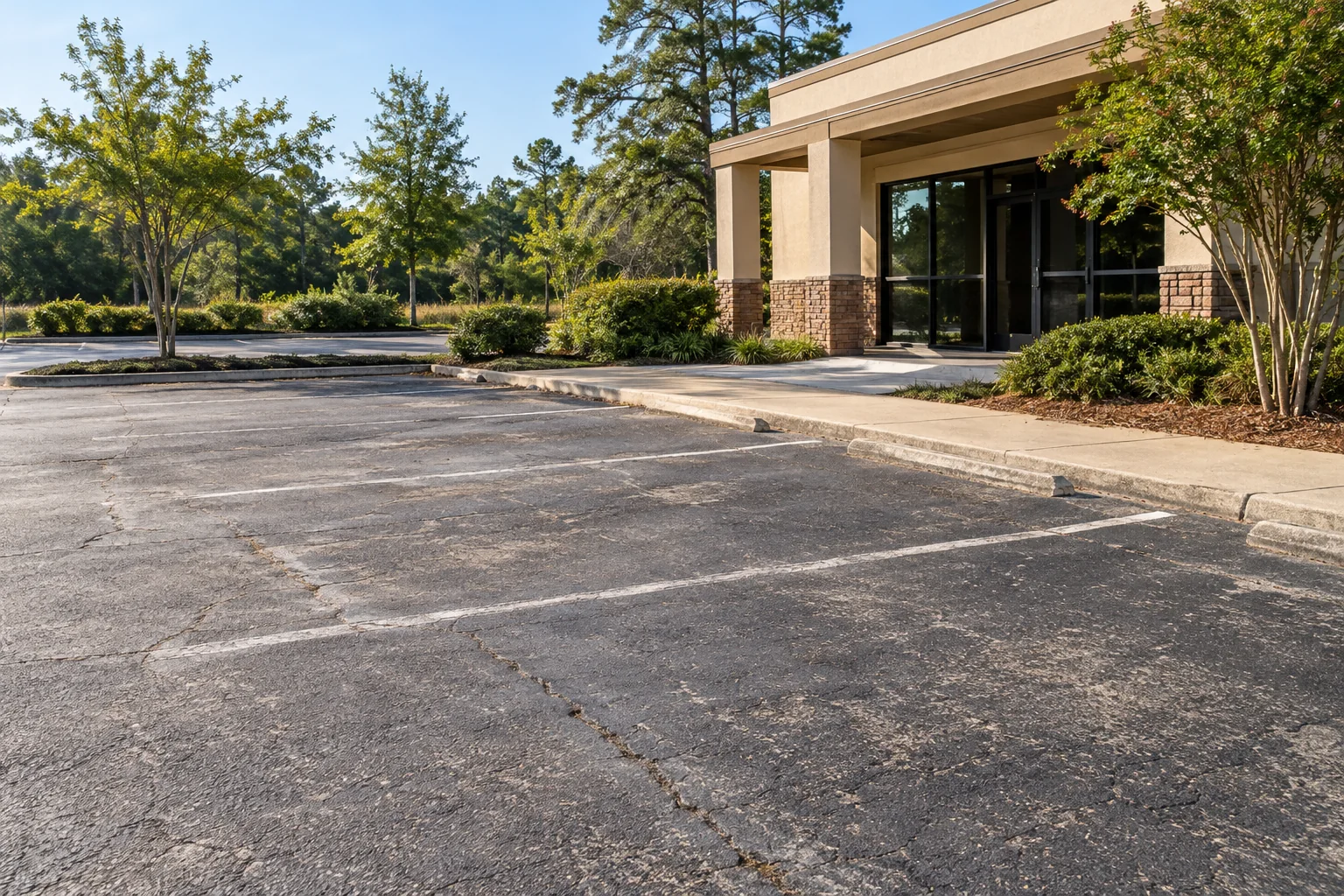
For a Mandeville business lot, keep each observed issue connected to a location and an actual scope decision. A property manager may identify several concerns while only one area is proposed for the current phase. State which items are being evaluated, which are approved and which remain deferred. A marked photograph can organize the discussion without implying every mark is an authorized construction boundary.
If a tenant or service provider requests another task, use the agreed approval path before changing the work. Explain any effect on the phase, access arrangement or related responsibility. The people managing arrivals need the current authorized plan, not a collection of separate suggestions that have not been reviewed together.
At closeout, compare the completed activities with that scope and retain genuine photographs, approved changes and actual release instructions. Identify a related-provider handoff or deferred area separately. This gives the next property manager a usable record without assuming every surface visible in an image was repaired or every water-related question was resolved.
Call or text Asphalt Solutions with the actual Mandeville property address, current issue list and operating constraints. Most work takes place at customer job sites. Slidell contact visits require an appointment; listed hours mainly describe phone availability. Coordinate the site review and actual construction sequence directly before communicating dates or access arrangements as final.
Start with how the Mandeville property operates
A business parking lot is an arrival route, a walking area, a delivery space and part of the daily operation. The first repair question should describe how the affected area is used. A depression at a quiet corner and damage at the only entrance create different operating decisions even when the visible repair area is similar.
This guide helps Mandeville business owners organize an inquiry. It does not claim that every local property has the same soil, drainage or pavement problem. Asphalt Solutions discusses the actual address, surface and access needs before a project scope is established. Existing service coverage is not a promise of a particular appointment or construction date.
Create a location-based issue list
Use labels people on the property recognize: main entrance, delivery turn, west storefront or collection enclosure. For each issue, include a safe wide photograph and a detail photograph when useful. Record whether the concern affects vehicle travel, walking, parking availability or water movement.
Keep the observation separate from the requested solution. For example, write that water remains beside the storefront after nearby pavement dries, rather than declaring that the entire lot needs replacement. This gives the contractor information to investigate without requiring a manager to diagnose hidden conditions.
Potholes and recurring patches
For missing material, record the surrounding cracks and earlier repairs. Explain whether damage returns at the same location and whether heavy vehicles turn or stop there. Ask what area the proposed repair includes and whether related conditions need evaluation before the patch is selected.
An immediate operating response may differ from a planned repair. The property operator should address unsafe access while the work is arranged. Discuss any proposed temporary measure as a defined short-term objective, rather than assuming it provides the same result as removal, evaluation and a broader repair.
Water near entrances and walking routes
Include the whole water route in your notes. Show nearby roof outlets, inlets, curbs and the direction water appears to move. A close photo of a puddle can hide the entrance immediately beside it. Date observations and explain approximately when they were taken relative to rainfall.
Do not enter drainage structures or ask staff to stand in traffic to gather information. If a concern affects building access, identify the person responsible for coordinating the property response. Ask which drainage or connection work is included in a pavement proposal and which needs separate evaluation or another trade.
Turning and delivery areas
The truck route can matter as much as the parking stalls. Identify deliveries, collection service, service vehicles and the tightest turns. Give the contractor known vehicle types and frequency. If deliveries will change after a tenant turnover, include that planned use before choosing the work.
Map places where vehicles stop while waiting for a gate or unloading space. These details help the discussion move beyond a generic commercial-lot description. Do not prescribe a construction detail from an online example; ask how the proposed scope addresses the use you have described.
Edges and adjoining features
Record damaged pavement beside landscaped islands, walls, concrete walks and unpaved shoulders. Show whether vehicles routinely reach the edge. Ask where removal ends and how adjoining features will be protected or connected. A parking-lot quote does not automatically include every curb, inlet or walkway.
Identify responsibility for utility covers and equipment controlled by another party. If separate work must happen first, keep the sequence in the project notes. This prevents a repair boundary from being treated as permission to alter a feature that the contractor or property manager does not control.
Parking lines belong to a reviewed layout
If surface work will affect markings, ask how the layout will be reviewed and restored. Include entrances, walking routes, loading areas and any existing accessibility-related features. Do not assume copying the old lines establishes compliance or that a paving contractor’s photo review is a complete accessibility assessment.
Where accessibility or design questions apply, the responsible owner should obtain the appropriate review. Keep that responsibility separate from the marking installation scope. Confirm whether restriping is included, optional or coordinated separately, and when it can occur in the work sequence.
Plan phases around real operating windows
List opening hours, deliveries, collection times, shift changes and events that affect access. A lot that looks empty during a site visit may be essential during the morning rush. Ask which areas could remain available and which routes must close for the proposed work.
Do not promise tenants uninterrupted access before the contractor has reviewed the sequence. Keep alternatives practical: where visitors will enter, where staff will park and how deliveries will be handled. If the only entrance is affected, that constraint needs a direct discussion rather than a generic note to keep the business open.
Give notices that answer the next question
A useful notice identifies the affected area, expected timing, alternate route and contact for updates. A date alone leaves customers and staff guessing where to go. Coordinate the message with the actual work plan and update it when the plan changes.
Ask who will maintain signs or barriers and communicate a revised schedule. Make sure notices reach delivery dispatchers and recurring service providers, not only tenants. Avoid announcing a reopening time until the contractor’s instructions for the actual work are available. The property manager’s communication plan and the construction sequence should describe the same access arrangements.
Compare proposals by operating impact and scope
Review the mapped repair areas, preparation, materials, connections, exclusions and additional-work approval process. Then compare closures and responsibilities. A proposal requiring one operating interruption may differ from another using several phases. Those differences should be understood alongside the price.
Separate optional maintenance or marking work from required preparation. Ask which remaining conditions are outside the proposed result. Keep written approvals clear when a tenant requests work but the owner must authorize it. No one should have to infer whether a site conversation changed the contract.
Keep a closeout record the next manager can use
Save the final marked scope, approved changes, completion date and return-to-use instructions. Label photographs with the repaired location. Record any area deliberately deferred and the follow-up questions left open. This makes a future repair discussion easier if staffing or property ownership changes.
Ask for applicable written terms rather than assuming all work has identical coverage. The record is an account of what was agreed and performed, not a certification that every part of the lot is sound. If a concern returns, provide the history and dated observations for the next assessment.
Questions for business owners
Keep authorization ahead of tenant requests
Before the visit, identify who owns the affected area and who can approve spending. A tenant can describe an access problem without having authority to change the lot. Keep the owner, manager and contractor using the same scope version when a request becomes authorized work.
Discuss the actual property
Plan a commercial project or request a project quote. Include the address, your goal and safe photos. Call (985) 788-0493 if you prefer to begin by phone. An inquiry does not confirm price or a construction date.
Reviewed October 8, 2026. Owner planning guidance; no property-specific diagnosis, engineering specification or completed-project claim. Guidance and image-source policy.