
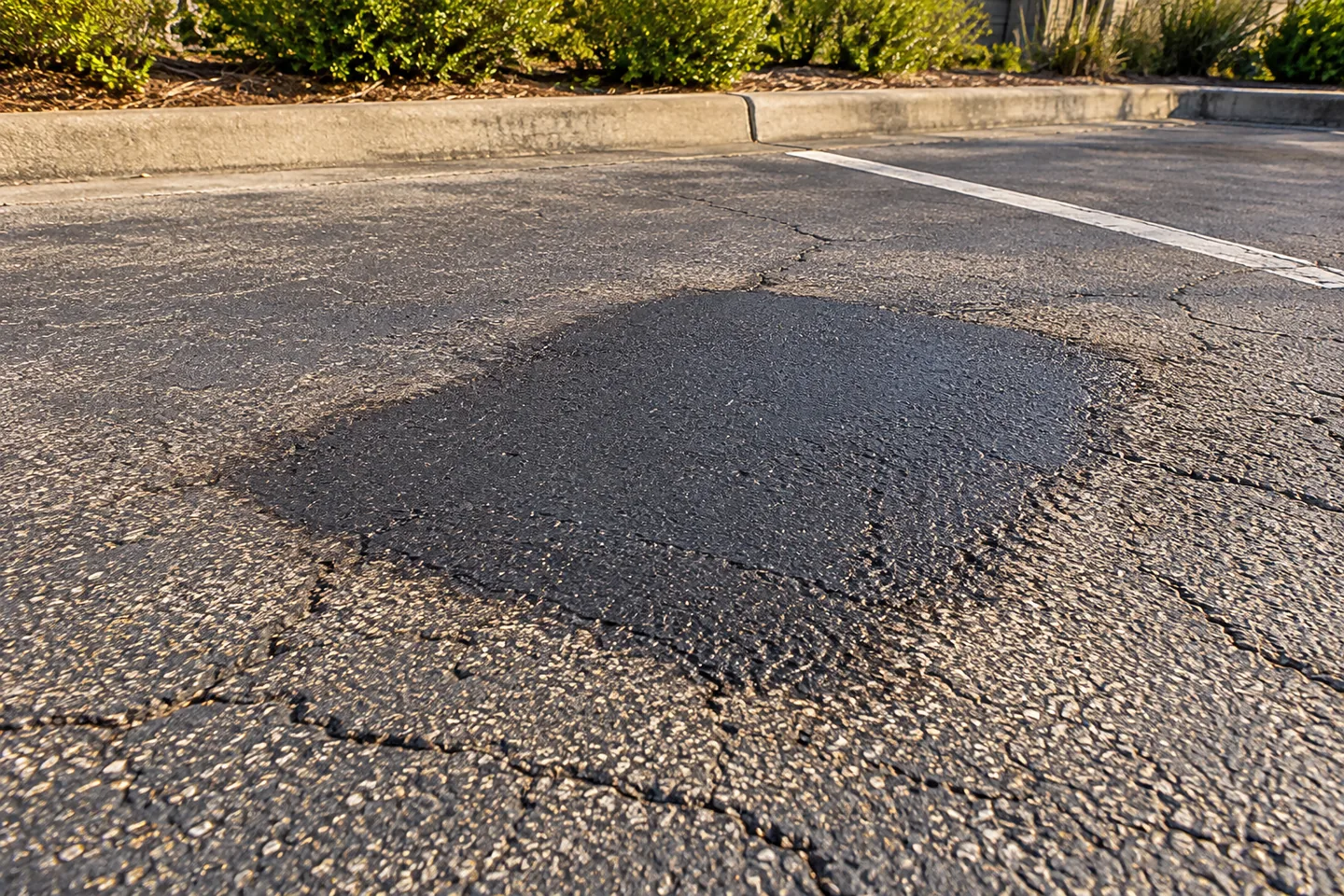
Describe the shiny surface before naming its cause
Bleeding describes asphalt binder appearing at the pavement surface in a way that can make an area look smoother or shinier than neighboring pavement. It is a technical condition term, not a conclusion that every dark patch is bleeding. An owner should first describe the visible area, its location and when the appearance was observed. A property assessment is needed to distinguish the relevant surface condition and discuss an appropriate recommendation.
Water, staining, polished-looking aggregate and visibly different repair material can affect appearance too. A close image of a shiny spot may leave those possibilities unclear. Show the wider dry surface when it is safely available and share known observations rather than guessing. If the area was wet or recently treated, include that fact. The inquiry should make the circumstances understandable instead of assigning a binder-related explanation solely from reflection in a photograph.
The word bleeding does not identify a complete repair operation. A proposal using it should explain what condition the contractor assessed, what work is offered and why that operation is recommended. An owner does not need to prescribe an additive, material mixture or application method from a glossary. The useful question is how the proposed work addresses the evaluated area while accounting for retained pavement, surrounding features and the property's actual use.
Record appearance in its ordinary setting
Take a wide view locating the smooth or shiny-looking section, then a closer view where safe. Include adjoining pavement with a different appearance and a fixed feature such as a curb or building corner. Note the date, whether the pavement was dry and the ordinary weather context. These details help the contractor interpret the observation. They do not transform an image into a test of binder content or establish a hidden construction history.
If earlier photographs show the same section, keep them with their known dates. Record whether the area appears more extensive or whether the concern was observed under different weather conditions. Avoid comparing unmatched lighting as though it proves material movement. A reflective surface can photograph differently at different angles. Consistent location records support the site discussion while keeping actual changes separate from the way a camera captures light.
Do not step into traffic, touch hot pavement or drive across a suspect section to demonstrate the condition. Use the property's normal safety and access arrangements if the area presents an operating concern. Photographs and known history are enough to begin an inquiry. The contractor can discuss what assessment is appropriate without an owner performing informal material tests that may create risk and do not establish a reliable technical result.
Keep stains and maintenance history separate
Share any verified history of a spill, cleaning, coating or previous repair in the location. These events can help explain why appearance deserves further review, but should not be treated as proof of the current condition. If no history is known, state that clearly. A darker section may have several explanations, and choosing a cleaning operation before understanding the concern can confuse the scope the owner actually wants considered.
If a stain is suspected, describe it as a suspected stain rather than changing the diagnosis to bleeding. Conversely, a shiny appearance should not prompt an assumption that oil must be present. Ask how the contractor's assessment informs the recommended work and whether a separate cleaning or maintenance item is being offered. Keep those responsibilities distinct. The glossary is intended to clarify questions, not prescribe chemical treatment of an unidentified surface condition.
Where sealcoating or another surface operation is planned, disclose the observation before accepting a proposal. Ask how it affects suitability and preparation for that operation. The contractor should explain what is included, what is excluded and any further assessment needed. A general promise to make the lot look darker does not establish that the evaluated condition has been addressed or that every different-looking section will receive the same treatment.
Compare the actual surface-work recommendation
Read the proposed work in plain language. Identify the area considered, the offered preparation and the operation intended to address the concern. Ask how retained pavement is treated at the boundary and whether other repairs are included. Different contractors may recommend different purposes or amounts of work. A condition label inside both estimates does not make them equivalent, so compare their operations and limits before comparing the final prices.
If the recommendation depends on findings during preparation, establish a change procedure. Ask what information will be documented, how additional work is priced and who may approve it. A limited surface-work item should not become an open-ended repair promise, and extra work should not proceed on an assumption of owner consent. The agreed process should make it practical to discuss a discovery while keeping the accepted initial scope identifiable.
Check the nearby connections. Curbs, concrete, drainage features, parking markings and pedestrian approaches may be retained or handled by separate parties. Ask which protection, adjustment or restoration is included. A shiny-looking section near an entrance can affect the operating conversation without automatically requiring every neighboring feature to be renewed. The proposal should identify the actual boundary and responsibility for the work offered at that location.
Include route use and closeout records
Explain how vehicles and pedestrians ordinarily use the affected section. For a business, include stopping and turning movements, deliveries and the approach to tenant doors. For a home, identify the garage route and parking area. Share known use changes without presenting them as proven causes. This gives the assessment practical context and helps the contractor discuss the work sequence and restrictions for the actual property.
Review the access arrangements for the proposed operation rather than assuming a small dark patch creates a small closure. Its location may affect the only entrance or a route used by service vehicles. Ask who communicates the closed area and who gives reopening instructions. The actual work and conditions determine those directions. Do not treat a dry or changed surface appearance as independent permission to resume every ordinary activity.
Keep the accepted recommendation, approved changes, dated location photographs and care instructions after work. At closeout, discuss the visible boundaries and any listed follow-up items. If appearance later changes, record the section and conditions without diagnosing material content or assigning fault from a picture. An Asphalt Solutions inquiry should include the actual project address, safe photographs and known maintenance history so the offered assessment can address the specific concern.
Shiny-surface inquiry worksheet
Record the location, date, dry or wet condition and ordinary weather context of the shiny-looking area. Add a wide view showing neighboring pavement and a safe closer view of the appearance. Write verified coating, cleaning, spill or repair history in a separate note. Where the history is unknown, keep it unknown. A reflective photograph should not fill gaps in the record with an assumed binder condition or stain.
Ask the contractor what condition was assessed and which offered operation addresses it. Record preparation, boundaries, limitations and any associated repair separately from the condition name. Add access instructions and additional-work approval where needed. At closeout, retain the accepted explanation and location photographs. This worksheet makes the scope understandable while separating visual appearance, assessment and work rather than treating a darker patch as proof of one concealed material cause.
Questions about bleeding
Meaning in plain language
Bleeding describes excess asphalt binder appearing at the surface. The affected area may look shiny and behave differently from adjacent pavement.
A practical example
Record shiny areas and the conditions when they appear. Do not identify a surface condition by color alone or walk into live traffic to inspect it.
Use the term in your project discussion
Discuss the condition before applying another surface treatment.
Details that matter
- Shiny areas
- Temperature conditions
- Traffic pattern
A mistake to avoid
A shiny asphalt surface is not always a sign of a superior finish.
Continue with the right next step
Property conditions determine the final scope. These planning notes do not replace a site evaluation. How to use our pavement guidance