
A depression is a low area, not a complete diagnosis
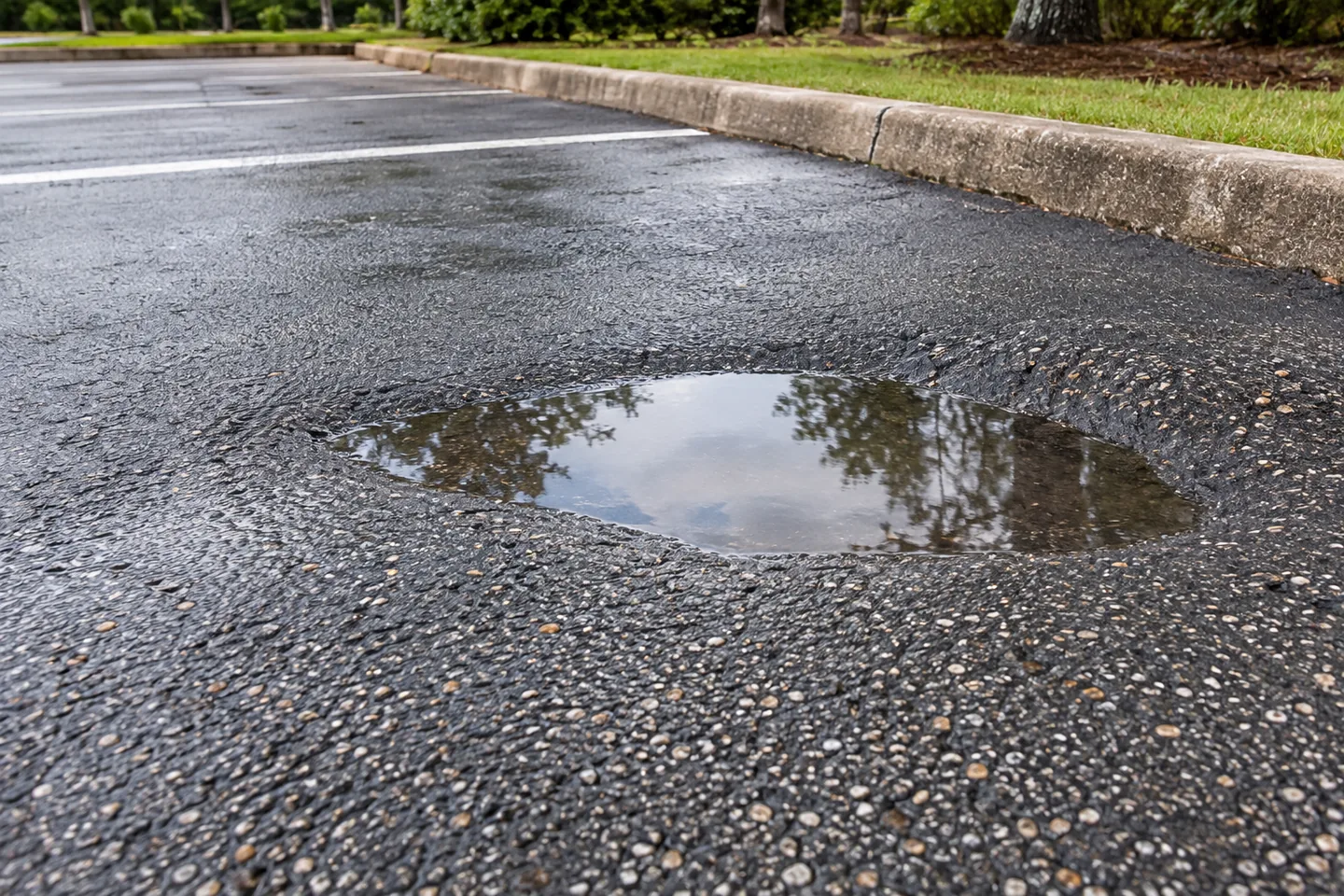
A pavement depression is a localized low area in the surface. It may be easiest to notice when water remains after rain, but a wet photograph does not establish how the low area developed. Start with the visible shape and its location. Explain whether the concern is an isolated section, a route following vehicle tracks or a connection beside another feature. The site assessment should determine how those observations affect the work being considered.
Keep the low-area observation separate from settlement. Settlement describes downward movement, while depression describes the current low shape. An owner may not have enough history to know whether movement occurred or whether the geometry existed earlier. State that uncertainty honestly. A clear description of where water remains is useful without claiming that supporting ground moved, a contractor made a particular error or the entire pavement structure has failed.
An intact low surface also differs from an opening with missing material. A pothole can contain water and look like a depression from a distance, while a shallow low section can remain intact. Show a safe dry view if available, together with the wider wet-weather context. The contractor can then discuss the actual concern instead of selecting a repair around an assumed category that the original photograph did not establish.
Observe the low area and its water connections
Take a wider photograph showing the depression relative to the building, entrance, curb and nearby pavement. Add a closer view from a safe position without stepping into traffic or the low area. Record the date and whether the photograph was taken during rain or afterward. The surrounding layout matters because a small puddle can be part of a larger route. A close-up of reflected water may omit the connections needed for a useful assessment.
If you already observe the section at different times, keep those notes together. Describe whether visible water remains later, whether the area was dry beforehand and where runoff appeared to arrive. Avoid assigning an exact drainage performance standard from a casual observation. The record provides context for questions about the property. It cannot establish a hidden outlet restriction or prove that one particular paving operation will change the full water route.
Show retained features near the low area. A garage apron, sidewalk crossing, drain inlet or curb may affect the discussion of a finished connection. Photograph the approaches and surrounding pavement, not just the lowest visible point. Ask which features are retained and what adjustment or separate work is proposed. The depression label should not imply that altering every nearby structure is part of a pavement estimate or that all such work belongs to the paving contractor.
Describe the impact on ordinary property use
Explain why you want the low section considered. Water near the garage, a wet pedestrian approach and an unused rear-lot puddle can lead to different operating discussions. Identify the actual route and the users affected. Do not ask people to cross a suspect section for demonstration photographs. The property manager's normal access process should govern concerning areas while the contractor reviews the location and the work that can be offered.
For a driveway, show how vehicles approach and where they park or turn. Mention whether the low area is beside retained concrete or near the only entrance. If you also want widening or a parking change, describe that request separately. A depression repair and a redesign of driveway use may involve different boundaries and decisions. Keeping both purposes visible helps the contractor explain what is being assessed and what the proposal includes.
For a lot, connect the observation to customer parking, delivery movements or pedestrian access where relevant. Record any events that change ordinary use, such as tenant deliveries or collection visits, without treating them as proven causes. If several owners or tenants share the area, identify the person coordinating the inquiry. The construction scope and the operating plan should be based on the actual location rather than a generic promise to eliminate every puddle on the property.
Ask what correction is proposed and what remains outside it
A proposal should explain the operation intended for the evaluated low area, its limits and its relationship to retained pavement. Ask what is removed, prepared, placed or adjusted. A surface-renewal label alone leaves these decisions unclear. The owner should understand which concern the recommended work addresses and which surrounding conditions remain excluded. Do not assume an added layer or small patch automatically corrects the wider geometry and all adjoining water connections.
If separate drainage work is recommended, identify its responsible party and scope. A pavement discussion can reveal a question about an inlet, roof outlet or neighboring surface without authorizing changes to those features. Ask how the recommended items fit together and which decisions require further review. This keeps a low-area project understandable and prevents a limited paving price from being treated as an unlimited promise about the entire drainage system.
Discuss uncertainty before acceptance. Some boundaries or supporting conditions may need confirmation during preparation or removal. Agree how the contractor documents findings, prices additional work and obtains approval. Keep allowances and optional improvements separate from the base item. The owner can accept a defined recommendation with a change procedure without expecting a puddle photograph to predict every concealed condition below or beyond the observed area.
Compare scope and follow up using consistent locations
Use one location sketch to compare estimates. Write the proposed operation, boundary, retained-feature treatment and exclusions beside the low section. Add the access sequence, cleanup and change-approval procedure. If contractors recommend different extents of work, ask them to explain the reason. A shared request to fix a depression does not make every price equivalent, especially when one proposal includes connection work and another prices only the central surface area.
Review closure and reopening instructions for the actual work. A small low area at the driveway entrance can affect all vehicle access, and work near a lot crossing can affect pedestrian movement. Tell the contractor about the route before agreeing the sequence. A finished-looking or dry surface is not independent permission for every use. The property-specific directions should state who communicates restrictions and how the owner receives an update when the usable area changes.
At closeout, keep the accepted scope, approved changes and photographs locating the work in its wider setting. Later natural-rain observations can document visible behavior when safe, without becoming a technical diagnosis or a promise of performance. If a concern remains, identify the location and circumstances specifically. For an Asphalt Solutions inquiry, provide the project address, dry and wet context where available, known history and the improvement you want reviewed.
Low-area comparison worksheet
Identify the low section and surrounding retained features on a sketch. Add safe dry photographs when available and natural-rain observations with dates. Record where water appears to arrive and remain, keeping those observations separate from suspected hidden causes. State the practical concern: garage access, a pedestrian approach or a selected lot area. If earlier geometry is unknown, do not convert the present low shape into a confirmed movement history.
Compare proposed operations at the same location, including preparation, repair limits and offered connection work. Put separate drainage items and responsibilities beside the pavement item instead of assuming they are included. Add closure, reopening and change approval to the record. Retain closeout photographs and later safe observations with the accepted scope. The worksheet helps discuss the actual low area without setting a drainage standard from a casual puddle photograph or promising that one surface operation resolves every surrounding concern.
Questions about depression
Meaning in plain language
A depression is a low pavement area. It may arise from settlement, placement geometry or other conditions and can collect water.
A practical example
A low area may collect water without an open hole. Describe the footprint and nearby elevations before choosing a repair.
Use the term in your project discussion
Include the low area and surrounding fixed features in photos.
Details that matter
- Low-area boundary
- Nearby drains
- Change over time
A mistake to avoid
Filling the low spot without considering runoff can create another problem.
Continue with the right next step
Property conditions determine the final scope. These planning notes do not replace a site evaluation. How to use our pavement guidance