
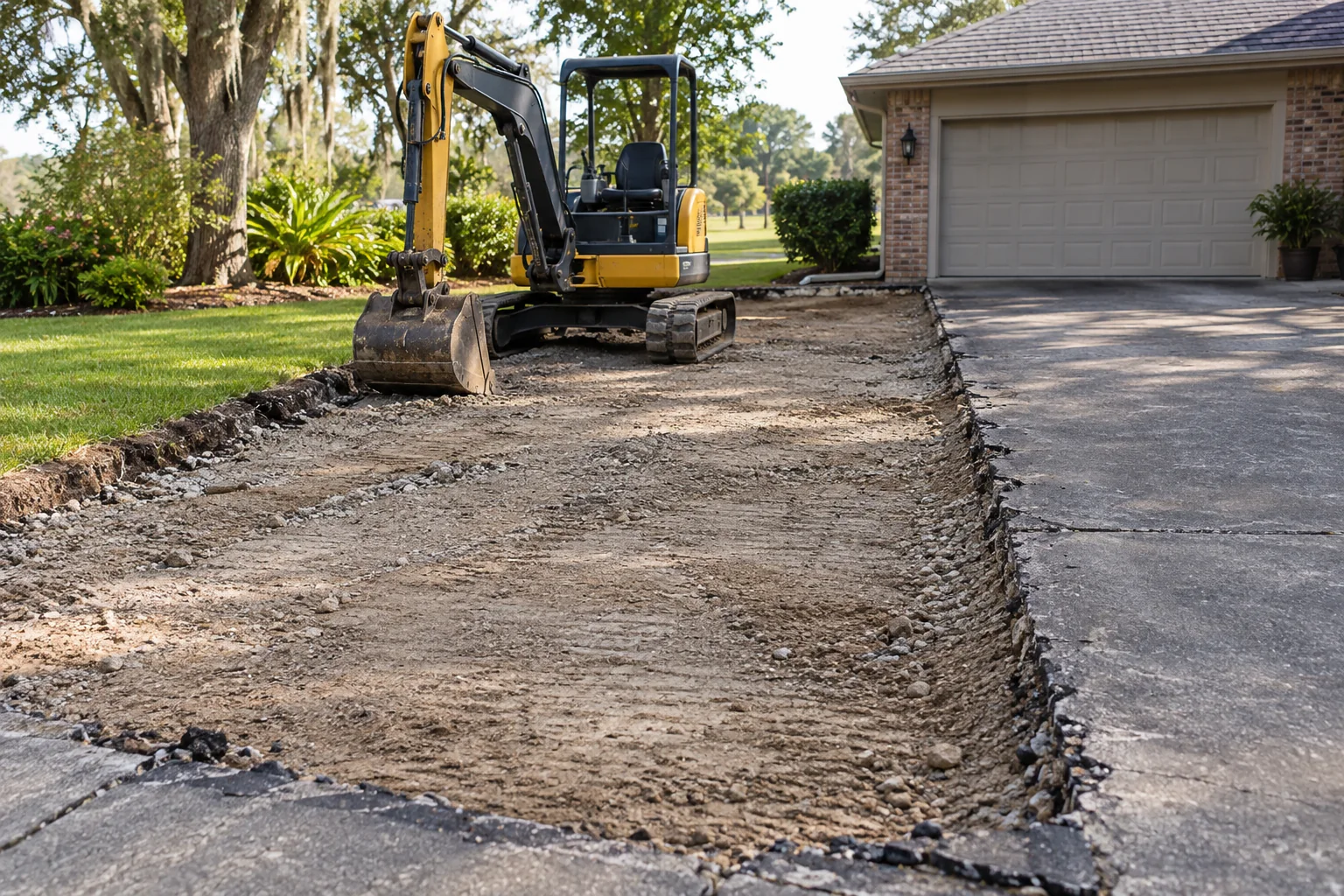
Reconstruction describes rebuilding rather than a surface refresh
Pavement reconstruction is a more extensive rebuilding approach involving removal and replacement of the existing pavement structure within the defined project scope. The term helps distinguish that work from a surface treatment or a limited repair. It does not provide the design for your property or establish how far removal must extend. Ask the contractor to describe exactly what the proposed reconstruction includes.
The boundary is especially important. A proposal may refer to reconstructing a particular area rather than every paved surface on the property. Identify the driveway section, parking area or entrance to which the term applies. If other areas remain, have that shown clearly. An owner reading only the project title might otherwise expect a full property rebuild when the measured scope describes a smaller intervention.
Reconstruction should follow evaluation of the actual condition and requirements. Severe-looking surface damage may prompt the question, but an image alone cannot establish the needed removal, support work or finished section. Ask what findings support the proposal and whether further investigation or appropriate design input is needed before the work is agreed.
Define removal and the conditions expected below it
Ask which existing materials will be removed and how the proposal describes the intended limit. A phrase such as remove old pavement may leave questions about what remains below the visible surface. The owner should understand the contractor's assumptions without trying to dictate a construction detail from an unrelated project. The quote needs a clear basis for the work being priced.
Discuss what happens if conditions exposed during removal differ from those assumptions. The proposal may need a process for documenting a finding, explaining the recommended response and obtaining approval before added work proceeds. That process is useful because an area can be measured accurately while concealed conditions remain uncertain. A blanket statement that everything is included may not explain the practical boundary of that promise.
Removal also creates disposal and cleanup responsibilities. Ask where the removed material goes, what is included in the price and which areas the crew may use while handling it. If equipment must cross retained pavement or use a shared entrance, identify those arrangements before scheduling. The owner then has a clear record of authorized access rather than deciding afterward which staging activity was expected.
Connect the rebuilt area to retained site features
A rebuilt pavement still meets things that remain. Garage aprons, sidewalks, curbs, drains, utilities and adjoining pavement should be part of the project discussion. Identify which features stay, which are included in the work and which belong to another party. Reconstructing the center of an area does not answer every question at the boundaries or establish responsibility for features outside the quote.
Ask how finished levels and connections are coordinated with those retained features. If there is an approved design or existing evaluation, make it available to the contractor and confirm who reviews changes. A new section cannot be judged only by its appearance if its connection to a threshold or walking route remains unresolved. The appropriate construction details depend on the property-specific plan.
Describe water concerns before the reconstruction scope is finalized. Ask whether the work includes evaluating runoff, existing low areas or drainage connections. More extensive removal does not by itself define the drainage outcome. The proposal should identify the relevant work and any retained constraint. If another professional or authority needs to be involved, record that dependency and the point at which it must be resolved.
Clarify the intended use and rebuilding information
Tell the evaluator how the reconstructed area will be used. A driveway, delivery approach and parking area may involve different operating needs, and a change in future use should be disclosed before the scope is selected. Do not assume that rebuilding automatically means the pavement is suitable for every vehicle or future activity. The proposed work needs to relate to the stated requirements.
Ask who supplies or confirms the relevant rebuilding information. The contractor can explain the proposed scope and identify where appropriate design or investigation is required. An owner should not choose layer dimensions or material requirements by comparing photographs or borrowing a section from another property. Request a clear written description of the plan and the assumptions used to price it.
If documentation or testing is expected, ask whether it is included, who performs it and what question it answers. Avoid treating an unspecified inspection as a guarantee of every construction detail. Put the agreed documentation beside the actual work items. That makes the proposal review more concrete and helps the owner know what records should be available at completion.
Plan a realistic closure and communication sequence
Reconstruction can interrupt access while material is removed, support work proceeds and the finished pavement is placed. Ask which areas are unavailable during each stage and how that affects vehicles, deliveries and pedestrian approaches. Explain the essential operations of the property before a schedule is accepted. A broad promise to work around the business should be translated into specific access assumptions.
If staging is proposed, discuss the temporary boundaries and connections between stages. The appropriate arrangement is property-specific and may need input beyond the paving crew. Identify who evaluates temporary access, who communicates restrictions and who approves a revised sequence. On a residence, include household vehicles and scheduled visitors; on a business property, include tenants, staff and service providers.
Reopening requires project-specific instructions. The area may look finished before all related work is complete or before the responsible party releases it. Ask whether the restrictions differ by activity and who communicates the release. Keep the instructions with the project record so people arriving later receive current information. Avoid promising a universal reopening interval based only on the word reconstruction.
Compare a rebuild proposal with a narrower alternative
Imagine two offers for the same deteriorated driveway. One retains part of the existing pavement and the other proposes removing and rebuilding a defined section. Ask both contractors to explain the condition findings and project goals behind those approaches. Then compare the same boundaries, retained features, preparation and access assumptions. The larger scope should have an explanation, and the narrower scope should make its limitations visible.
Next consider the garage connection and a known water concern near the entrance. Ask whether each offer addresses those same locations. An extensive rebuilding description can still leave a retained feature or drainage issue outside the scope. Keep the response tied to the location so the final agreement reflects what the owner actually wants evaluated rather than relying on the apparent comprehensiveness of the project title.
To discuss reconstruction with Asphalt Solutions, call or text the actual job-site address, photographs and known work history. Include the current use, intended changes and access needs. Most projects take place at customer properties. Visits to the Slidell contact location are by appointment; phone availability is separate from job scheduling. Request a written scope that explains removal, rebuilding assumptions, retained features, change approval and reopening responsibilities.
Ask what completion documentation will describe
At the proposal stage, agree on what the completion record will identify. The owner may need the final project boundary, approved changes and the work description for future maintenance or a property handoff. If a specific report or test record is expected, confirm that it is included and who supplies it. A photograph of the finished surface does not document concealed construction by itself. The completion information should describe the actual agreed work without implying that unperformed testing or excluded site features were verified.
Questions about pavement reconstruction
Meaning in plain language
Reconstruction rebuilds a pavement through a more extensive removal and replacement process. Its need depends on the overall condition and project requirements.
A practical example
An estimate should describe removal, supporting work and finished connections as well as the new surface.
Use the term in your project discussion
Compare reconstruction with other options using scope, disruption and likely underlying problems.
Details that matter
- Removal depth
- New section
- Site access
A mistake to avoid
Reconstruction should not be selected solely because a surface looks weathered.
Continue with the right next step
Property conditions determine the final scope. These planning notes do not replace a site evaluation. How to use our pavement guidance