
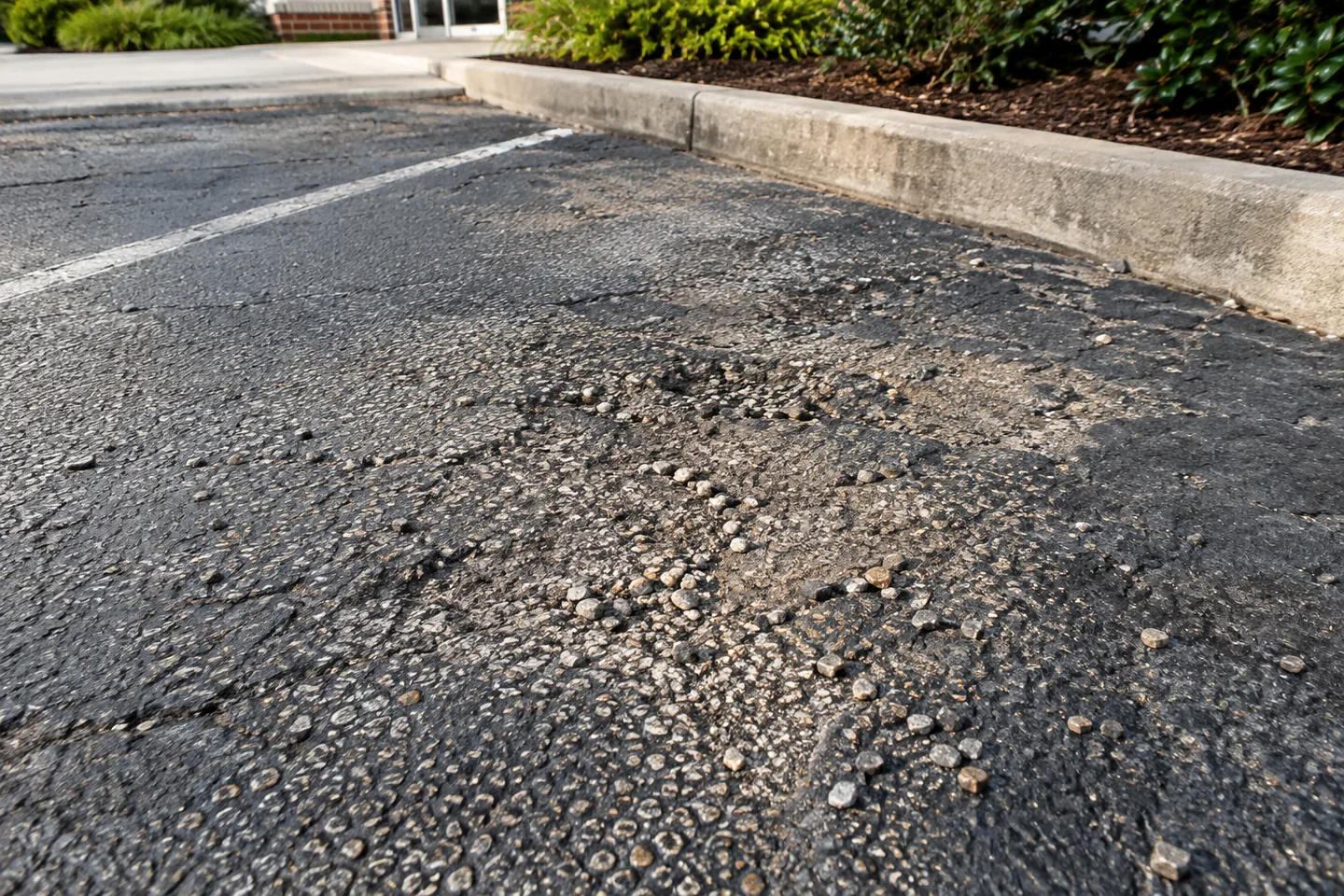
Raveling concerns material leaving the surface
Raveling describes loss of aggregate from an asphalt surface. An affected section may look rough or pitted and may have loose small stones nearby. The name helps identify a visible concern, but does not establish its complete cause, remaining pavement condition or suitable treatment. Begin by showing the affected surface and its surrounding context. The contractor needs to assess the property before recommending maintenance, a localized repair or a broader operation.
Distinguish stones coming from a deteriorating surface from loose material deposited on top. Gravel carried from a nearby shoulder or material left after another activity may look similar in a close photograph. Describe what you observed and whether the surface itself appears to have changed. If the origin is uncertain, say so. An accurate inquiry should not force every loose stone into a diagnosis of raveling or assume a specific construction problem.
A rough texture also needs context. Some retained surfaces may have a different appearance from newer sections, and an old patch can have a distinct aggregate texture without proving active material loss. Show the boundary and known history. Ask how the contractor distinguishes the visible condition relevant to the recommendation. The owner does not need to classify it perfectly; clear observations are more useful than certainty based only on surface appearance.
Record texture changes and the area they occupy
Take a wide view locating the rough section within the driveway or parking area, then a closer view where safe. Include adjoining smoother pavement and a retained curb, building or concrete feature for reference. Where several patches of roughness exist, mark them separately on a sketch. This helps connect photographs to the proposed areas rather than implying that a single close-up represents the condition across the whole property.
If loose stones are present, photograph their location without collecting material from an unsafe route or scraping the pavement. Note whether they are concentrated beside the rough area, along an edge or in a traffic route. Ordinary photographs can communicate texture and context, but cannot identify material properties or hidden layer condition. The site discussion should address those uncertainties instead of turning an owner sample or image into a construction specification.
Known changes over time can help the assessment. If earlier photographs exist, use the same location references and dates. Record whether the rough area appears larger, whether small pits are more apparent or whether loose material is now visible elsewhere. Do not infer an exact rate of deterioration from unmatched views. Consistent observation records support a clearer conversation without pretending to provide laboratory testing or a formal pavement-condition survey.
Describe the actual operating concern
Explain how the surface is used and what the owner wants reviewed. Loose material near a walking approach presents a different operating conversation from texture changes in a rarely used rear section. A driveway owner may be concerned about a turning area or material reaching the garage. A property manager may be tracking several locations. Identify these concerns specifically rather than assuming that a general request for a smoother appearance explains the whole project.
Show known nearby sources of loose material, such as a gravel edge or landscaping work, without claiming they caused the surface condition. If another contractor recently used the route, provide verified history. Keep cleaning observations separate from structural conclusions. The contractor can then discuss what is deposited on top, what appears to be changing in the asphalt and what assessment is needed before selecting the offered operation.
At an occupied site, use the property's normal safety and access process for concerning loose material or damaged routes. Do not ask pedestrians or drivers to demonstrate the issue for photographs. Let the manager and contractor discuss the affected approaches and proposed sequence. A surface-condition inquiry should make the property easier to review without creating additional exposure or relying on informal tests that cannot establish the underlying condition.
Ask what preparation and treatment are being offered
If a maintenance treatment is proposed, ask what purpose it serves and how the existing surface condition affects suitability. The recommendation should identify preparation and any repairs included before treatment. Do not assume a coating restores missing aggregate, rebuilds failed support or converts every rough area into renewed pavement. A written explanation of the operation and its limits is essential to understanding what the owner is purchasing.
If repair or replacement is recommended, request clear area boundaries and a description of retained pavement. Ask how removal and preparation relate to the visible roughness and nearby features. A contractor may recommend work beyond the section that is easiest to see in a photograph. The owner should understand that rationale before comparing a localized repair with a larger resurfacing proposal or treating their prices as equivalent options.
Discuss findings that may change the scope. Where quantities or supporting conditions need confirmation during work, agree how they are documented, priced and approved. Identify the person who can authorize a change and how they receive the information. This procedure makes an initial estimate understandable without expecting the visible aggregate texture to predict every condition beneath it or assuming that a limited maintenance price includes unspecified deeper work.
Coordinate the work with boundaries and use
Identify retained edges, concrete connections, drains and markings near the affected section. Ask whether their protection, adjustment or restoration is included. A surface-treatment item should not silently absorb every neighboring feature. If the property has several responsible parties, record who coordinates the relevant work. This is particularly useful where a rough area meets a pedestrian entrance, shared driveway or tenant route that must remain understandable during the project.
Review the access plan against ordinary use. For a business, include customer approaches, deliveries and service visits. For a home, identify garage access and where vehicles stay while work affects the driveway. Ask how the closed section is communicated and who gives reopening instructions. Do not assume an area can be used because it appears swept, dry or newly coated. The actual work sequence and property-specific directions determine the agreed restrictions.
At closeout, retain photographs locating the treated or repaired areas and showing their visible boundaries. Keep the accepted scope, changes and care instructions alongside known earlier records. If loose material or texture changes later become a concern, describe the location and date without declaring one hidden cause. An Asphalt Solutions inquiry should include the project address, safe surface photographs, known history and the improvement you want reviewed so the assessment can address the actual property.
Aggregate-loss observation worksheet
Give each rough section a location reference and match it to a wide view and a safe closer photograph. Note visible pits and where loose stones are found. Record nearby gravel, landscaping or known recent activities as context, keeping the material's origin uncertain when it is unknown. Add any verified earlier surface records rather than interpreting a different texture as proof of a particular repair method.
Ask the contractor to separate assessment of the existing asphalt from cleaning or preparation of material deposited on top. Record the operation recommended for each area and the limits of its purpose. Identify any separate repairs, retained features and access restrictions. Keep the accepted description with closeout photographs. The resulting record helps explain which surface concern was reviewed and what work was offered without treating loose stones or a rough photograph as a technical material test.
Questions about raveling
Meaning in plain language
Raveling is loss of aggregate from an asphalt surface. Loose material, exposed texture and the extent of deterioration matter when evaluating a treatment.
A practical example
Describe where aggregate is becoming loose and whether traffic is carrying it away. A photograph of collected stones should also show the affected surface.
Use the term in your project discussion
Share clear images and describe whether loose stone is increasing.
Details that matter
- Loose aggregate
- Affected area
- Surface age if known
A mistake to avoid
Loose stone does not always mean the whole pavement must be replaced.
Continue with the right next step
Property conditions determine the final scope. These planning notes do not replace a site evaluation. How to use our pavement guidance