
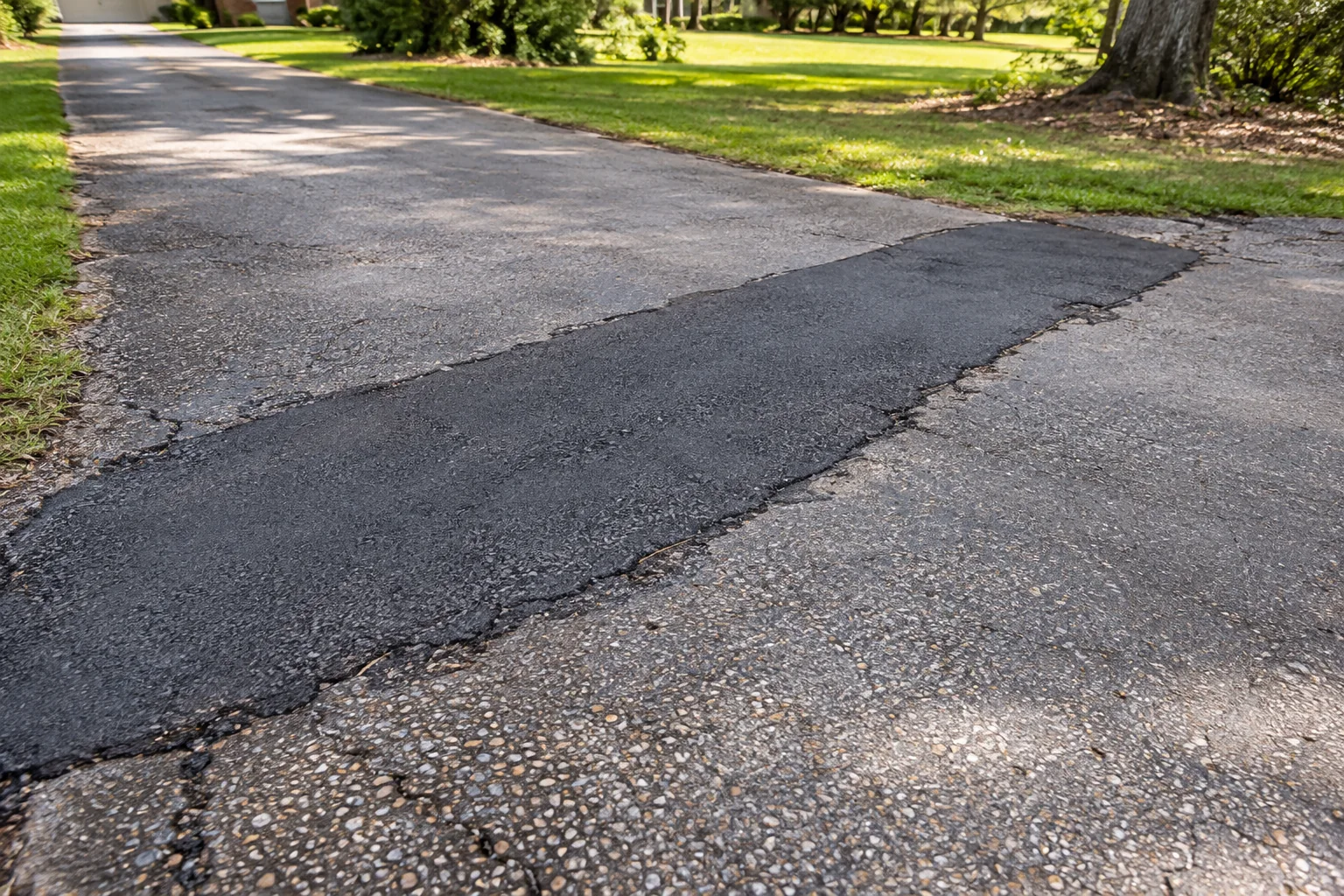
Review the restored strip and connected pavement
Uneven pavement after utility restoration should be reviewed with the surrounding surface and known trench history. Show the complete strip and where it connects to retained pavement. The visible restoration is a location for review, but its outline does not establish the full extent or cause of the present concern.
Describe an abrupt transition, depression, raised area, loose edge or crack separately. These observations can occur together without every one having the same explanation. A photograph may locate the condition but cannot verify the supporting material or complete construction beneath it. Ask what further examination is needed before a repair boundary is chosen.
Tell the evaluator what the unevenness affects: vehicle passage, water collection, walking access or another practical use. This keeps the discussion connected to the property's actual need. The first decision is what needs reviewing and who is responsible, rather than assume another narrow strip of material will address every concern associated with the earlier utility activity.
Record the transitions and changes over time
Take a safe overall view identifying the restoration within the driveway or lot. Add close views of the transitions and the affected surrounding pavement. Include the ends of the strip and any nearby fixed surface. A cropped image of one lip does not show how the restored area fits into the route or where the concern stops.
Keep genuine earlier photographs if available. Describe when the change was first noticed and whether later observations differ. If the restoration date or original condition is unknown, say so. An old-looking patch does not supply a reliable construction date, and the fact that a change followed work does not independently establish its complete cause.
Do not repeatedly drive over the uneven area, dig beside it or remove edge material to create a demonstration. Safe static views and known history can begin the request. Ask what measurements or investigation are needed and how they will inform the proposed activity. The owner does not need to disturb the site to make an initial review useful.
Share actual utility and restoration records
Provide available records identifying the utility work, restoration date, responsible providers and agreed pavement scope. Mark the known trench route on an overall view while distinguishing confirmed information from an owner's estimate. The visible asphalt strip may not reveal every part of the earlier excavation or the condition beyond it.
Identify who manages the utility and who can authorize current pavement work. A new paving estimate should not silently represent utility-system inspection or permission to alter related infrastructure. If the utility provider or original restoration contractor needs to participate, make that dependency visible before the repair boundary is finalized.
Keep earlier agreements and instructions when recent work is under discussion. Report the actual concern to the responsible provider without deciding fault or warranty coverage from appearance alone. The current evaluator can discuss condition and suitable next steps while the owner keeps contractual and provider responsibilities connected to the records that actually establish them.
Include water, use and neighboring surfaces
Record safely observed water collection or flow near the strip with location and approximate timing. Include adjoining grades and visible drainage features. One wet image does not establish underground conditions or a complete explanation for unevenness. Ask whether a drainage question needs separate review and whether it affects the pavement decision.
Describe actual vehicle and walking routes across the restoration. Identify deliveries, heavy-vehicle use and important entrances without assuming a particular user caused the condition. The work plan needs the intended operation and consequences as context. A remote surface concern and a transition at the only entrance can have different access-planning needs.
Show neighboring concrete, curb, garage or other fixed connections that could limit the finished surface. Adding material is not automatically suitable simply because the visible concern looks low. The recommendation should explain the intended relationship to retained elevations and identify any design or related-provider decision needed before changing that connection.
Compare repair boundaries and investigation needs
Ask the contractor to locate removal, retained surfaces and restoration in the proposal. The old trench outline is useful history, not an automatic boundary for every new repair. The evaluator should explain why the proposed area fits present findings and what concern the activity is intended to address.
If further investigation is proposed, clarify the specific question, location, extent and limitations. Information from one location should not be treated as complete knowledge of every part of the restored route. Ask how the result affects the recommendation and whether investigation and its restoration are separate from later pavement work.
Compare alternatives by purpose and retained conditions before price. A localized transition activity and a broader removal-and-repair scope can address different objectives. Identify uncertainties, exclusions and dependencies. Agree who receives new findings during authorized work, how changes are priced and who approves them. That process makes the decision understandable without treating the initial photograph as a guarantee of hidden condition.
Plan access and a clear provider handoff
Discuss whether the affected route can close and which operations must continue. Include household parking, deliveries, walking access and shared-site needs. If another utility or drainage task must precede paving, agree on the handoff and interim condition. The schedule should reflect actual dependencies rather than assume the surface activity can happen in isolation.
Identify who communicates closures, changes and release for use. A temporary route suitable for a passenger car should not automatically be assumed suitable for every delivery or pedestrian use. Have the responsible parties review the actual arrangement and explain it clearly to users before the work area closes.
Follow the provider's reopening instructions for the actual work and conditions, including any separate crossing, turning or parking restrictions. New-looking pavement does not by itself release an unfinished related task. Keep the completed activity, pending work and responsibility for each question explicit so the owner knows what must happen before normal operations resume.
An example of comparing restoration scopes
Suppose an owner sees a low-looking restored strip and an abrupt transition near its end. Ask whether the proposed activity addresses the transition, the broader uneven area or both. If one estimate follows the old strip while another includes surrounding pavement, request an explanation based on present findings. Share confirmed utility records and distinguish them from a route inferred from the visible surface. If investigation is needed, identify the question it answers before the boundary is treated as final. Also confirm which provider handles any utility-related task and what must happen before paving. The comparison should identify purpose, retained conditions, access sequence and exclusions. It should not rely on a photograph proving the complete supporting condition or on a new paving price being interpreted as a finding about earlier contractual responsibility. Keep those decisions in the written scope and record approved changes so the owner can understand what is actually being provided at each part of the restoration.
Keep the completed scope and later observations together
At closeout, retain genuine photos showing the repaired area and retained connections, the scope and approved changes. Identify any portion of the old restoration left outside the work. The record should explain the actual activity provided rather than imply the entire utility route or unseen construction was evaluated and replaced.
If unevenness or another concern develops later, report its location, timing and actual observation. Describe known changes in use or nearby work without assigning a hidden cause from one image. The earlier record helps direct follow-up to the appropriate provider and distinguish a new finding from a condition deliberately retained or excluded.
Contact Asphalt Solutions with the project address, safe overview and available restoration history. Most work is handled at customer job sites. Slidell contact-location visits require an appointment, while listed hours mainly concern phone availability. Call or text to discuss the review and any utility-provider coordination needed before selecting a pavement activity for the uneven strip.
Questions about uneven pavement after utility restoration
The direct answer
A restored utility opening should connect smoothly to its surroundings while addressing any continuing settlement. The restoration history is useful evidence.
What to discuss before choosing a repair
Discuss support and finished elevations rather than only placing a thin surface cap.
What to observe and record
- Locate the repaired trench
- Show transitions
- Record when changes began
A mistake to avoid
The final surface should not be separated from the fill and restoration below it.
Continue with the right next step
Property conditions determine the final scope. These planning notes do not replace a site evaluation. How to use our pavement guidance