
The decision in plain language
A proposal should distinguish surface grading from drain, pipe or outlet work.
The situation to discuss
Ask exactly which water-related tasks are included and who owns structures outside the work boundary. Keep exclusions visible.
Your five-point decision sheet
Use these headings on a simple sketch or in your project notes. Under each one, write the actual property observation, the question you still need answered and the person responsible for the decision. Leave an unknown item marked as a question instead of assuming it is included.
- What located observation and requested pavement improvement are being reviewed?
- What does the base scope actually include and exclude?
- Which retained features and separate provider tasks are identified?
- Which options, sequence and revisions have been accepted?
- What visible closeout questions and open decisions remain?
What not to assume
The word drainage does not define a complete design or repair scope.
Turn the discussion into a clear work boundary
Keep a copy of the marked site sketch with the estimate. Identify the area being authorized and any adjoining feature that must remain protected or available. If the contractor recommends an investigation or a separate trade, record that next step before treating the proposal as a final solution. A planning guide helps you ask questions; it cannot establish hidden conditions from photographs.
When a decision changes the work, request an updated description showing what was added, removed or deferred. Confirm how any additional quantity will be measured and approved. Make sure the person giving the approval has authority for that part of the property. This prevents a useful site conversation from becoming a different job than the one the owner expected.
Bring the right information to the visit
Send your address, the overall project goal and photos showing this specific connection or operating area. Include a wide view for context and a closer view of the detail under discussion. Describe any timing or access constraint that affects the decision. Avoid placing yourself in traffic or entering inaccessible structures to collect information.
State the water question and requested pavement section
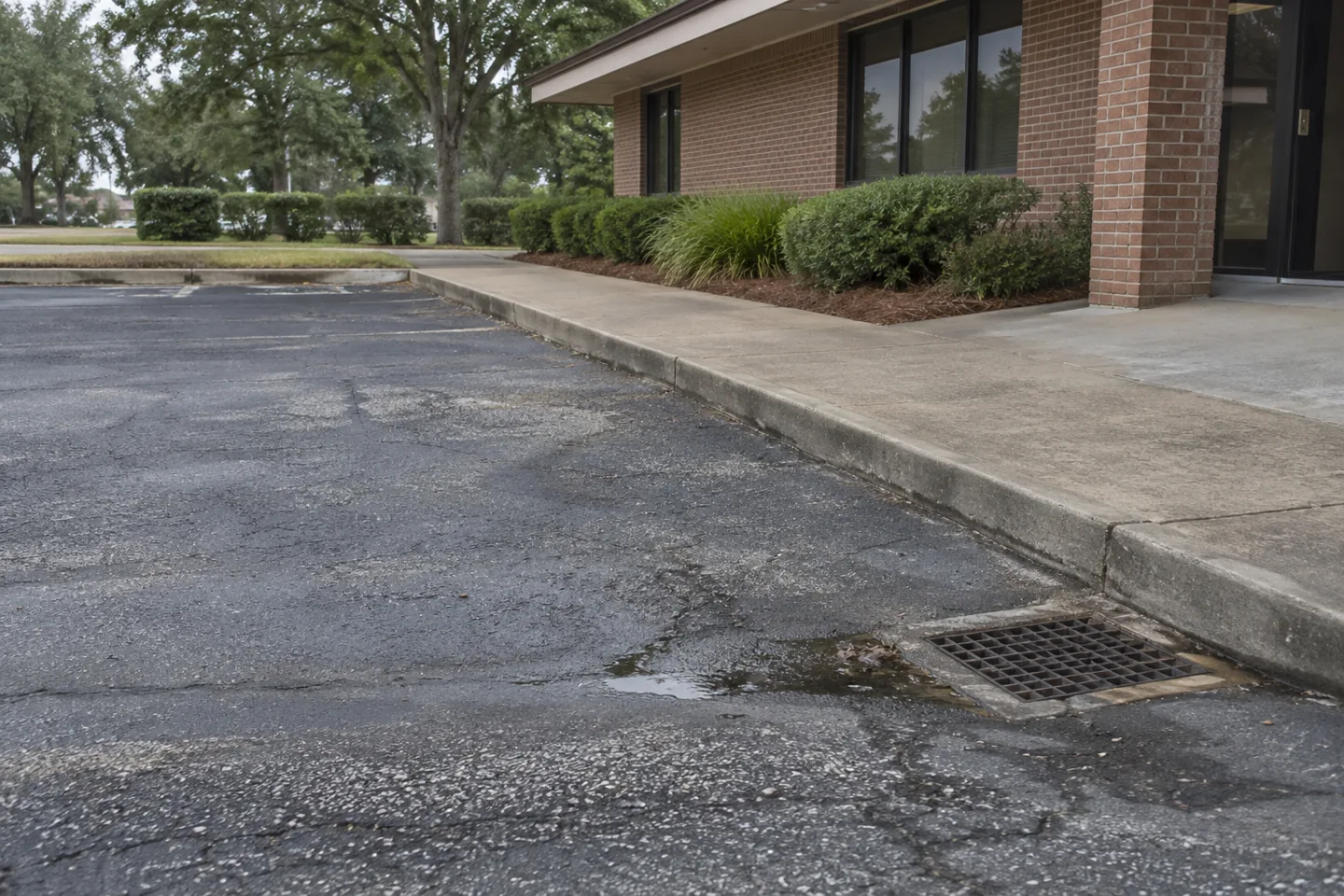
Begin with the property address, a recognizable section name and the improvement the owner wants reviewed. Use wide photographs and fixed landmarks to locate the observed water concern. Explain what the owner actually saw and when it was observed, keeping uncertain information clear. A request to fix drainage can mean different tasks to different providers, so identify the pavement area being discussed. The useful starting point is a specific located question that can be connected to the contractor's offered scope rather than an assumed agreement that a general driveway price includes every water-related item on the property.
Describe the observations before discussing responsibility
Share relevant dates, photo timing and visible property features without turning them into a diagnosis or assigning a hidden cause. State whether the owner observed water after a known event or under an uncertain condition. Identify reliable information supplied by another provider with its source and limitations. This gives the scope discussion actual context while preserving the difference between an owner record and a confirmed assessment. A proposal can address a requested pavement item more clearly when the relevant observation is located and described instead of presented as a settled explanation that every provider is expected to accept.
Identify what the base pavement offer includes
Ask the contractor to describe its actual work boundaries, preparation, included repairs or treatments and retained surfaces. Connect each important item to the same property reference used for the water observation. Keep broad terminology clear enough that the owner can understand what is being priced. A surface-work description should not silently become an agreement to modify every outlet, drain, threshold or neighboring feature. The owner should be able to read the proposal and identify the offered pavement work on its own. This creates a clearer starting point for discussing an optional item or a separate provider response.
Keep water-related features individually identifiable
List the visible outlets, drains, lawn boundaries, thresholds or other retained features relevant to the question. State what the owner knows about their arrangement and what remains uncertain. A feature disappearing beneath a surface should not be assigned an invented route or condition. Ask which items are inside the offered work and which questions need another provider's review. Keep the response with the section reference. This makes the estimate more useful than a broad drainage label that leaves the owner unsure whether the price concerns pavement shape, a retained feature, separate equipment or a task that was never actually described.
Name the providers and contacts for separate decisions
Identify who coordinates a relevant building, landscape, drainage or other provider when a question is outside the offered pavement scope. Keep that coordination role distinct from the person who approves the paving proposal when they differ. Record which response is needed before the work can be described clearly and assign a contact to obtain it. A contractor should not be silently given responsibility for another party's review or method. The owner can then see what has been accepted and what remains open, with the actual work boundaries and provider decisions connected in one practical property record.
Compare proposals using the same concern and boundaries
Give providers the same recognizable pavement area and relevant observation record when asking about the requested work. Compare preparation, included items, retained features, exclusions and optional choices rather than totals alone. Two general driveway offers may address different sections or assume different separate-provider tasks. Ask for important distinctions to be explained in writing. The goal is to understand the actual response each provider is offering for the requested property question, not to select a technical design from a worksheet or assume a low price establishes the same water-related scope as another more detailed proposal.
Keep optional and deferred items distinct
If the proposal lists an additional water-related item, identify its location, offered work and relationship to the base scope. Ask whether it depends on another decision or changes preparation, access or sequence. Record the exact item accepted when the owner chooses it. Keep an unselected option and deliberately deferred work as different categories from completed scope. A later property contact should not infer that every suggested improvement was performed simply because it appeared in an early estimate. If the owner returns to a deferred item, share current information and ask the provider to review the actual present circumstances.
Review coordination before the work window is chosen
Ask the responsible contacts to confirm the sequence for pavement work and any separate provider task that affects the same area. Identify relevant access or preparation needs and keep uncertain dates distinguishable from confirmed arrangements. A preferred order is useful planning information but should not become an operating instruction before the actual parties review it. Save the response with the accepted scope. This gives the owner a practical coordination path and lets the contractor discuss the section it will receive as agreed, without being expected to resolve another provider's task or an unreviewed retained-feature question at the start of the job.
Document a revision when new information changes the offer
If a provider assessment or owner decision changes the proposed pavement boundary or included item, identify the actual revision and who approved it. Ask whether price, preparation, access or timing assumptions change. Keep the current proposal version obvious while retaining earlier discussions as history. Do not silently extend an earlier approval to a different water-related task because the same contacts remain involved. A traceable change record lets the owner and contractor point to one current agreement and gives a future property contact a clearer explanation of why the offered work changed after the original observation was shared.
Review visible results against the accepted description
After the responsible provider permits the relevant use, compare the recognizable completed section with the accepted boundaries and included items. Record a specific visible question and ask the contractor to clarify it. Keep a separate retained-feature decision or unselected option distinct from a concern about completed pavement work. A surface photograph does not establish every hidden condition or create a new performance promise. Save the provider's response and any agreed follow-up with the relevant item. This keeps the closeout conversation connected to the actual proposal rather than an undefined expectation that every water question on the property was included.
Keep the water and scope record together
Retain dated photographs, section names, confirmed feature information, accepted work, provider responses, optional-item decisions, revisions and provided instructions in one property file. Identify unresolved or deferred matters with assigned next steps. For an estimate discussion, send Asphalt Solutions the address, wide pavement views, actual observation timing and the intended use of the requested section. Explain the particular water question you want reviewed and relevant separate contacts. A focused record helps the contractor discuss its offered scope without asking a general paving estimate to determine every hidden condition, settle legal responsibility or accept a task another provider has not reviewed.
Questions before you approve the work
Discuss the actual property and work limits
Send the property address, current photographs, intended use and access needs. Keep planning with these related decisions.
- Documenting water at a garage threshold
- A driveway project near a neighbor’s runoff
- Drainage and connection decisions
General proposal background: FTC information about written home-improvement estimates. Use the actual accepted agreement for its terms.
Reviewed October 14, 2026. Owner preparation guidance; the accepted proposal defines the actual work.