
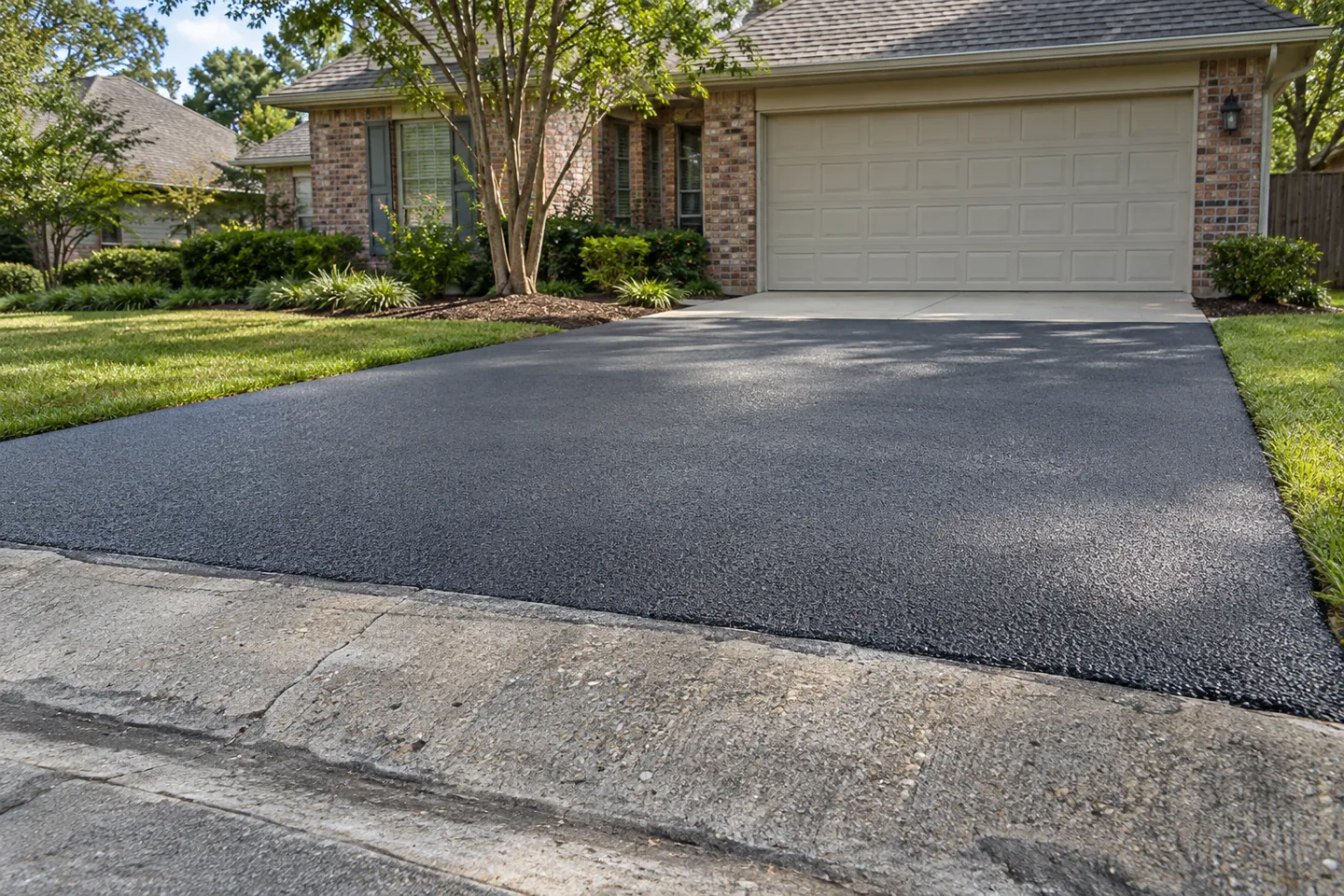
Turn resurfacing into an identifiable scope
Resurfacing is a broad description of renewing a pavement surface. It does not identify a complete process by itself. When the term appears in an estimate, ask the contractor to translate it into operations you can compare: what is removed, what is retained, what is repaired and what material is placed. A property owner can then understand the proposal without assuming that every resurfacing option means the same amount of work or the same finished connections.
Begin with the reason you want work considered. A driveway may feel uneven, have visible damaged sections or look different after several previous repairs. A lot may need surface work coordinated with markings and active entrances. These are different starting concerns even if each owner initially asks for resurfacing. Describe the observable issue and intended property use. The recommendation should respond to that information, rather than treating a general service label as a diagnosis.
An asphalt overlay is one operation that may appear in a resurfacing discussion, while reconstruction involves a different extent of replacement. Maintenance treatments also have their own purposes and limits. Ask the contractor which approach is actually proposed and why. If estimates use different language, arrange a scope comparison before choosing between them. A familiar label can conceal a meaningful difference in retained pavement, preparation and the amount of localized repair included.
Separate surface appearance from property function
Record the condition you see without trying to identify every technical cause. Photograph worn areas, prior patch outlines, cracks and damaged edges. Add a wider view that shows how the section connects to the rest of the property. Note where vehicles turn, park or repeatedly travel. A renewed appearance can be one goal, but the proposal also needs to explain which functional concerns are being reviewed and which remain outside the agreed work.
Water observations should be documented separately from dry-surface observations. Give the date and approximate stage of the rain when a photograph was taken. Show the surrounding area, not just the center of a puddle. Explain whether water appears to arrive from a roof outlet, adjacent land or another paved section. This information provides context for assessment. It does not prove a hidden cause or establish that resurfacing alone will change the complete runoff route.
List the connections that need to keep working: garage aprons, exterior steps, gates, concrete walkways, curbs and drainage structures. Ask how the proposed finished surface relates to each feature. If adjustment is recommended, identify who performs it and whether it is priced. A surface-renewal promise is incomplete when the owner expects every adjoining feature to be modified but the contractor has priced work only within the pavement outline.
Read preparation, repairs and finish as separate decisions
The proposal should explain preparation in enough detail to identify its boundaries. If milling is included, ask where material is removed and how removal relates to the next placed surface. If isolated repairs are included, ask which areas are identified and how quantities will be confirmed. Avoid assuming that a single resurfacing line includes all possible preparation. A marked scope and itemized responsibilities make differences between proposals easier to understand.
Discuss visible damage before the new surface covers it. Existing cracks and recurring patch areas deserve specific questions about suitability and proposed treatment. Request clarification where the contractor's recommendation depends on further investigation or conditions discovered during work. Record that uncertainty honestly. An owner can approve a defined plan with a change process without pretending that every concealed condition was known when the initial estimate was prepared.
Material and finish expectations should also be written clearly. Ask what surface is proposed, where the new work ends and how appearance may differ beside retained pavement. Existing concrete, older asphalt or excluded striping may remain visually distinct. If uniform appearance across the whole property is important, bring that expectation into the discussion before accepting the price. The new work should be evaluated against the agreed scope, not an unstated expectation that nearby retained surfaces will look new.
Plan the work around real property use
For residential resurfacing, identify the vehicles and routines affected by closure. Show whether the driveway is the only route to parking, a garage or a delivery area. Let the contractor know about planned moving trucks, landscaping deliveries and other work using the same access. Ask for a proposed sequence and a way to receive updates. Coordinating these uses in advance is more useful than trying to change the work plan after vehicles have entered a closed area.
For a business, map ordinary customer movement, tenant doors, collection access and delivery routes. Include the pedestrian approach to the entrance and any retained route proposed during work. A resurfacing phase should be understood by both property management and the people directing visitors. Review notices against the actual layout so users receive clear instructions about parking and entrances. Do not assume that maintaining one open drive aisle preserves every required movement on the site.
Reopening is a separate decision from the completion of visible placement. Ask who provides instructions and how the restrictions apply to different vehicles or activities. Keep those instructions with the project record and pass them to tenants or household members who use the surface. Avoid selecting a generic reopening period from an online example. The offered materials, construction sequence and actual conditions determine the contractor's property-specific directions.
Make estimate comparisons and closeout practical
Put the competing proposals beside the same property sketch. Compare the removal limits, repairs, retained features, surface treatment, marking work and access responsibilities. Note where a price is fixed and where an allowance or optional item appears. Ask whether the contractor is pricing the same areas and the same intended outcome. If one estimate includes a connection adjustment and another excludes it, the difference matters even if both headings say resurfacing.
Before acceptance, agree how additional work is approved. Identify a decision-maker, the method of documenting a discovery and the pricing confirmation required before proceeding. Also clarify which adjacent features or services are handled by other parties. This arrangement helps prevent a resurfacing discussion from becoming an open-ended promise about drains, gates or utilities. Each responsibility should be tied to a person and a written item rather than a general expectation of completion.
At closeout, review the visible new surface, retained connections and any listed follow-up items. Keep dated photographs, accepted scope, changes and care instructions together. If water or access concerns remain, describe when and where they occur. The record should distinguish a newly observed concern from a previously excluded condition. Good documentation supports a specific follow-up conversation without requiring the owner to diagnose pavement structure or infer hidden workmanship from surface appearance.
Resurfacing comparison worksheet
For each estimate, write the proposed operation beside the word resurfacing. Then list the area retained, the area removed, isolated repairs and the finished connections described. Put exclusions in a separate column. This can be done on paper without technical measurements. The aim is to show whether the two contractors are offering the same work, not to rank recommendations before a property assessment or force one method into every estimate.
Add the access plan, marking responsibilities and reopening instructions to the comparison. Where an item is missing, ask for clarification rather than entering assumed work. Keep optional improvements separate from the base price so the accepted scope is easy to recognize. If the contractor revises the proposal, retain both dated versions and mark which one was accepted. That simple record makes later closeout discussion more precise, especially when surface renewal is coordinated with separate drain, gate or concrete work.
Questions about resurfacing
Meaning in plain language
Resurfacing is a broad term for renewing a pavement surface. Estimates should explain the actual treatment, preparation and repair work instead of relying on the label.
A practical example
A proposal using this word needs a description of the actual operation. Clarify whether it means an asphalt overlay, replacement or a different surface treatment.
Use the term in your project discussion
Compare the written operations included in each proposal.
Details that matter
- Repair quantities
- Surface treatment
- Traffic reopening
A mistake to avoid
Two resurfacing estimates may describe substantially different work.
Continue with the right next step
Property conditions determine the final scope. These planning notes do not replace a site evaluation. How to use our pavement guidance