
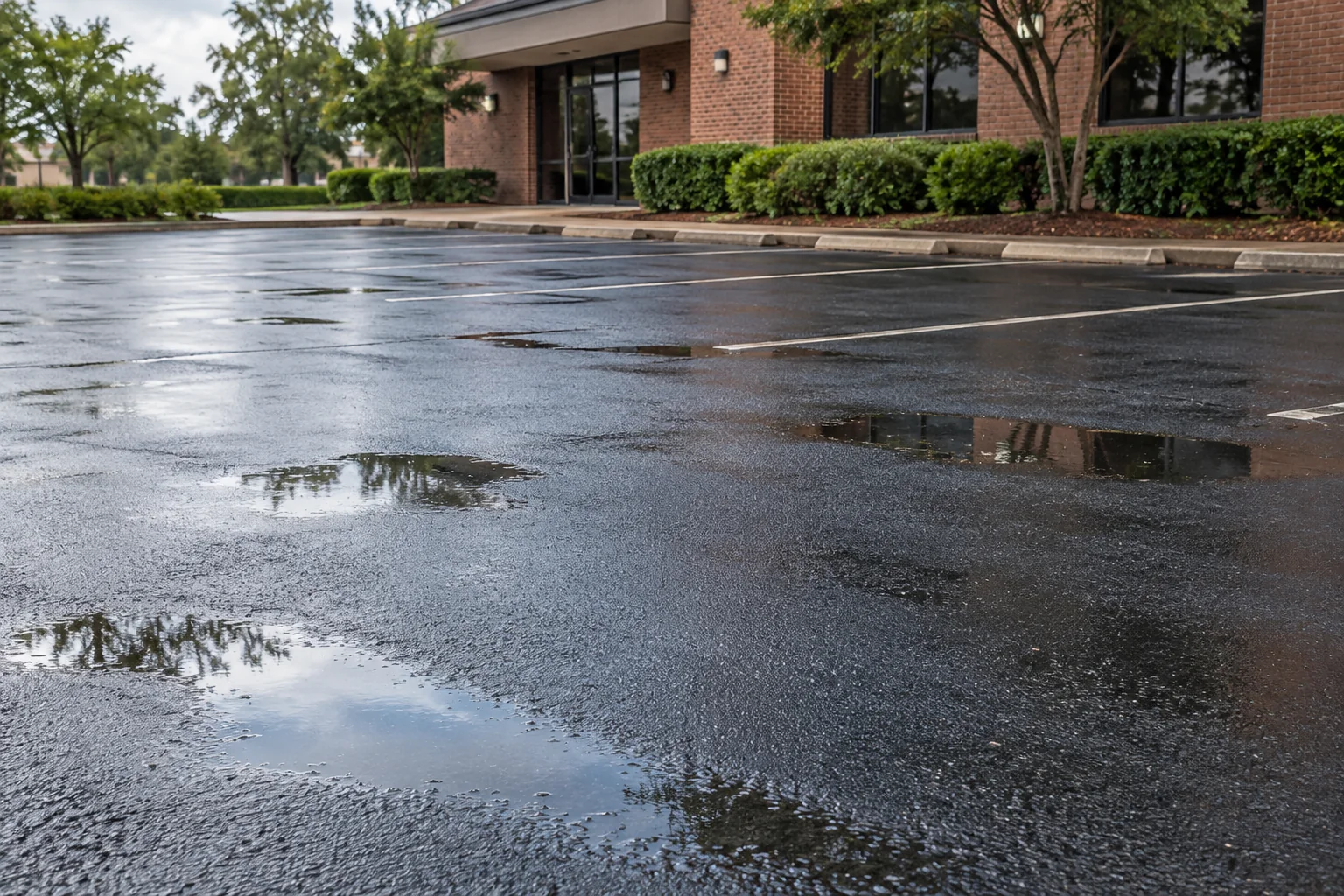
Begin with the actual water observation and project scope
Puddles after resurfacing raise questions about the finished surface, previous conditions and the work that was agreed. Start by identifying where water collects and when you observed it. A fresh-looking surface and a puddle photograph do not by themselves establish the cause or the complete responsibility for the condition.
The useful review combines the water observation with the actual scope and retained site features. Resurfacing and a defined drainage correction can involve different work. Ask what the project was intended to address and what evaluation supported the finished connection. A broad phrase about new asphalt should not replace the accepted description of work.
This guide helps organize a factual project discussion. It does not determine contract rights, warranty coverage or fault. Use the actual agreement and appropriate advice for those separate questions. Keep the observations, dates and scope clear so the responsible contractor or evaluator can understand the concern without relying on assumptions from surface appearance.
Use genuine before-and-after information when available
If you have photographs from before the work, retain their original dates, location and context. Compare the same area where possible and identify differences in angle or conditions. Do not manufacture a matched pair from unrelated images or use a reference image as evidence of the site's earlier condition.
If no before-work images exist, state that honestly. The accepted scope, location sketch, earlier notes or known history may still help frame the review. Avoid claiming that an area was previously dry or held water unless that statement is based on actual observation or records. An accurate information gap is more useful than an invented comparison.
Record the new water location with wide and close views from safe positions. Show surrounding surfaces, inlets, curbs and entrances that help identify the area. A close puddle image may describe water without explaining its relationship to retained features. Ask the evaluator what additional information is needed to understand the finished arrangement.
Record rainfall context and the visible water path
Note when the water was observed and the relevant rainfall context you actually know. Describe whether the concern recurs and where water appears to approach or leave the area. Do not infer exact rainfall quantity, depth or drainage grade from an image. Those details may need appropriate measurements or other information.
Show nearby outlets and retained connections where visible safely. The surface leading toward an inlet can be part of a different question from the condition of the connected drainage system. Ask which evaluation addresses each issue. A pavement photograph does not establish what is happening inside concealed drainage features.
Do not remove grates, enter structures or attempt a flooding test to demonstrate the concern. Follow project restrictions and arrange appropriate review. The owner can provide useful observations without altering the site or directing vehicles through the water. If current access is a concern, request interim instructions from the responsible parties.
Read what resurfacing and preparation actually included
Gather the accepted proposal, relevant plan and approved changes. Identify whether low areas, finished levels, inlet relationships or other drainage-related work were specifically included. The existing short FAQ correctly explains that a fresh surface does not guarantee old puddles disappear. The next question is what the actual project evaluated and agreed to address.
Preparation matters to the scope comparison. One project may include defined corrections before surface placement while another retains the existing arrangement under stated limitations. Ask the responsible contractor to explain the relevant work and records. Do not infer a complete preparation history from the color or smoothness of the finished surface.
If the project involved other trades or retained features, identify the handoff. A drain adjustment, concrete connection or separately owned area may have a different responsible party. Keep those boundaries visible rather than assume the surfacing contractor controlled every connected condition. The useful review starts from the actual agreement and documented work.
Ask for the evaluation and next step at the named location
Describe the concern to the responsible contractor with the location record and actual project information. Ask what needs review and whether another evaluator is appropriate. The response may begin with a site visit or measurements rather than an immediate repair detail. Record that next step without presenting it as a completed diagnosis.
If a correction is proposed, ask what it addresses, what remains and how it relates to the surrounding water path. A local surface activity should not automatically be interpreted as a whole-site drainage redesign. The owner needs the boundary, relevant assumptions and limitations to understand the proposed outcome.
If additional findings arise during review or preparation, agree on how they are documented and any changed scope approved. Keep the actual response tied to the named location. This is more useful than a general promise to fix puddles that leaves several separate water concerns and retained features unaddressed in the record.
Plan access for any review or return work
Tell the contractor about vehicle movements, deliveries and pedestrian approaches near the affected area. A return visit or correction may interrupt operations even if the original resurfacing is complete. Identify the property contact and who communicates restrictions to occupants. Do not assume that everyone who heard the first schedule knows a later visit is planned.
Ask who evaluates any temporary access arrangement and what owner actions are needed. A parking row or entrance may need to be clear before the review or work. If weather or another condition changes the sequence, obtain current instructions and pass them along accurately. Avoid directing activity into a restricted area based on an earlier expectation.
Follow project-specific reopening and use instructions after any activity. A dry-looking patch or completion of one task does not independently release every part of the property. Retain the completed scope, release and unresolved questions with the original project record. Future maintenance should be able to distinguish the initial work from the later response.
Prepare a useful post-resurfacing water request
Send the job-site address, actual work date if known, accepted scope, genuine earlier records and current water photographs. Identify the concern by a consistent location name and describe the observed rainfall context. Ask for the appropriate review and next step rather than assign a hidden cause from a single image.
Call or text Asphalt Solutions to discuss the property and relevant work information. Most projects occur at customer job sites. Visits to the Slidell contact location are by appointment, and phone availability is separate from construction scheduling.
A practical way to compare the original work and a return proposal
Imagine a manager reports water after a resurfacing project but the original offer only describes surface work within a defined boundary. Gather that accepted scope and any approved changes before assuming the new water request was already included. Ask the responsible provider to review the observation and explain the next step using the actual project information. This keeps the conversation factual without deciding responsibility from a photograph.
If a return proposal is prepared, identify whether it addresses one local area or a broader water path. Ask what preparation, retained-feature coordination and access restrictions are included. Compare those items with another offer only when the same concern and boundary are understood.
Keep the original work and later response as separate dated entries in the property history. A new patch photograph should not overwrite the earlier observation or imply that an internal drain question was evaluated when it was not. Clear records help another manager or contractor understand what changed, what was completed and which recommendation still requires a decision.
Questions about puddles after resurfacing
The direct answer
Ponding after surface work may reflect existing low areas, changed elevations or restricted drainage. The actual scope and before-work conditions are important records.
What to discuss before choosing a repair
Discuss the agreed finished elevations and what corrective options can fit them.
What to observe and record
- Compare dated before and after photos
- Record rainfall timing
- Show water outlets
A mistake to avoid
Do not infer a single cause from one photograph after a storm.
Continue with the right next step
Property conditions determine the final scope. These planning notes do not replace a site evaluation. How to use our pavement guidance