
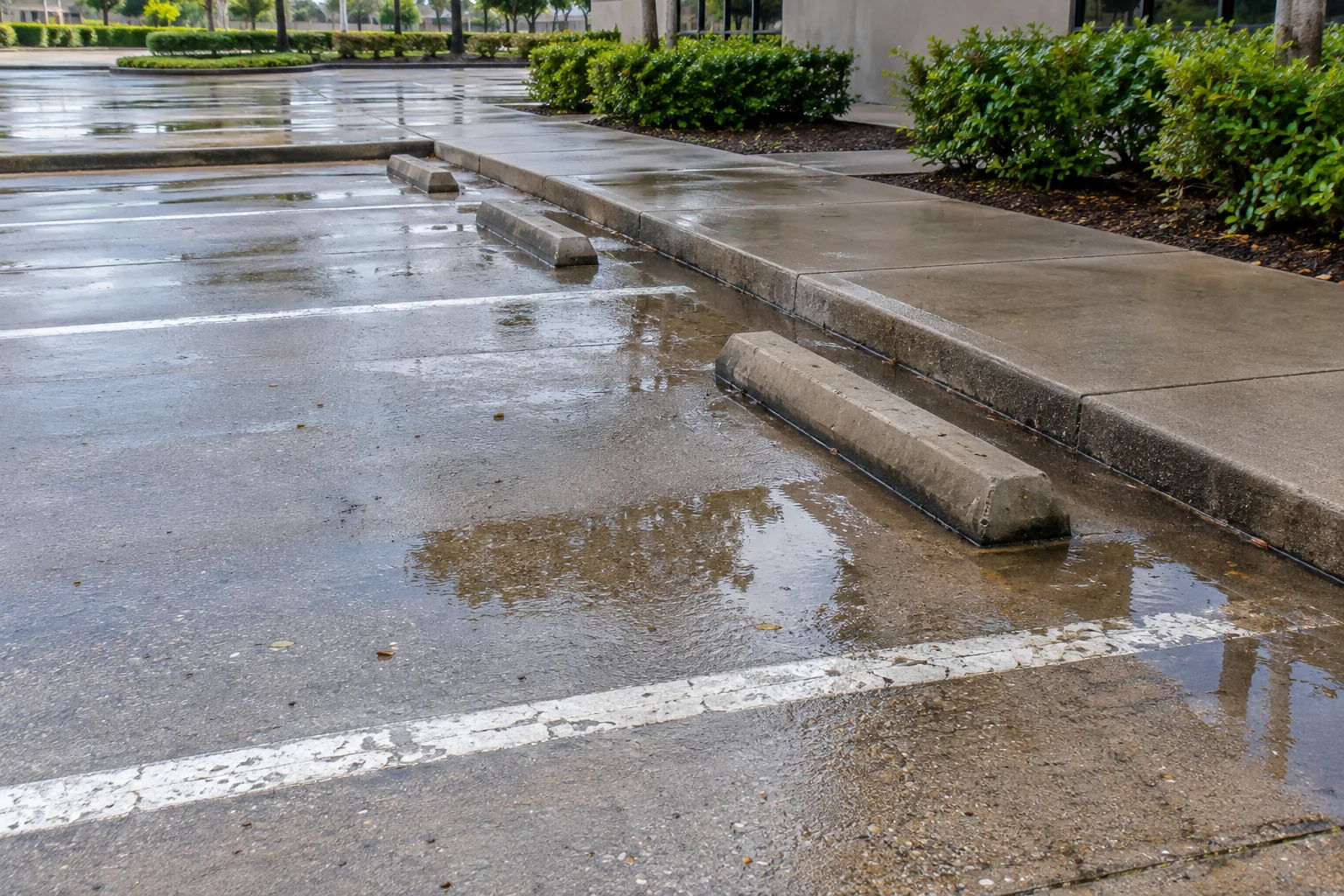
Show the wheel stop within the parking area
Water around a wheel stop should be reviewed in the context of the parking space and surrounding surface. The wheel stop is a visible feature, but its presence alone does not establish why water collects. Show the parking row, nearby curb, sidewalk and drainage features along with the puddle. A close photograph of water against concrete leaves too much of the site relationship out of view.
Describe what the water affects. It may collect where a driver exits, lie beside a walking connection or remain near a parking edge. Identify the particular spaces and whether the concern occurs in several locations. This helps the site discussion focus on the actual use affected rather than assume every wheel stop in the lot needs the same change.
Keep the initial request observational: water collects at these locations after rain, and you want the layout and pavement relationship reviewed. The evaluator can then explain what needs to be measured or checked. A photograph cannot establish drainage performance for the entire lot or certify that a proposed wheel-stop change will resolve the concern.
Document timing and the extent of collection
Take an overall view identifying the affected row and a closer image of the water if it can be done safely. Record the approximate time after rain and the conditions you know. If you have several observations, keep them separate rather than combine them into a single claimed duration. The difference between water seen during rain and water recorded later is useful context.
Show where the wet area ends and how it relates to painted lines, pavement patches and nearby drainage points. Include an image when the surface is dry if available. The dry view can reveal layout and visible surface features hidden by water. It does not establish unseen pavement support or the condition of a buried drainage connection.
Do not enter traffic lanes, stand behind reversing vehicles or move a wheel stop to obtain evidence. Property managers can plan a safe observation window when needed. An initial review request does not require an owner to measure puddle depth or reproduce runoff with a hose. Ask what information the contractor needs before assuming a test is necessary.
Review placement and elevations together
The useful question is how the wheel stop, parking use and surface elevations relate at this location. Ask whether the proposal addresses a layout issue, a pavement issue or both. Moving a wheel stop may change where vehicles stop without changing an underlying low area. Adding pavement can change surrounding connections without settling whether the intended parking arrangement remains suitable.
Include the sidewalk and walking route in the review. Explain where people normally leave vehicles and reach an entrance. A water concern should not lead to an isolated equipment change that ignores vehicle overhang or the space people use. If accessibility or another specialized design question applies, identify who will evaluate it for the actual property rather than infer compliance from a photograph.
Avoid selecting removal as the automatic answer. Ask what purpose the wheel stops serve and how that purpose will be handled if a change is proposed. The site review should connect any movement, replacement or pavement work to the intended layout. This guide does not prescribe a universal placement dimension or certify a parking plan.
Clarify drainage-system and pavement responsibilities
Describe nearby inlets, curb openings or other visible water connections without assuming they are blocked or functioning correctly. If drainage review is needed, clarify what it includes and who provides it. A pavement estimate should not silently stand in for an inspection of every pipe or outlet serving the lot.
Ask whether proposed surface work depends on another repair or a confirmed discharge route. The owner should understand the sequence before authorizing construction. If a separate drainage provider must supply findings, identify the needed information and how it changes the paving decision. Keep a pending dependency visible instead of treating it as a minor detail to settle after the surface is installed.
When property lines or shared parking areas are involved, confirm who can authorize changes. A water path crossing a boundary is not resolved by a sketch that sends it somewhere else. The responsible parties need to settle the actual design and coordination. This page offers preparation questions, not a drainage design or a determination of local approvals.
Make the scope more specific than move wheel stops
A written proposal should identify the affected spaces and explain the purpose of the work. If wheel stops are moved, removed or replaced, ask how their former locations and new connections are handled. If pavement is repaired, identify the boundary and the retained surfaces. These details help distinguish layout work from a correction to the surface where water collects.
Compare alternatives against the observed problem and intended parking operation. One option may address only a limited area; another may depend on broader layout or drainage decisions. Ask what each leaves unresolved and how the result will be evaluated. Do not compare prices as equivalent until the work boundaries and assumptions are clear.
Include markings and adjacent restoration if they are part of the plan. Ask who is responsible when different providers handle pavement, parking equipment and striping. The final arrangement should be communicated consistently. A proposal can be detailed about its own scope while still identifying a design or drainage question that must be settled before the work is scheduled.
Keep parking and walking access organized
Discuss which spaces and travel areas need to close and how users will be directed during the work. Include employee parking, deliveries and the route from parked vehicles to the building. If only part of a row can be closed, settle the sequence and temporary arrangement before construction rather than rely on drivers to interpret a changing work area.
Tell the contractor about peak use and any special operational needs. Agree who communicates with tenants or site users and who confirms reopening. A finished-looking surface or relocated wheel stop is not a substitute for the provider's release for actual use. Follow instructions specific to the activities performed and the conditions on the project.
At completion, review the agreed layout and repair boundary together. Keep genuine photographs that identify the affected spaces and any remaining concern. If later rain prompts a follow-up, provide timing and location rather than a bare puddle image. The written scope and before-work observations make it easier to discuss the actual result without claiming one visit proves performance under every storm.
An example of comparing equipment and pavement work
Consider a parking row where water is visible beside two wheel stops but not the neighboring spaces. Moving the blocks might change the vehicle stopping position without changing where water collects. Ask the contractor to compare the observed wet area with the existing layout and surface elevations before a relocation is chosen. If the proposed work includes a pavement correction, identify its boundary and effect on the walking connection. If it includes only equipment movement, understand that limited purpose. A marked overall photograph and the written scope can make this distinction clear. The decision should address the actual parking operation and findings rather than assume every puddle beside a wheel stop has the same explanation.
Bring the parking context to the initial call
Send Asphalt Solutions the actual property address, an overall parking-row view and safe photographs of the affected spaces. Explain where people walk and whether other providers have already reviewed drainage or layout. The first conversation can then identify what should be examined on site and what information is needed before selecting an activity.
Most projects are carried out at customer job sites. The Slidell contact location is available by appointment only; the listed hours mainly concern phone availability. Call or text to discuss access and the next step. A useful review keeps wheel-stop purpose, parking use, surface elevations and water observations in the same conversation instead of treating a concrete block as the complete explanation.
Questions about parking lot puddles around wheel stops
The direct answer
Wheel stops and parking geometry can influence where debris and water collect. A broader elevation and drainage review may still be needed.
What to discuss before choosing a repair
Ask whether the work changes surface elevation, stop placement or drainage.
What to observe and record
- Show wheel-stop placement
- Record low spots
- Note pedestrian routes
A mistake to avoid
Removing a wheel stop is not a complete diagnosis of a ponding problem.
Continue with the right next step
Property conditions determine the final scope. These planning notes do not replace a site evaluation. How to use our pavement guidance