
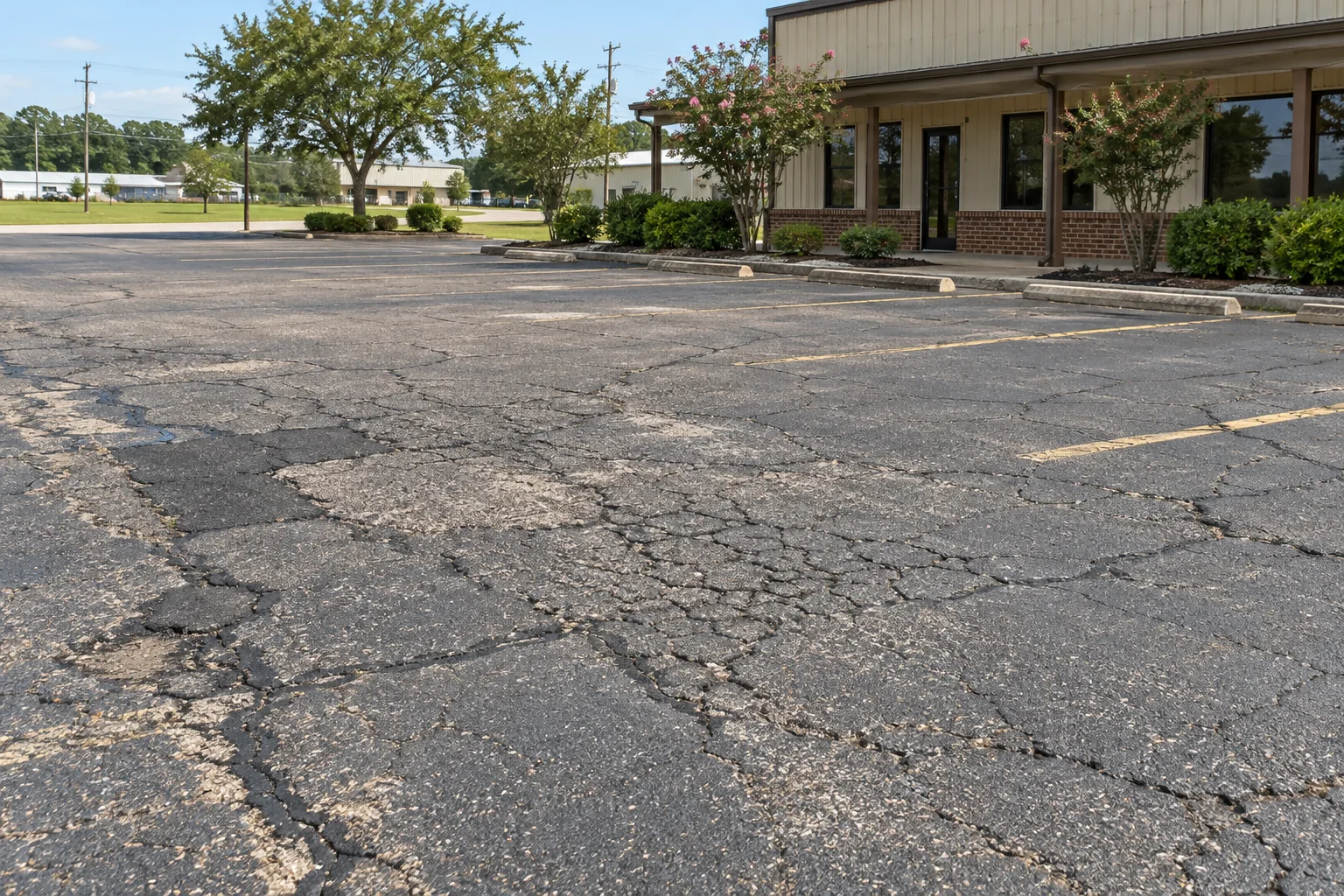
Start with an overall condition review
Cracking across many parts of a parking lot should be reviewed as an overall condition pattern. A close view of one damaged spot cannot explain the extent, different uses or retained pavement across the property. Start with a plan or wide photographs that locate the main patterns and earlier repairs. The evaluator can then explain what should be examined before work is prioritized.
Do not assume each crack is an isolated defect or that widespread visible cracking automatically means every area needs the same reconstruction. Different parts of a lot can have different histories and conditions. Ask the reviewer to distinguish those areas and explain how the findings relate to maintenance, localized repairs or broader rehabilitation options.
State the owner's practical goals: maintaining access, reducing recurring disruption, addressing particular damaged routes or planning an investment over time. Those goals help the discussion produce a useful comparison. They should be evaluated alongside actual condition findings rather than used to justify a predetermined treatment before the lot is reviewed.
Map the patterns by location and use
Divide the lot into recognizable areas such as the entrance, parking rows, delivery route and perimeter. Mark the crack locations and known repair boundaries on an available plan or overall photograph. Add safe representative close views for each area. The record should help the contractor connect a visible pattern to the actual part of the property being discussed.
Show wheel paths, turning areas and standing locations used by heavier vehicles where that information is known. Describe normal operations without assuming a particular vehicle caused the cracking. Include relatively sound-looking areas as well as the most damaged ones. A useful overview avoids presenting only dramatic close-ups that may hide meaningful differences across the lot.
Do not try to assign technical condition ratings from a few photos. Ask what observations or measurements are needed for the actual review and how they will be used. The owner's map is a preparation aid, not a certified pavement survey or a substitute for the evaluator's examination of the property.
Collect repair, treatment and water history
Share actual records of resurfacing, patching, crack activities and other work. Identify where each scope occurred and when, if known. A lot may include several construction periods or repair boundaries. If history is incomplete, state that clearly instead of treating the current surface as one known assembly of a single age.
Describe concerns that return after earlier activities and provide genuine dated photos where available. Recurrence helps identify a question for review, but it does not alone prove the cause or determine a warranty outcome. The evaluator should connect the current recommendation to the actual pattern and documented history.
Include safe water observations, known drainage changes and relevant utility work. Show locations and approximate timing rather than label the entire lot as a drainage failure. If a separate drainage provider has findings, share them with the paving contractor. Clarify which system questions are resolved and which remain dependencies before a broader surface project is chosen.
Compare localized work with broader options
Ask the contractor to explain which concerns a localized repair would address and which patterns would remain. A series of patches may have a limited purpose that should be understood before approval. Conversely, a broader proposal should explain why its boundary fits the findings rather than rely only on the fact that many cracks are visible.
Compare maintenance and rehabilitation options by function, preparation, removal, retained conditions and expected result. They may not be interchangeable solutions. Ask what each option assumes about the existing pavement and what additional review would change the recommendation. A useful comparison makes the differences visible before the owner compares totals.
This guide does not prescribe a universal repair depth, pavement assembly or service-life promise. Those decisions depend on actual site findings and appropriate technical work. The owner should receive a property-specific explanation of the proposed approach, including its limits, rather than a generic promise that one activity makes every crack-related concern disappear.
Make investigation and change decisions reviewable
If further investigation is recommended, ask what question it is intended to answer and where it will occur. Clarify its extent and limitations and how the result informs the proposed work. Findings from a limited location should not be treated automatically as complete knowledge of every area of a varied lot.
Identify which decisions can be made now and which must wait for additional information. A planning estimate may include allowances or pending scope items, but those should be understandable. The owner needs to know what is firm, what is provisional and what action is required before scheduling construction.
Discuss how unexpected conditions during authorized removal would be communicated and priced. Identify who can approve added work and how the approved boundary is updated. A clear change process is especially valuable in a lot with multiple repair histories. It keeps new information attached to the project decision rather than let it disappear into a general rehabilitation label.
Plan phases around a functioning property
Tell the contractor about opening hours, tenant access, deliveries, collection routes and other operations that share the lot. Identify routes or parking areas that cannot close at the same time. The phase plan should reflect actual use rather than divide the surface into convenient rectangles without considering how people reach the building.
Agree who reviews and communicates temporary parking and walking arrangements. If accessibility or specialized design questions apply, identify the responsible evaluation for the actual property. A line on a construction sketch is not by itself confirmation that a temporary route works for every required use.
Clarify the handoff between preparation, repairs, paving, markings and any separate provider activity. Ask who confirms reopening at each stage and what restrictions apply. Follow instructions for the actual work and conditions. A phased project is easier to manage when users know which area is available, which is closed and who communicates changes to that arrangement.
An example of comparing phases with different purposes
Consider a lot with widespread cracks in older parking rows, a recently repaired delivery lane and a busy entrance that must remain available. A proposal divided into phases should explain more than which rectangle is completed first. Ask which condition each phase addresses and what remains usable for parking, walking and deliveries while that work occurs. If localized repairs are proposed now and broader work later, identify the purpose and limits of the initial scope. If a larger rehabilitation is proposed, understand how retained areas and existing repairs affect the plan. The decision should connect actual findings, operational constraints and clear boundaries. A phase price should not be interpreted as a complete solution for the whole lot when it deliberately covers only selected concerns and leaves other areas for a separate decision.
Keep priorities and the completed scope traceable
A multi-area plan should identify the purpose and boundary of each phase, what remains and what is deferred. Keep that record with the condition map and approved changes. It helps later discussions distinguish completed work from an area intentionally retained or scheduled for a different project.
At closeout, use genuine photographs that identify the finished areas and connections. Discuss actual care and reporting instructions with the provider. Do not interpret a uniform new appearance as proof that every concealed condition or future maintenance question has been resolved. Expectations and warranty terms should follow the actual agreement and retained conditions.
Contact Asphalt Solutions with the property address, an overall lot view and known repair history. Most work is handled at customer job sites. Visits to the Slidell contact location are by appointment only, and the listed hours mainly describe phone availability. Call or text to discuss an overall review and the operational constraints that need to shape the planning conversation.
Questions about widespread cracking across a parking lot
The direct answer
A broad crack network needs an overall condition assessment. Treating each line as a separate cosmetic issue may overlook more extensive deterioration.
What to discuss before choosing a repair
Compare maintenance, rehabilitation and reconstruction using the lot’s actual condition.
What to observe and record
- Map patterns across the lot
- Identify wheel-path damage
- Record prior repairs
A mistake to avoid
A low-priced coating should not be represented as rebuilding failed pavement.
Continue with the right next step
Property conditions determine the final scope. These planning notes do not replace a site evaluation. How to use our pavement guidance