A practical project scope
Identify the crack pattern
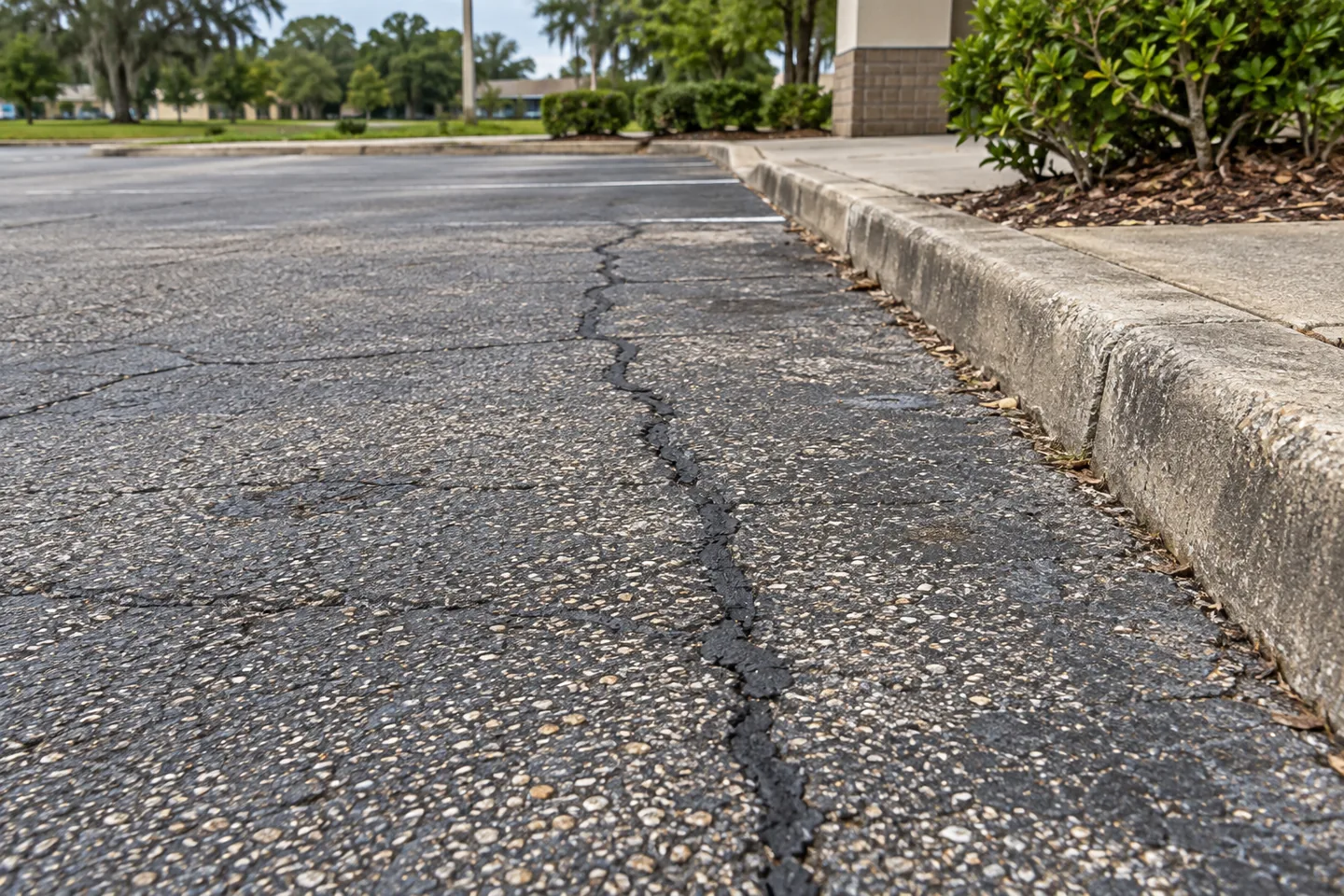
An isolated joint or linear crack is different from a network of interconnected fatigue cracks. Photograph the pattern and the surrounding surface to help explain what is happening.
Keep water from becoming a larger problem
Open cracks can allow moisture into supporting material. Appropriate cleaning and treatment may help maintain suitable pavement, but soft or moving areas need additional evaluation.
Understand the limits of crack treatment
Filling or sealing is maintenance, not a way to restore a failed base. Wide openings, vertical movement, and repeated cracking may call for removal and repair.
What to share for an estimate
- The property address and approximate area.
- Photos of the surface, edges, and any drainage concerns.
- Vehicle types, access needs, and scheduling constraints.
- Whether you need installation, repair, maintenance, or a comparison of options.
Related services
Explore Louisiana service areas or pavement planning guides.
Plan the work with confidence
Crack repair should match the crack’s condition, movement and surrounding pavement. A suitable maintenance treatment can limit an opening, while a crack network associated with failed support needs a broader repair conversation.
In this planning guide
Read the pattern without turning it into a diagnosis
Photograph crack direction, width changes and surrounding damage. Note whether an opening is isolated, part of a connected network, near an edge or following an old utility cut. These details help frame the assessment but do not establish the cause by themselves. Record when the crack appeared and whether adjacent material moves or settles. After-rain photos can show water involvement. Keep guesses separate from observations so the proposed treatment responds to evidence. A crack’s appearance alone is not a reliable basis for choosing material, repair depth or a promise of long-term performance.
Distinguish crack maintenance from rebuilding pavement
Filling or sealing selected cracks is different from removing failed asphalt and repairing supporting conditions. Ask which cracks are suitable for the proposed treatment and which are excluded. An interconnected pattern, movement or broken material can change the appropriate approach. Covering every visible line with the same product may leave structural concerns unresolved. Compare the preparation, material and intended purpose described in proposals rather than only the treatment name. If the work is an interim measure, record that limitation. A maintenance treatment should not be presented as adding the structural capacity of a new pavement section.
Review cleaning and application details
The opening must be evaluated and prepared for the proposed material and method. Ask how loose material and debris are addressed and what conditions are required for placement. Old repairs, vegetation, oil contamination or wet areas may affect the discussion. Narrow, wide and moving openings may not all be handled identically. The scope should make the intended operation understandable without asking the owner to prescribe construction details from a photograph. Keep the material information available from the work with the maintenance record. A product name is useful, but preparation and site suitability are equally important comparison points.
Consider edges, drainage and previous overlays
Cracks near unsupported edges, drains or old utility trenches may be connected to conditions beyond the visible opening. Show adjacent ground, water pathways and previous repair boundaries. If a crack has returned through an overlay, provide the earlier surface history where known. Ask whether the proposal addresses the relevant surrounding conditions or only the opening. Some issues need separate support or drainage work, and those responsibilities should be clear. Do not assume that a new surface or crack treatment makes the underlying discontinuity disappear. Understanding retained limitations helps set realistic expectations and compare alternatives.
Track change after the repair
Take dated photos from consistent positions and retain a sketch of treated cracks. Record changes in vehicle use, water observations and nearby utility work. Compare later movement with the original condition rather than relying on memory. Follow reopening and care instructions specific to the treatment. If a crack widens, breaks up or is accompanied by settlement, discuss the changed condition rather than automatically applying another identical repair. Maintenance records support an informed next decision. They are especially useful when a property changes owners or managers and the next person would otherwise have no history of the pavement.
What changes the price?
Measured treatment quantity, opening condition, preparation, access and the need for adjacent structural repairs affect price. A unit rate does not answer whether the same cracks and operations are covered in two estimates.
Request a written, property-specific proposal. A photo inquiry starts an assessment conversation; it is not a fixed price, confirmed construction date or final engineering specification.
A practical sequence for the project
- Map cracks and surrounding conditions
- Review suitability
- Distinguish maintenance from removal and repair
- Agree on preparation and material
- Follow work-zone and reopening guidance
- Retain a dated treatment map.
Prepare your inquiry
Send the property address, a wide view of the area, close photos of relevant defects and the result you want. Include vehicle types, water observations, prior repairs and access restrictions. State whether your main concern is usability, maintenance, drainage, layout or appearance so the discussion starts with your priority.
Want to start with a text?
Text the property details to (985) 788-0493 or use the quote form. For a larger business property, include the person coordinating access and the operating schedule. Avoid putting confidential tenant or customer information in photos.
Useful questions before approving the work
| Ask about | Get clear in the proposal |
|---|---|
| Work boundaries | Included areas, excluded areas and connections to pavement that remains |
| Hidden conditions | Assumptions, documentation and approval before additional work |
| Property operations | Closures, pedestrian routes, vehicle storage and communication |
| Finishing and care | Cleanup, agreed finishing work, reopening guidance and follow-up responsibilities |
Continue with the details that fit your property
Planning guidance reviewed October 6, 2026. This guide helps organize a contractor conversation; final quantities, materials and construction details depend on the property. Read our guidance and source policy.
Make a crack-location record before discussing treatment
Photograph cracks with enough background to show where they lie in the property. Identify whether each is near an entrance, pavement edge, retained concrete or a previous repair. Include a closer view only after the wider relationship is clear. Describe the visible pattern and any practical concern without assigning a hidden cause. A long crack, a branching pattern and a crack beside a patch may prompt different assessment questions, but photographs alone do not establish the correct repair method.
If the property has many cracks, divide it into named areas rather than sending an unlabeled collection of close-ups. Tell the contractor whether the request concerns selected locations or a review of the entire paved footprint. Ask how the proposed treatment locations will be documented and whether other damaged areas are excluded. The word crack repair is too broad to compare prices without understanding the included work. A treatment line in an example does not define the method for the actual property.
Clarify the relationship to other pavement work
Ask whether the proposal covers crack treatment alone or preparation for another maintenance operation. Identify any potholes, loose areas, previous patches or visible movement that also need review. These observations should not be silently folded into a crack-treatment price. The contractor should explain which concerns the proposed work addresses and which need separate decisions. If an area is unsuitable for the initially proposed treatment, ask how that finding will be communicated and how additional work would be authorized.
Where a crack is close to a concrete joint, curb or drain feature, show the whole connection. Tell the contractor what must remain and whether the location affects vehicle or pedestrian access. If water repeatedly appears nearby, record its timing without concluding that the crack caused it or that treatment will eliminate it. Keep drainage and retained-feature questions explicit in the proposal. That makes it possible to compare scope without treating every visible line as an interchangeable defect with an identical solution.
Keep treatment expectations and access instructions together
Discuss the practical work area before scheduling. A narrow treatment location can still interrupt a doorway, entrance lane or parking space that the property depends on. Ask how people will recognize the temporary boundary and who receives any change in access instructions. Identify an owner-side contact who can answer location questions. Obtain the actual instructions for returning vehicles and pedestrians to the treated area; do not substitute a generic waiting period from another product or an unrelated project.
After the work, retain the agreed location record and photographs that show the treated areas in context. Review any areas intentionally left out and record separate recommendations as future decisions rather than completed work. A visible treatment line can look different from adjacent weathered pavement. Ask about the particular outcome specified in the proposal instead of treating appearance as a promise that all cracking will disappear permanently. Dated observations and a clear scope support useful follow-up if a question develops later.