
A painted boundary starts with a layout decision
A parking stripe is a painted line that helps identify a parking space or another intended boundary on a paved surface. It makes the layout visible to drivers, but the line and the layout are separate decisions. A bright, straight stripe can accurately reproduce an arrangement that no longer suits the property. Before asking for fresh paint, decide whether the job is restoring an approved existing arrangement or changing how the lot functions.
Property use can change without a corresponding update to the old markings. A different tenant may bring different delivery activity, a doorway may become busier or a former storage area may become customer parking. Describe those changes before the restriping scope is prepared. A contractor looking only at the faded lines may not know that the owner expects a different outcome. A short written explanation of how the lot is used is often more useful than saying that the lines simply need to look new.
The initial discussion should identify the limits of the marking work and the person responsible for layout approval. If a designer or another professional supplies the arrangement, provide that information before painting is scheduled. Keep a dated reference so everyone knows which version controls the work.
Distinguish refreshing lines from changing the arrangement
Refreshing an existing layout generally starts with confirming which markings are to be restored. A change in layout raises additional questions about old marks, space arrangement, circulation and connections to pedestrian areas. Do not combine both ideas into a request for restriping without explaining the intended result. The preparation and coordination can be different, and the contractor needs a clear basis for pricing the work.
Consider a lot with faded spaces and a confusing former loading area. Painting the visible lines may make both arrangements easier to see without resolving which one drivers should follow. Ask how obsolete markings will be handled and how the intended pattern will remain understandable. The answer may require a layout decision before a paint proposal can be finalized. A clean-looking surface alone does not settle the conflicting directions.
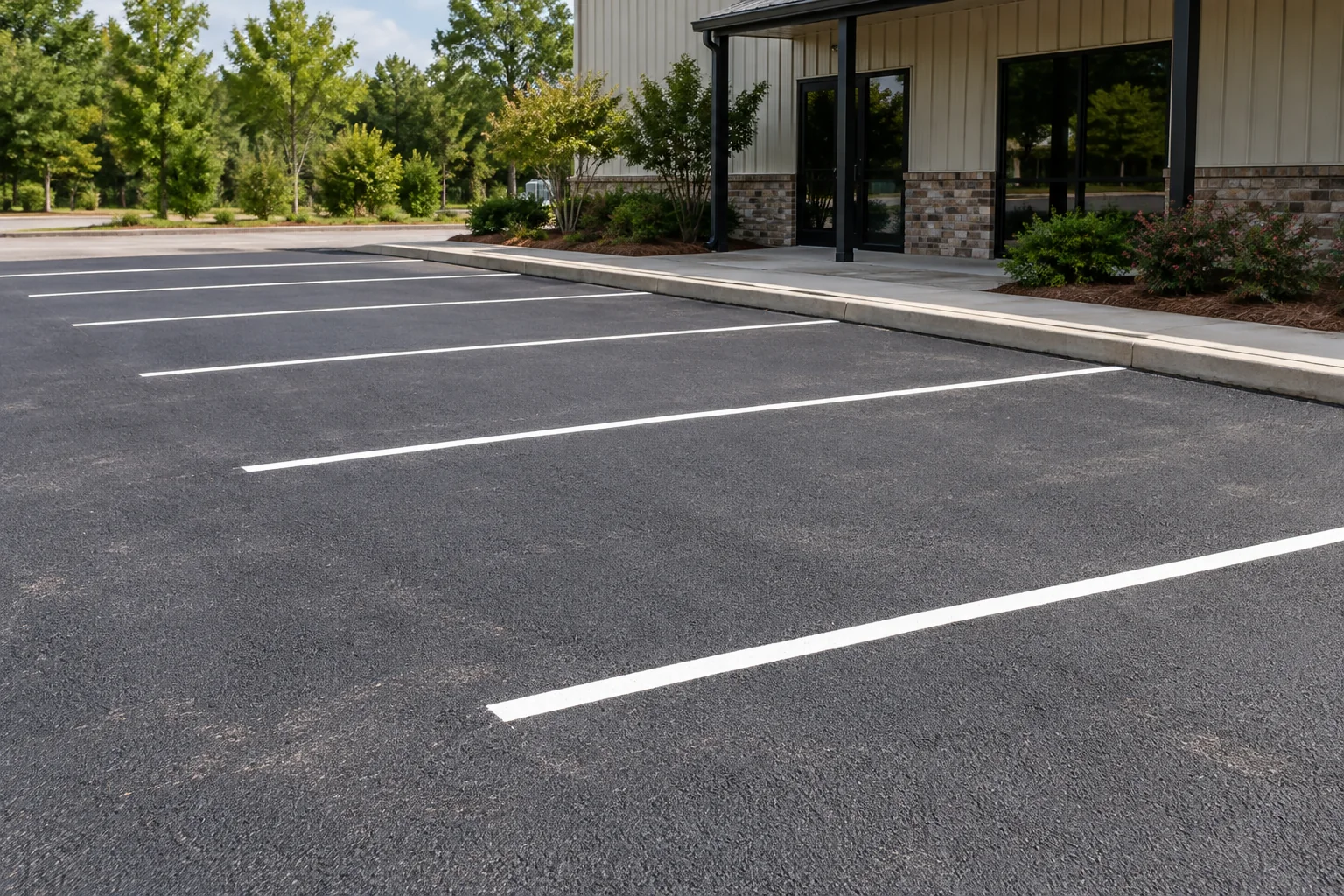
Accessible spaces, access aisles and required routes deserve their own review. Copying an existing symbol or adding blue paint does not establish that the complete arrangement meets applicable requirements. Have the relevant layout evaluated by the appropriate professional. The educational parking-stripe example shows ordinary lines; it does not provide dimensions, space counts, signs or a compliance plan for your property.
Surface condition affects the scope before paint is applied
A marking job takes place on an existing or newly treated surface. Tell the contractor about planned patching, resurfacing, sealcoating or other work so striping is scheduled in the right sequence. Painting an area that another crew will disturb can create avoidable rework. Ask who coordinates the activities and what condition the surface must reach before the marking work begins. Product and project instructions should guide the actual timing.
Visible dirt, vegetation, loose material or contamination may need attention before painting. Ask what preparation is included rather than assuming that every cleaning activity is part of a line-painting price. A contractor may identify conditions that need separate treatment or affect the proposed work. Document those limitations clearly. A promise to apply a new stripe is different from a promise to correct every underlying surface problem.
Also point out cracking, depressions and areas where water collects. Paint can improve the visibility of a boundary, but it does not restore pavement support or correct a low area. If both pavement repair and striping are needed, ask for the responsibilities and sequence to be shown separately. That makes it easier to understand whether a quote addresses the reason the lot is difficult to use or only its faded appearance.
Make the marking inventory specific enough to compare
A useful quote identifies the actual types of markings included. Ordinary stall lines, access-aisle hatching, arrows, lettering and other markings are not interchangeable units of work. Ask the contractor to identify what is included within the project boundary and what is excluded. If quantities are preliminary, record what will be confirmed before the final scope is approved. This prevents a broad phrase such as paint parking lot from carrying several different expectations.
Ask how the proposed marking material relates to the surface and use of the property. An owner can request the product description and relevant application instructions without trying to specify a product solely from a web article. Discuss any limitation associated with weather, surface condition or recent pavement treatment. A responsible comparison uses the actual proposal and its assumptions rather than a generic expected lifespan promised for all lots.
If the layout changes, include the handling of old markings in the comparison. If a property supplies its own plan, clarify who verifies that the plan is the approved version. If the contractor is asked to review the arrangement, identify what that review includes and whether another professional is needed. Keep layout approval distinct from the crew's responsibility to install the approved markings.
Plan vehicle removal, customer access and reopening
The contractor needs access to the areas being marked. Identify who will move vehicles, how tenants will be notified and what happens if a space remains occupied when work begins. A property manager should also discuss deliveries, refuse collection and other scheduled activity that could cross the work area. These details can affect the sequence even when the physical painting operation is limited.
For an occupied business, ask whether the work can be arranged in stages and what restrictions each stage creates. Do not assume that retaining some open spaces also preserves a suitable route to every entrance. Explain pedestrian needs and request a project-specific access plan. Temporary instructions should be understandable to the people using the lot, including anyone arriving after the first announcement. Name the person responsible for updating those instructions if the schedule changes.
Obtain reopening instructions for the actual product, surface and conditions. A stripe that looks dry from a doorway is not an authorization to drive across it. Ask who releases an area for use and how the property manager will be told. Keep that instruction with the work schedule so staff do not make conflicting promises to customers. When other pavement work is involved, confirm whether it creates additional restrictions beyond the marking operation.
Use a simple comparison and completion record
Imagine that one offer covers repainting ordinary spaces and another also includes obsolete-mark removal and a specified set of directional markings. The totals cannot be compared as the same scope until those differences are understood. Ask for the inventory, preparation, layout responsibility and access assumptions to be shown clearly. Then compare the same items rather than dividing each total by the number of visible parking spaces.
At completion, review the work against the approved scope and layout reference. Note any unfinished areas that were occupied or unavailable, and obtain a clear plan for returning to them if that is part of the agreement. Keep the completion date, product information supplied and any maintenance instructions. These records help when a future tenant or maintenance provider asks which arrangement was intended and when it was last refreshed.
To discuss faded lines or planned pavement work with Asphalt Solutions, call or text the actual property address and photographs showing the whole lot as well as the affected markings. Explain whether you want to preserve the existing arrangement or review a change. Work is normally handled at customer job sites. Visits to the Slidell contact location are by appointment; the listed phone availability is separate from site-work scheduling.
Questions about parking stripe
Meaning in plain language
A parking stripe marks a space or boundary on a parking surface. Layout, visibility, surface preparation and the intended circulation pattern all matter.
A practical example
A fresh painted line can reproduce an unsuitable layout. Review how the property is used before copying its old marks.
Use the term in your project discussion
Confirm the layout before repainting rather than automatically copying existing lines.
Details that matter
- Space layout
- Surface condition
- Traffic circulation
A mistake to avoid
Fresh paint does not make an incorrect layout correct.
Continue with the right next step
Property conditions determine the final scope. These planning notes do not replace a site evaluation. How to use our pavement guidance