
Compare the new proposal with the earlier patch record
For a recurring pothole, keep the actual earlier work description where available rather than infer what was installed from its present appearance. State the known date, location and observed sequence. An owner may know that a patch was placed without knowing the preparation or material. Mark those details as unknown instead of turning a recollection into a technical finding.
Give the next provider the same overall and defect views when comparing options. Ask how the proposed boundary and task differ from the earlier work, what supporting conditions were evaluated and whether a separate water-related question remains. A larger-looking patch on a photograph does not independently establish that a more complete repair has been specified.
Keep the approval process clear if evaluation identifies additional work. The owner should understand who can authorize a change, what the changed task includes and how access will be managed. An initial visit can identify a dependency without settling every hidden condition. Retain the explanation and current scope together so later review does not rely on a broad phrase such as fixing the same hole again.
At completion, keep genuine location images and the provider's instructions for use. Record a deferred or excluded item separately. A later concern should identify the actual behavior and location without assigning a cause or determining warranty coverage from appearance alone. Contact Asphalt Solutions by call or text with the property address and known history; most work is at customer sites, and Slidell contact visits require an appointment.
Document how the patch failed
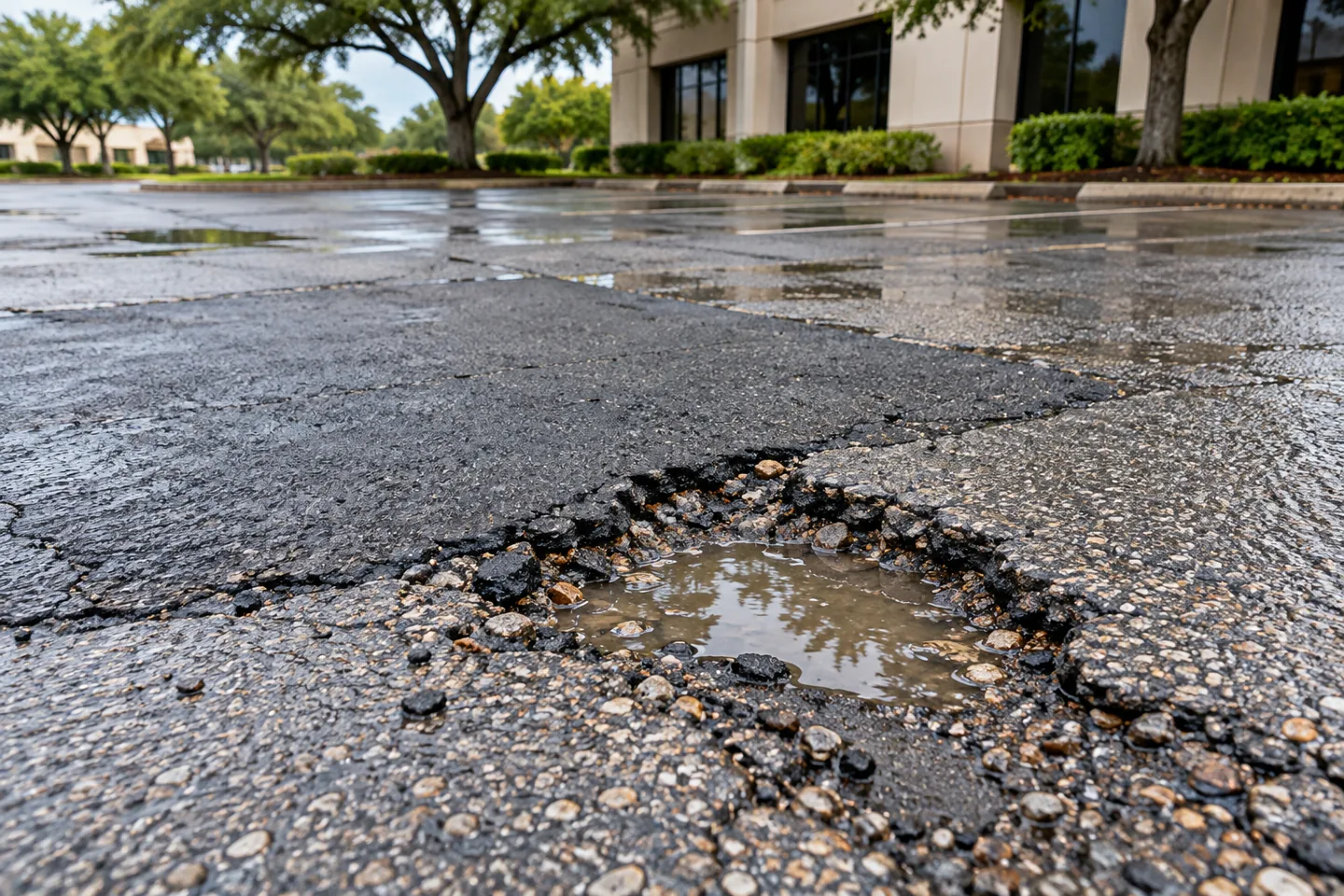
A recurring pothole can be frustrating because the surface appeared repaired and then opened again. Begin by identifying what actually returned. Did material come loose inside the patch, did the edge separate, or did another opening develop alongside it? These are different observations. Photograph the previous patch boundaries and the surrounding pavement together so the estimator can discuss the failed area in context.
Record the approximate repair date, the first sign of renewed damage and any known construction method. Keep the earlier invoice or proposal if available. You do not need to know the material brand or thickness to begin an inquiry. An honest history with gaps identified is more useful than an assumed explanation such as “bad asphalt” that a photograph cannot establish.
Include a wide photo of the route and a closer view from a safe position. Note whether the damaged area is in a wheel path, vehicle turn, parking stall or drain approach. Explain whether the new opening grew gradually or appeared after a particular event. The purpose of this record is to identify assessment questions, not to diagnose all layers beneath the surface.
Look beyond the visible opening
The visible hole may be smaller than the area requiring attention. Adjacent cracking, movement or previous patch edges can affect the useful repair boundaries. Ask the assessment to explain how the proposed limits were selected and which surrounding material will remain. A price for filling the opening is a different description from a repair that removes a defined damaged zone.
Moisture, weakened support, loading and repair preparation can be relevant to recurring damage, but the actual cause needs property-specific assessment. Report standing water, runoff across the location or changes in nearby drainage. If water observations are absent, say so; do not invent them to obtain a larger repair. The estimator should distinguish what is observed from what needs investigation.
Ask whether the proposed work assesses the condition beneath the removed pavement and what happens if unsuitable material is found. Identify any allowance, exclusion or change-approval process. A proposal need not pretend every hidden condition is already known, but it should make the uncertainty understandable. This is especially useful when an earlier surface treatment did not last as expected.
Compare temporary attention with a defined reconstruction
Some work addresses an immediate surface opening, while a more involved repair can include removal, preparation and reconstruction of a larger area. Ask the contractor to describe the purpose and limits of the selected method. A short-term response should not be mistaken for a promise that the surrounding pavement has been rebuilt or that every recurring condition is resolved.
Compare proposals by the operations included. Clarify how damaged material is removed, which boundaries are prepared, what support is retained or corrected and how the repair meets existing pavement. The words “patch pothole” alone do not answer these questions. Two prices can differ because they describe different retained conditions, not simply because one company charges more for identical work.
Crack treatment, sealcoating and striping have roles different from rebuilding a pothole. Ask where they fit in the sequence if they appear in the quote. Coating over distressed pavement does not replace missing structural material, and paint does not correct a damaged travel surface. Address the actual repair need first, then discuss suitable maintenance or marking work for the remaining area.
Describe the vehicles and movements at that location
A defect near a loading route may experience different use from one in a residential driveway. Tell the estimator about the vehicles, frequency of visits, stationary turning and any standing load. Include occasional refuse or delivery vehicles even if they are absent during an assessment. The repair discussion should reflect the location’s intended use rather than assume every paved area carries passenger vehicles only.
If vehicles repeatedly cross the previous patch boundary, show that route on a simple sketch. Identify a tight turn or low-speed maneuver where useful. Do not infer a final pavement design from vehicle weight alone; describe the actual operation and ask how it informs the scope. Any changed use since the original pavement or earlier repair should be included in the history.
For a business property, coordinate who can close the affected route and which alternative is available. A small pothole can occupy a critical entrance, so the operational effect may exceed the visible area. For a home, explain driveway and garage access. In either case, confirm the construction boundary and reopening instructions before promising normal use at a selected time.
Define water-related and adjoining work separately
If the hole lies near a drain, curb or concrete transition, ask how that interface is handled. Repairing asphalt around a structure is not automatically the same as repairing the structure or its outlet. Identify which features are included and who handles separate operations. An asphalt-only approval should not be assumed to cover every nearby drain or concrete concern.
Where water collects, record the apparent water path and nearby features during safe observations. Ask whether the repair changes finished elevations and what drainage-related work is included. A new patch should not be described as a complete drainage correction unless that work is actually assessed and specified. Equally, a returning pothole does not establish from appearance alone that drainage is the sole cause.
Ask how the new repair differs from the old one in boundary, preparation or retained support. The answer should relate to the observed condition rather than rely on a broad material promise. Keep that explanation with the proposal. It gives you a practical reference for approving the work and later understanding what was changed if another concern appears nearby.
Make the inquiry and approval useful
Send the address, defect location, repair history and wide and detail photos. Include observed water, vehicles and access constraints. Ask for a scope discussion that distinguishes retained pavement from rebuilt areas. Approximate dimensions help locate the concern, but they do not establish measured quantities or the final construction limits. The on-site assessment should address those details.
Before scheduling, compare preparation, boundaries, related work and exclusions alongside the total. Identify the authorized approver for changed conditions and the contact responsible for access. Request project-specific reopening guidance for the intended vehicles and movements. A finished-looking repair should not be taken as permission for every turning, standing or loading activity.
Asphalt Solutions discusses asphalt repair for homes and commercial properties across Greater New Orleans and the Northshore. Use the general quote form for a home or an initial repair question, or the commercial form for a business lot with operating constraints. Call or text (985) 788-0493 with the location and concern. The inquiry begins assessment; it does not guarantee a repair lifespan or confirm a construction appointment.
Questions before you plan the work
Bring the property facts to the conversation
Driveway paving, asphalt repair and concrete services address different project questions. Compare the appropriate scope for your property.