
The decision in plain language
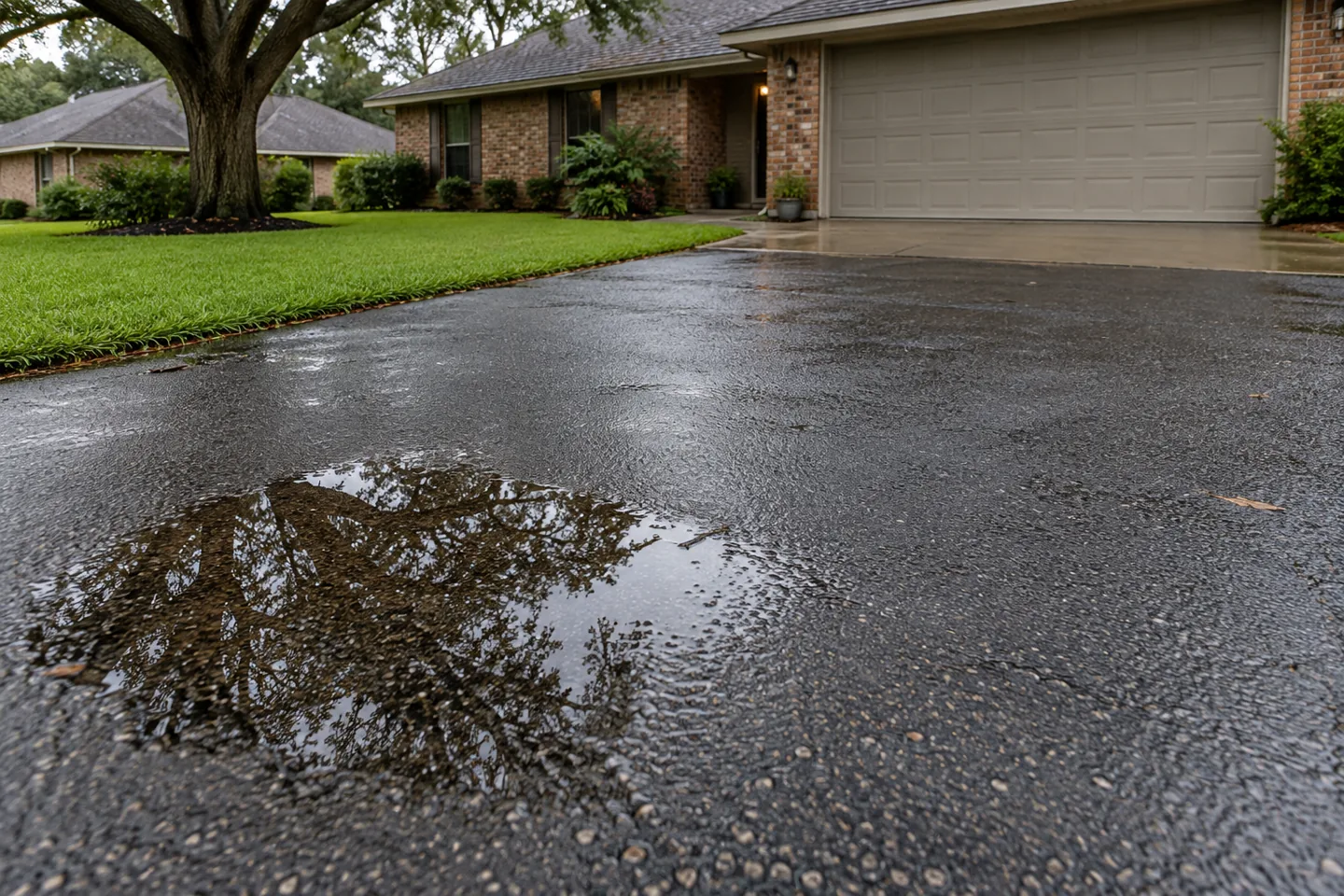
Timing and context make a puddle photo more useful than a single isolated image.
The situation to discuss
Use a safe repeatable position and note when rainfall stopped. Include the source direction and nearby connections in the view.
Your five-point decision sheet
Use these headings on a simple sketch or in your project notes. Under each one, write the actual property observation, the question you still need answered and the person responsible for the decision. Leave an unknown item marked as a question instead of assuming it is included.
- Where does the water observation sit within the proposed pavement section?
- What rain-event and photograph timing is actually known?
- Which consistent views and fixed landmarks connect the observations?
- What visible extent is recorded without invented depth or cause?
- How does the offered scope address the concern and what remains separate?
What not to assume
One photograph cannot establish performance during every storm.
Turn the discussion into a clear work boundary
Keep a copy of the marked site sketch with the estimate. Identify the area being authorized and any adjoining feature that must remain protected or available. If the contractor recommends an investigation or a separate trade, record that next step before treating the proposal as a final solution. A planning guide helps you ask questions; it cannot establish hidden conditions from photographs.
When a decision changes the work, request an updated description showing what was added, removed or deferred. Confirm how any additional quantity will be measured and approved. Make sure the person giving the approval has authority for that part of the property. This prevents a useful site conversation from becoming a different job than the one the owner expected.
Bring the right information to the visit
Send your address, the overall project goal and photos showing this specific connection or operating area. Include a wide view for context and a closer view of the detail under discussion. Describe any timing or access constraint that affects the decision. Avoid placing yourself in traffic or entering inaccessible structures to collect information.
Give the puddle a recognizable property location
Start with a wide photograph that identifies the affected driveway or parking section in relation to fixed features. A garage corner, retained curb or entrance can help locate the area after parked vehicles and everyday surroundings change. Use the same plain section name in later photographs and the estimate discussion. Explain whether water appears inside the proposed work area or on neighboring pavement. A close image of water without context can be hard to connect to the actual property. The useful starting point is a located observation that the contractor can discuss with the requested scope, rather than an assumed explanation of why the puddle exists.
Record the event and the photograph separately
Note the date of the rain event and the time or general window when the photograph was taken. State what the owner actually knows about the event instead of inventing a rainfall amount from memory. A photo taken during rain and one taken later describe different observations. Keep that distinction visible in the record. If the timing is uncertain, say so and identify the source of any weather information you share. This helps a contractor understand the sequence without treating one image as a complete account of the rainfall, the property's drainage behavior or the conditions below the pavement.
Use consistent views across several observations
When relevant photographs already exist, connect them using fixed property landmarks and the same section names. For future observations, an ordinary permitted viewing point can help keep the framing recognizable. The images do not need to be identical to be useful, but explain a changed angle or an obstructed view. Avoid labeling two different locations as one before-and-after comparison. The purpose is to document where water was visible and how the owner observed it at different times. A consistent record gives the estimate conversation more useful context than a collection of close photos whose dates and locations are unclear.
Distinguish the visible boundary from an assumed depth
Describe where the water appears to reach in the photograph using recognizable landmarks. Keep that visible extent separate from a depth or volume that was not reliably measured. A surface image does not establish every hidden contour or condition. If another provider supplied a measurement, record its source and method with the actual information. The owner can then share what is known without giving a guessed number the status of a confirmed finding. Ask the contractor which additional information is useful for reviewing the requested pavement work instead of treating a distant photo as a complete survey of the area.
Keep rain and other water observations distinguishable
Note whether the owner observed water after rain, during known irrigation use or under an uncertain condition. Record the timing and location without automatically deciding that one activity caused the concern. A useful file can preserve several observations and the questions they raise. Explain any confirmed property information, such as the position of a visible outlet or retained drain feature, while keeping unverified connections clear. This helps the contractor understand why the owner is requesting review without turning an ordinary observation into a diagnosis of roof runoff, a buried pipe, a pavement base or another feature that has not been assessed.
Describe the property's actual use of that section
Explain whether the affected area serves ordinary parking, a garage approach, customer access or another use. Identify the vehicle and entrance needs relevant to the estimate conversation using confirmed practical information. A puddle at an unused edge may raise a different owner priority from water at the main approach, but its importance still needs discussion with the actual site and scope. Keep the observed concern and intended use together in the property record. This gives the contractor a clearer starting point than a broad instruction to eliminate every visible wet area without explaining which section the owner wants reviewed first.
Show nearby retained features without changing them
Include ordinary views of a nearby curb, lawn edge, outlet, drain or threshold when those features help locate the observation. State which ones the owner wants retained and which are already assigned to separate work. A photograph supports the scope discussion without establishing the condition of a hidden connection. Ask the responsible provider about an unresolved feature question rather than assuming the paving proposal includes modifying it. Keeping the existing arrangement recognizable helps both parties discuss work limits and coordination needs before the owner chooses a repair item or announces that every neighboring water-related feature will be changed.
Compare observations without promising a cause
If water appears in a similar location after different events, describe that pattern as the owner's observation and provide the dates or timing information available. A repeated location can support a focused question, but it is not by itself proof of a particular hidden cause or the appropriate repair. Ask the contractor what review is needed for the requested section and how the offered scope addresses the actual concern. Keep the explanation with the relevant photographs. This preserves useful context while allowing the provider to distinguish an owner record from a technical finding or a promise about future drainage performance.
Connect the concern to the written proposal
Before accepting work, ask how the proposal describes the pavement section, the observed water concern and any separate drainage question. Identify included tasks, retained features, exclusions and any additional review still needed. A surface-maintenance description should not silently become a guarantee that all water movement will change. Keep the contractor's actual explanation and the owner's decision together. If the scope changes after another provider supplies information, record the approved revision and its effect on the work limits or sequence. The useful result is an agreement the owner understands, with the water observation connected to the offered work rather than left as an undefined expectation.
Retain the observation record after the decision
Keep the dated photographs, section names, confirmed property information, accepted proposal and provider responses in one file. If the owner later notices a change, add a current observation and explain when it was seen. Preserve earlier views as history instead of rewriting them as a technical conclusion. For an estimate conversation, send Asphalt Solutions the address, wide pavement views, actual rain-observation timing and the intended use of the affected area. Ask for review of the requested scope and identify the water question clearly. A focused record helps the discussion progress without asking the contractor to infer hidden conditions from a single puddle photograph.
Questions before you approve the work
Discuss the actual property and work limits
Send the property address, current photographs, intended use and access needs. Keep planning with these related decisions.
Reviewed October 14, 2026. Owner preparation guidance; the accepted proposal defines the actual work.