
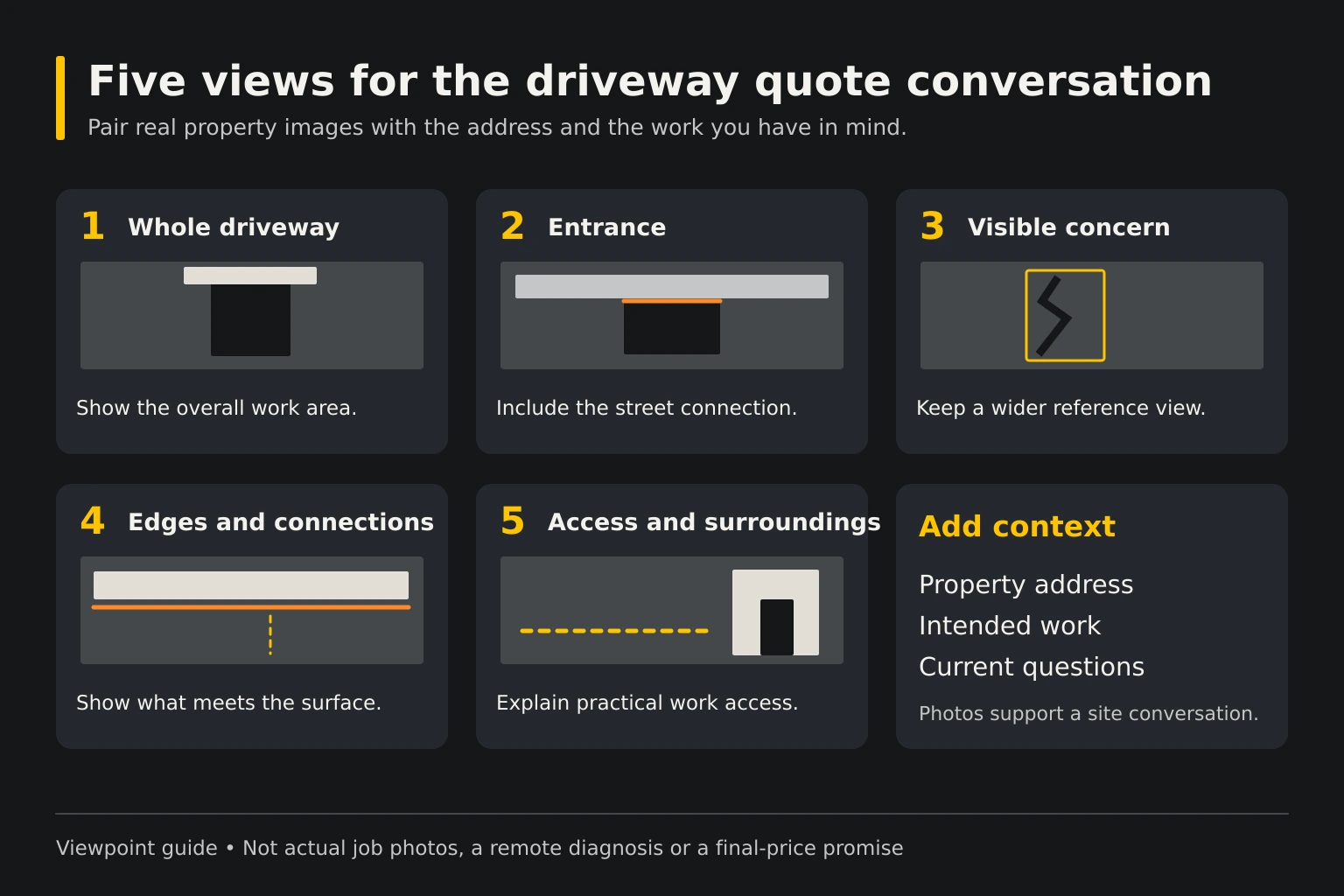
Keep the five-photo request honest and easy to follow
The five-photo structure is a preparation aid, not a requirement to obtain an unsafe view or fill a missing image with a representative picture. If one view cannot be taken safely or does not apply to the property, explain that in the message. The provider can identify whether another image or an appropriate site visit is needed.
Keep the original photographs where possible and use the message to identify each location. Do not invent a capture date, dimension or earlier repair detail to make the record appear complete. A clear note that something is unknown is more useful than a precise-looking assumption that sends the review toward the wrong condition.
If you later add photographs, distinguish them from the original request and explain what changed. Keep the current concern, actual provider response and proposal together. The owner can then compare the authorized work with the same locations shown in the inquiry without treating a photograph as proof of hidden structure, final scope or acceptance.
Call or text Asphalt Solutions with the property address and short brief when the request is ready. Most projects take place at customer job sites. The Slidell contact location is available by appointment only, and listed hours mainly concern phone availability. Arrange the actual site discussion and project timing directly rather than assuming the posted phone hours describe walk-in office access.
Photograph the project, not just the crack
A useful driveway quote starts with a clear description of the property and the result you want. Five photographs can make that first conversation much easier: the entrance, the complete driveway, the damaged area, the water concern and the fixed connections. They help an estimator see how the driveway works as a place to enter, park and walk, rather than as an isolated patch of asphalt.
Photographs are preparation for an assessment. They cannot establish buried pavement layers, soil conditions or the final construction quantities. Their value is in showing what needs to be discussed and helping you explain the project without guessing at a repair method. Start with the address, the current problem and the intended use, then attach views that support those facts.
You do not need professional equipment. A phone photo in reasonable daylight is usually a practical starting point. Keep the lens clear, avoid filters that change the surface appearance and retain the original files. Stand in safe locations, keep clear of moving traffic and do not put yourself in the roadway to obtain a better angle.
Photo one shows the entrance and approach
Show where the driveway connects with the street or another access route. Include the width of the entrance, visible changes in surface height and nearby drainage features. If a gate, curb, culvert or narrow approach affects access, make it visible. This view helps start the discussion about construction access and the driveway’s connections.
Explain what vehicles use the entrance and how they move through it. Passenger cars, a trailer and an occasional delivery vehicle may not use the same path. Mention turning or standing locations as well as regular parking. A photograph of an empty driveway will not communicate those operating details by itself.
Identify the intended project boundary without treating the photo as a survey. If you are unsure where private work meets a public connection, say so. Any applicable boundary, permission or utility coordination belongs in the project discussion before approval. A paving inquiry does not automatically authorize changes beyond your agreed property scope.
Photo two shows the whole parking arrangement
Take a wider view from a safe point that shows as much of the driveway as possible. Include the garage or parking destination and the surrounding edges. For a longer driveway, use more than one view rather than trying to fit everything into a distorted panorama. Keep the images in an order that explains the route from entrance to parking.
Describe what you want to improve. Is the goal replacing a deteriorated surface, adding room for another vehicle, changing a turn or making routine access more practical? The desired result is different from a guessed construction method. An estimator can compare options more usefully when the parking goal is clear.
If you want widening, photograph the proposed added area and its connection to the existing driveway. Show retained landscaping, structures and visible utility features. Include the parking arrangement you hope to achieve. Do not assume that paving the added strip alone is suitable without reviewing support, drainage and how the two areas connect.
Photo three connects the defect with its surroundings
A close-up can show the crack, pothole or broken edge, but it needs a companion view of the surrounding surface. Photograph the defect clearly, then step back safely to show where it sits in the driveway. The wider view can reveal related breakup, an adjacent low area or a connection that the close-up hides.
A familiar object can help communicate scale only when it can be placed without entering an unsafe area. Approximate dimensions in your message are also useful; label them as approximate. There is no need to probe a hole, lift material or test the pavement with a vehicle to produce an inquiry photograph.
Include repair history if you know it. Explain when the area was last repaired, what was done and whether the concern returned in the same location. Keep observations separate from conclusions. “Water collects here after rain” and “this patch reopened” are useful facts; a confident diagnosis of buried conditions from appearance alone is not.
Photo four explains a water concern
If water collection is part of the problem, show the affected area and the nearby drains, edges or buildings. A dry-weather view establishes its location; a later observation after rainfall can help describe the water path. Photograph only from a safe position and do not enter floodwater or an active traffic route.
Record when you observed the water and what appeared to happen. Note whether it collected beside the garage, across an entrance or along an edge, and whether the condition is recurring. These details help frame the assessment without promising that a new asphalt layer will correct every low point.
Ask the quote to distinguish pavement work from drainage-related work. Finished elevations, retained features and the intended outlet need consideration. A proposal should explain the correction it includes and any conditions it leaves in place. Treat an unexplained promise to “fix the water” as a question to clarify before approval.
Photo five shows the connections that must work
Photograph the points where the driveway meets the garage floor, walkway, concrete apron, gate or other fixed feature. Include drain covers and retained surfaces where relevant. These connections matter when comparing an overlay, targeted repair or replacement because each approach can leave different materials and elevations in place.
Explain any operation the photograph cannot show: a door that needs clearance, a route used by deliveries or a pedestrian entrance that must remain accessible. Describe these as project requirements to discuss. The estimator needs to know both what is fixed on the property and how you expect to use it.
Ask how the proposed finished surface will connect with those features. Compare preparation and transitions in writing instead of assuming every paving option produces the same result. A surface that looks uniform in a photo of another property is not evidence that your existing connections can be handled identically.
Send a short brief with the photographs
Label the views Entrance, Overall, Defect, Water and Connections. Add the property address, desired result, regular vehicle use and any access restrictions. Include your preferred reply method and a working contact detail for that method. This compact brief helps keep the first discussion focused and reduces the need to guess what each photograph shows.
You can say: “I want to compare repairing this driveway with replacing it. These photos show the entrance, the parking area, the recurring defect and the garage connection. Two passenger vehicles use it daily, and deliveries enter occasionally. Water collects beside the photographed edge after rain.” Replace the example with facts about your own property.
Ask what happens next: whether more information is needed, whether a site review is appropriate and what the written proposal will define. Confirm included preparation, boundaries, access, exclusions and reopening instructions before approving work. Keep the original photos and agreed scope together so later discussions refer to the same project.
Explore driveway paving options, review localized asphalt repair or send your project details. For a direct conversation, call or text (985) 788-0493. A complete inquiry starts an assessment; it does not confirm pricing, a repair method or a construction date.