
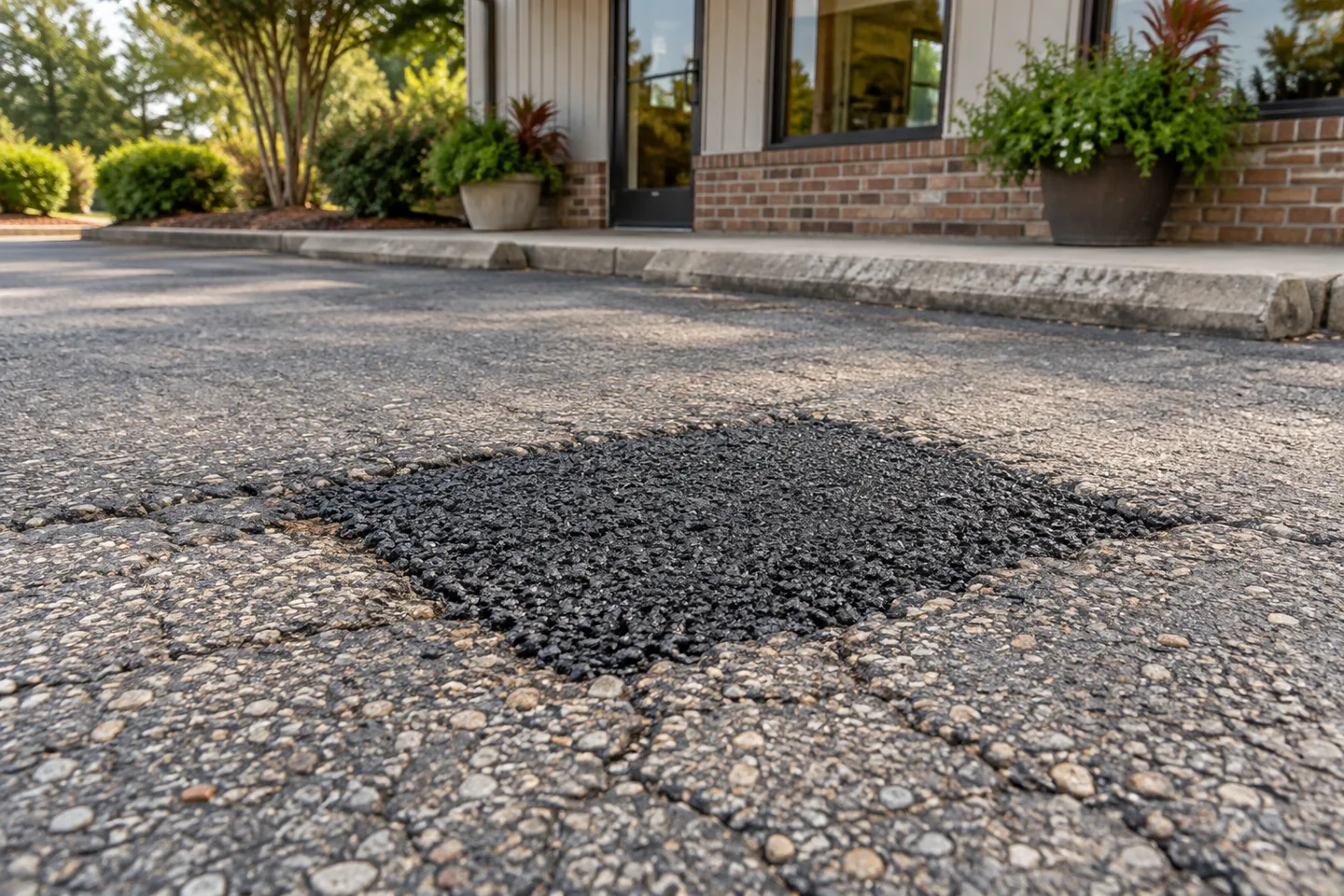
Cold mix describes material, not the whole repair
Cold mix is an asphalt-material term commonly encountered in patching discussions. It does not describe a complete repair scope on its own. A quote still needs to identify the location, preparation, placement and intended role of the proposed material. Owners should ask whether the work is being offered as an interim response, a specified repair or part of a larger plan. Do not infer those commitments from the word cold, a bagged-product photograph or the appearance of a patch. Different materials and applications need their actual context explained.
The useful comparison is between complete proposed responses to the same problem. If one estimate mentions cold mix and another describes a different asphalt material, ask both contractors to explain the work boundaries and expectations. A lower material-related price may describe a different task or a different intended role. Conversely, the term alone does not prove that a proposal is unsuitable. Start with the property use, the observed condition and the contractor's assessment. Keep any promised performance, follow-up or replacement work in writing instead of supplying assumptions from an online material discussion.
Locate the patching concern in the property
A close photograph of damaged pavement is more useful when it comes with a wider view. Identify whether the location lies in the main entrance, a turning area, a quiet parking bay or a route people walk. Show retained concrete, curbs and nearby patches. Note the practical effect, such as a vehicle path that people are trying to avoid. These records allow a contractor to discuss the actual request. They do not establish concealed depth, the condition below the opening or the most suitable material without the necessary assessment.
If several areas need attention, label them independently and ask how each is included. A collection of small openings can be a different planning question from one isolated patch. Describe previous repairs only to the extent you know them, using invoices and dated photographs where available. Mark uncertain history as uncertain. An old patch beside a new defect does not establish that the same product was used or why the condition developed. The assessment should connect the proposed response to each relevant location instead of treating all dark areas as evidence of identical work.
Establish the intended role before approving work
Ask the contractor to explain why the proposed material and method fit the specific location. If the response is intended to address an immediate access concern while a broader project is reviewed, ask how that limitation will be recorded. If a more complete repair is being offered, ask what preparation and boundaries it includes. Do not let an urgent need to address a visible opening erase the distinction between making a temporary arrangement and accepting a final scope. Both parties should understand what the quoted task is meant to accomplish.
Where follow-up is proposed, identify who initiates it and whether it is included in the price. A general statement that an area can be reviewed later is different from an agreed future visit or additional repair. Keep optional work and actual commitments separate. If another scope is still needed, preserve that item in the property record rather than treating the presence of patch material as closure. This approach helps household owners and managers make a practical decision without pretending the material name guarantees a particular life, finish or solution to an unknown underlying condition.
Compare preparation and retained connections
Ask what the proposal includes around the patch itself. The work boundary, treatment of surrounding damaged material and connection to retained pavement can matter to the scope discussion. A material label does not answer those questions. If the contractor needs closer inspection before setting the final boundary, agree how that decision and any price change are approved. Avoid providing a construction procedure from a generic guide; the owner needs a clear proposal while the actual method should follow the requirements and assessment relevant to the product and project.
Document water observations as observations, not a diagnosis. If the location is wet during one visit, record that fact with the weather context and surrounding view. Ask how it affects the proposed plan and whether a separate water-management question remains. Do not assume that cold mix can be used in every wet condition or that filling an opening changes the surface's drainage relationships. Similarly, show utility covers and concrete connections without assuming who is responsible for them. Those features may require a distinct decision beyond the localized material-placement task.
Keep access and repair records practical
Tell the contractor which movements depend on the affected area and what alternatives are available. A small patch can occupy the only useful entrance or the path for a delivery. Ask how temporary boundaries and reopening instructions will reach the property users. Do not decide the area is ready because the surface looks filled. The actual project instructions govern use, and different products or work arrangements may come with different requirements. Keep one owner-side contact responsible for communicating changes so that later arrivals do not rely on an outdated plan.
After the work, keep the agreed scope, dated location photographs and handoff instructions together. If the repair has a limited or interim role, retain that description with any next action rather than removing the issue from the maintenance list. Record later observations factually and compare the same area. A color contrast or a coarse-looking surface does not by itself establish failure, while a pleasing appearance does not prove concealed preparation. Direct follow-up to the specific agreed task, intended use and practical concern, with enough location context for the contractor to understand the question.
Record the intended role of a cold-mix repair
Name the repair area and describe why it needs attention now. Include a broad photograph, a closer image and the route affected. Note whether the opening was wet or dry when observed without making a universal suitability claim. If the repair is near an earlier patch, identify that relationship and supply any records you have. The first field should establish the problem and location, rather than beginning with an assumed product or a guessed hidden cause.
Ask the contractor to state the proposed role in the second field. Record whether the task is an interim response, a specified repair or one step in a larger plan, using the actual explanation offered. Identify what is included and what remains a separate decision. If follow-up is discussed, distinguish a possible future review from a visit or additional task that is actually agreed and included. This prevents a material name from supplying a commitment neither party has made.
Use the scope field to compare preparation, boundaries, retained connections and exclusions. If another estimate proposes different material, compare both responses to the same named area and intended use. Ask about unclear terms rather than ranking the offers from labels alone. Any potential additional work should have a clear approval route. Keep water-management and utility-feature questions distinct so that placing patch material cannot silently be treated as a resolution of unrelated concerns at the property.
The final field should hold the actual return-to-use instructions, completed location photographs and any agreed next action. Share the instructions with the people who arrive after the contractor leaves. Keep interim limitations visible on the maintenance list where relevant. If a later observation needs review, document its location and timing without assuming a color or texture difference establishes failure. A focused record supports follow-up on the actual agreed repair rather than an invented universal expectation for cold mix.
Questions about cold mix
Meaning in plain language
Cold mix is an asphalt repair material that can be handled without the same hot-placement process as hot mix. Its intended use and limitations depend on the specific product and application.
A practical example
If a temporary patch is proposed, record the intended follow-up. A short-term access repair should be distinguished from a final repair scope.
Use the term in your project discussion
Clarify whether the proposed repair is temporary stabilization or part of a longer-term plan.
Details that matter
- Product use
- Repair preparation
- Follow-up work
A mistake to avoid
Cold mix should not be assumed equivalent to every permanent reconstruction method.
Continue with the right next step
Property conditions determine the final scope. These planning notes do not replace a site evaluation. How to use our pavement guidance