
Warm mix refers to production and placement technology
Warm mix asphalt, commonly abbreviated WMA, is a group of technologies that allow asphalt mixtures to be produced and placed at lower temperatures than conventional hot mix asphalt. It is not a description of the pavement feeling warm to the touch, nor is it a weather forecast for the job. The term belongs in the material and construction discussion. For a property owner, the practical next question is whether a contractor is actually proposing that material and what the complete project scope includes around it.
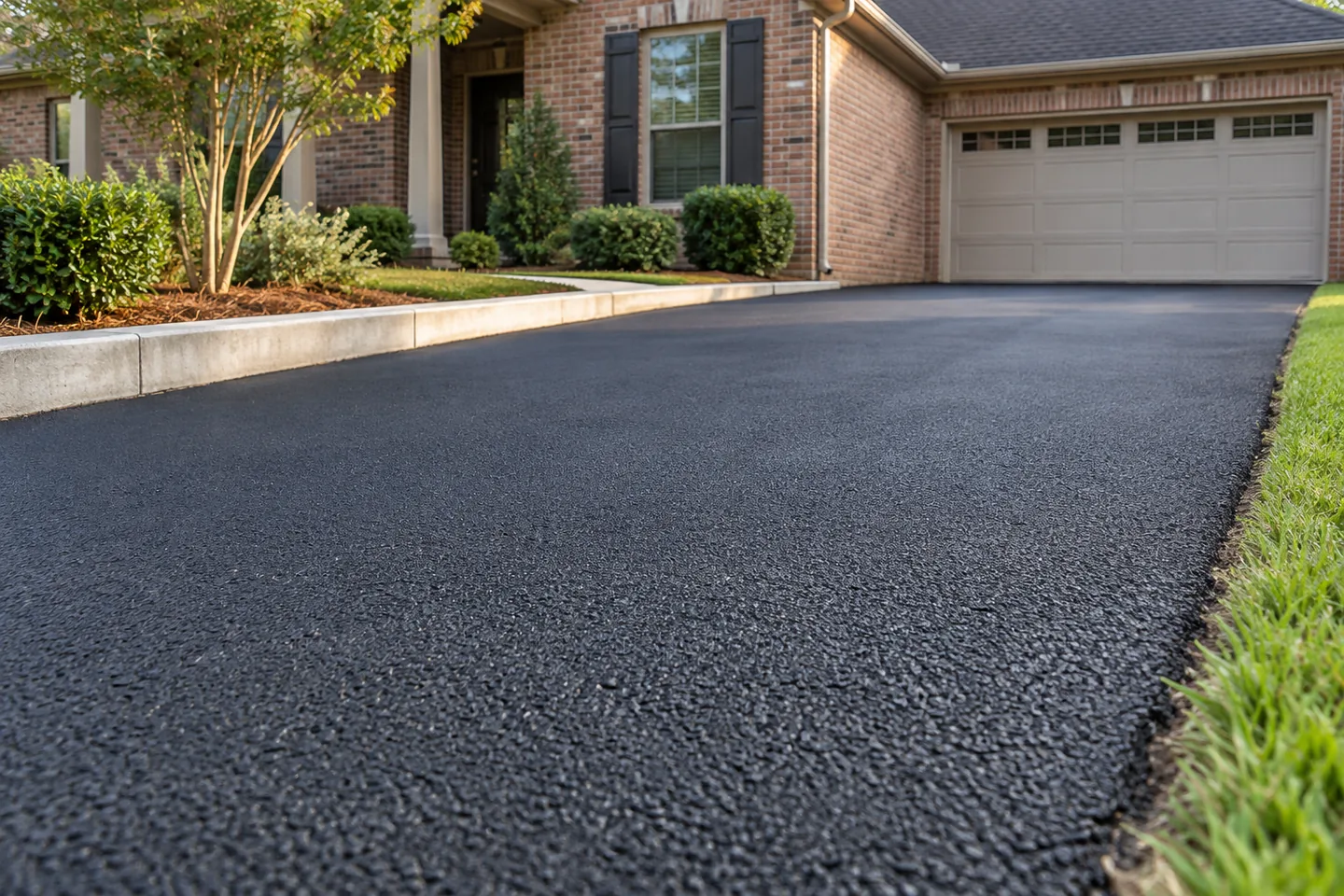
A finished driveway photograph generally cannot establish whether warm-mix technology was used. The ordinary appearance of an asphalt surface is not a production record. Ask for an explanation of the proposed material rather than trying to identify it from color, shine or an absence of visible steam. This educational page does not claim that every project uses warm mix or that Asphalt Solutions has particular production equipment or supply arrangements. Availability and suitability should be confirmed for the actual proposal instead of inferred from a glossary entry.
Compare complete paving proposals rather than temperature labels
If warm mix appears in an estimate, ask how it relates to the proposed footprint, preparation and installation. A comparison with another estimate should cover those same items. A material category alone cannot tell you whether two prices include the same repairs, removal, retained connections or optional areas. Keep the practical project description at the center of the conversation. If the contractor presents an advantage for the particular project, ask what that means in the written scope rather than translating a general technology description into an owner guarantee.
Do not use the word warm to assume a particular construction season, ambient-weather permission or reopening time. Technical decisions still depend on the actual material, site and requirements. An owner can explain access needs and scheduling constraints without prescribing temperatures or crew procedures from a highway document. Ask who determines whether conditions are suitable and how a schedule change reaches the property contact. This keeps the owner informed while leaving the construction decision with the parties responsible for the actual work.
Describe the property that the material will serve
Begin with the intended use: household parking, customer circulation, service access or another specific purpose. Identify the vehicles and operations you know about without guessing a pavement design. A simple sketch can show the main footprint, optional areas and surfaces that remain. Include wide photographs so the contractor sees entrances, buildings and retained concrete. The assessment should connect the recommendation to this real context. A technology label does not erase the need to understand what the finished pavement must do at the property.
Where existing pavement is being retained or resurfaced, record visible defects and known repair history by location. Share dated photographs or invoices if available. Distinguish observed conditions from suspected causes, especially around recurring damage or standing water. Ask whether the proposed preparation addresses the relevant concern and whether other review remains necessary. Warm-mix technology does not by its name describe a structural repair, a drainage change or a solution for every old surface. Keep these decisions separately visible in the scope so that the material discussion cannot hide an unresolved property issue.
Keep connections, environmental questions and claims specific
Show fixed connections such as garage aprons, curbs, drain features and walkways. Explain how people and vehicles cross them and ask what the proposed work will change. A completed image of another driveway cannot set finished levels or confirm that the same arrangement suits your entrance. If a retained feature needs additional review or adjustment, identify who handles it. The goal is a coherent project, with understandable boundaries, rather than assuming that choosing one asphalt technology settles every relationship between the new surface and the existing property.
General discussions of warm mix often mention changes in production energy or emissions. Those are technology-context statements, not a quantified claim about a particular contractor or installation. If a project has a specific reporting or procurement requirement, ask what documentation is actually available and applicable. Do not invent a percentage reduction, certification or health claim from the material name alone. A buyer can ask informed questions about the proposed process while keeping unverified environmental comparisons out of the scope, marketing record and expectations for the finished work.
Plan the handoff around instructions and evidence
Tell the contractor which access routes matter during preparation and paving, including pedestrians, deliveries and vehicles arriving later in the day. Ask how temporary arrangements will be communicated and who can approve changes. The work sequence and the return-to-use decision belong to the actual project. Do not assume that a lower-temperature production category means customers can use an area at a particular hour. Keep the instructions supplied for the job available to the people who need them, and update the access plan if the agreed sequence changes.
At handoff, retain the material description included in the agreement, the final scope and any relevant records actually supplied. Photographs can show the finished area and retained connections without proving a production technology or concealed preparation. If a concern develops, record its location, timing and practical effect, then ask about the agreed work. Avoid treating the material category as a universal performance promise. Useful follow-up depends on specific observations and actual commitments, while future maintenance still needs to respond to the condition and use of the particular property.
Prepare a warm-mix clarification sheet
Begin with where the term appeared: an estimate, a material discussion or general research. Ask whether warm mix is actually proposed for this project and record the answer without expanding it into a company-wide claim. Identify the intended paving area and use beside the material description. This prevents a technology explanation from being mistaken for confirmation of availability, supply arrangements or an agreed construction method at a property that has not yet been assessed.
In the comparison field, record the footprint, preparation, repairs and retained connections included in each offer. Ask how any stated project advantage relates to that actual scope. If environmental or scheduling benefits are mentioned, distinguish a general explanation from a commitment supported for this job. Do not fill the record with assumed percentages, universal temperature limits or a promised reopening hour. The useful question is what the contractor can explain and document for the work being proposed.
In the operations field, identify people and vehicles that depend on the area while preparation and paving are underway. Record who decides readiness, who communicates a schedule change and what alternative access is agreed. A lower-temperature production category does not by itself settle the public-access decision. Keep household members, tenants and staff informed through the project contact instead of allowing each person to decide from the appearance or perceived temperature of the surface when they arrive.
The handoff field should retain the agreed material description, instructions, approved changes and relevant supplied records. Match final photographs to the named locations so future concerns can be described clearly. If a question later involves material identity, ask about actual project information rather than interpreting the finished color. This preserves the distinction between a visible surface observation and a production record while keeping follow-up tied to the scope and commitments that were genuinely part of the agreement.
Questions about warm mix asphalt
Meaning in plain language
Warm mix asphalt uses technologies that allow production or placement at lower temperatures than comparable conventional hot-mix processes. Applicability depends on the mixture and project.
A practical example
This describes production or placement technology, not permission to ignore preparation, compaction or project specifications.
Use the term in your project discussion
Ask what material is actually available and specified for the site.
Details that matter
- Supplier specification
- Placement conditions
- Project requirements
A mistake to avoid
The term warm mix does not imply that every driveway requires it.
Continue with the right next step
Property conditions determine the final scope. These planning notes do not replace a site evaluation. How to use our pavement guidance