
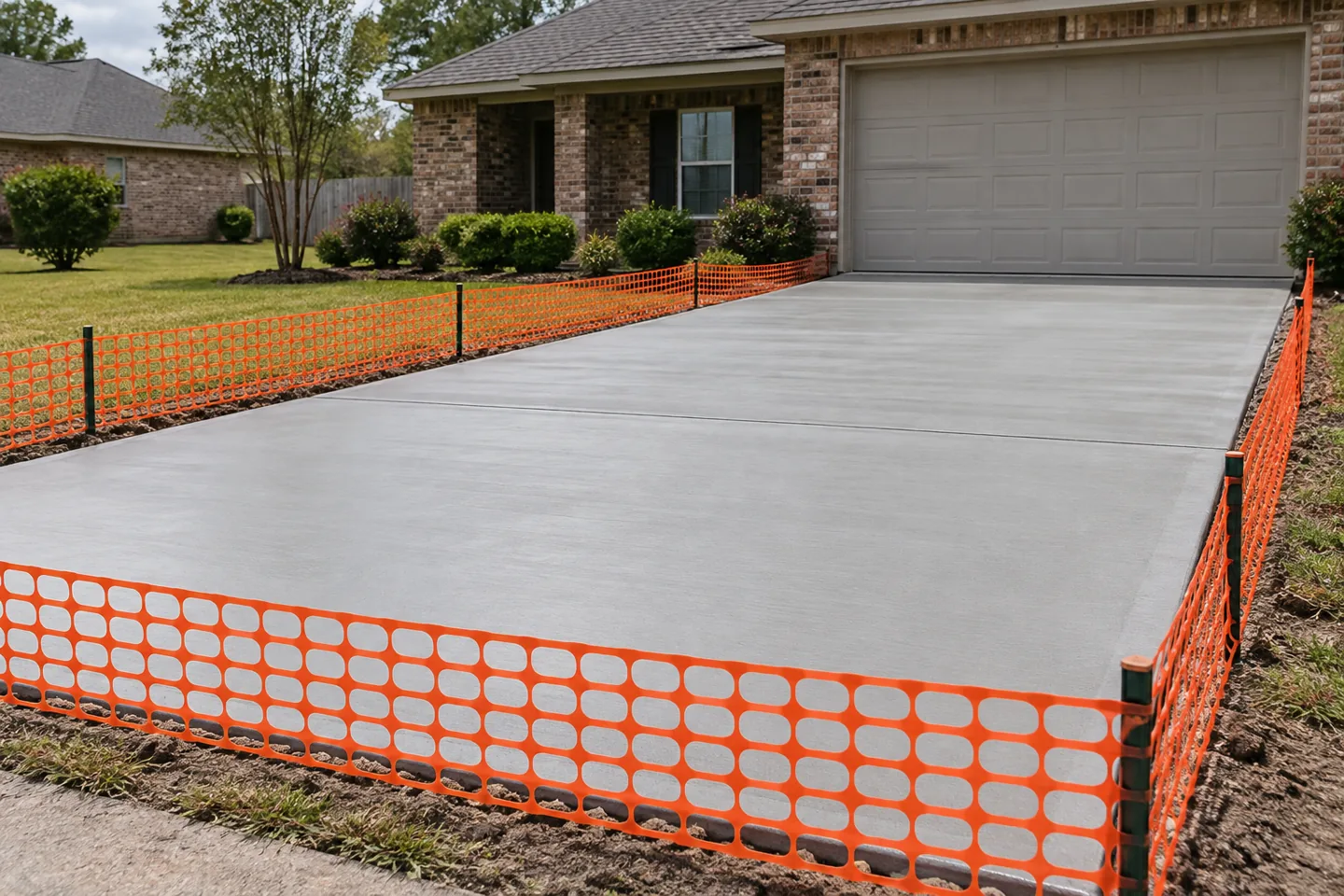
Curing is part of the work, not just waiting
Concrete curing concerns the conditions maintained while newly placed concrete develops its intended properties. The surface looking dry is a different observation. For a property owner, the useful decision is to understand the actual care plan and the instructions that follow placement. Ask who manages that plan, how it will be communicated and which responsibilities, if any, transfer to the owner.
Do not treat a general explanation as a recipe for the particular slab. The material, work and conditions need a coordinated project approach. A statement that the crew will pour the concrete does not explain all protection and follow-up responsibilities. Bring those questions into the scope discussion before scheduling, while access arrangements and the accepted work description can still be clarified.
Separate finishing, curing and permission to use
Finishing describes work that creates the surface. Curing has a different role, and permission to walk or drive on the area is another decision. These events may be discussed together in a project conversation, but they should not become interchangeable. Ask the project contact to distinguish the stages and explain which instruction controls each type of use.
An owner may see a surface that appears firm or notice someone briefly walking nearby. Neither observation grants permission to park a vehicle or move equipment onto the work. Ask specifically about pedestrian access, household vehicles, deliveries and other planned activities. Keep the response in a form that can be shared with every user. A clear handoff is more useful than relying on a remembered estimate given before placement.
Ask what the protection plan includes
Before accepting an offer, ask how the newly placed area will be protected and who maintains the agreed measures. Clarify whether barriers, notices, later visits or other care items are included. The answer should be connected to the actual work area and property use. Do not assume that an unmentioned item will be supplied simply because another contractor includes it.
If the scope assigns a task to the owner, request understandable instructions and the contact for questions. Ask what to do if the instructions cannot be followed as planned. Avoid improvising a different product, cover or treatment after reading online advice. An unapproved substitute can create a new question that was not part of the original plan. Resolve uncertainty with the responsible project contact before changing the care approach.
Plan the household or business route in advance
A home may need an alternate entrance, relocated vehicles and a place for deliveries. Children and pets need to be kept away from the active work and protected area. Map those practical needs before placement rather than trying to arrange a route across fresh concrete afterward. Ask which areas are closed and how the boundary will be identified.
For a business, discuss tenant access, waste collection, supplier visits and any route used by the public. Identify the person who will communicate restrictions to those groups. A notice on one door may not reach a delivery driver or an evening employee. Keep the access plan separate from an assumed completion date so a schedule change does not accidentally reopen the area before the project contact has authorized it.
Weather questions need a project response
Ask whom to contact if weather changes during the care period and how a revised instruction will reach the owner. In Louisiana, a forecast can change quickly; the point is to establish communication, not to select a response from a general weather label. An owner should know whether an instruction remains current and who can clarify it.
If an unexpected event occurs, note the time and describe what happened without diagnosing an effect. Photograph the area from a permitted location if useful. Do not disturb a cover, enter a closed area or add a treatment merely to obtain a better picture. Ask the project contact what information is needed and whether the care plan changes. Keep any revised instruction with the original record.
Appearance is a record, not a strength test
New concrete can raise questions about color, damp-looking patches or surface appearance. Record the location and timing of the observation, along with the instructions being followed. A photograph can help explain the concern, but it cannot establish the slab's strength or replace an agreed verification method. Avoid describing an image as proof that curing has succeeded or failed.
Ask how cosmetic observations will be reviewed separately from permission to use the area. If later work such as a coating or another finish is planned, tell the project contact before the initial scope is agreed. The sequence and compatibility questions need coordination. This glossary does not establish when a later product may be applied or imply that any product is included in Asphalt Solutions' work.
Make the handoff specific enough to follow
A useful handoff identifies the work area, date of the instruction, permitted routes and activities still restricted. It names the person to contact if a barrier is moved, someone enters early or circumstances differ from the plan. Ask how the final return-to-use instruction will be communicated. Do not assume silence means permission or that every portion of a staged project opens at the same time.
If several people share responsibility for the property, keep one current set of instructions and clearly mark revisions. A manager taking over a shift should not have to reconstruct the plan from several messages. Keep questions and answers together so an old preliminary estimate does not become the basis for a later decision. Confirm unresolved points before scheduling activities that depend on the concrete being available.
Compare curing responsibility between proposals
Two concrete offers may describe similar placement work but assign different follow-up duties. Ask each contractor to state what curing and protection work is included, what information the owner receives and what the owner is expected to provide. Compare those descriptions with the actual ability of the household or business to carry out the instructions.
Also clarify the process for concerns after placement. Ask how to report an event, what records should be retained and what the agreement says about review or correction. Do not infer a warranty from a care handout or assume every observed change has the same remedy. Any performance commitment should be part of the actual agreement. The practical goal is an understandable division of responsibility rather than an unverified promise about future appearance.
A useful care-planning example
Imagine a driveway project where the owner normally parks in the garage and receives deliveries at a side door. The care discussion should identify where vehicles will stay, whether the side route remains available and how delivery instructions will change. That is more actionable than asking only when the concrete will be dry. The project contact can explain the restrictions for the actual work.
For a staged commercial project, a manager may need different access instructions for separate areas. Label those areas and confirm who receives each reopening message. If an unexpected delivery arrives, the manager should have a contact and an approved response rather than a guess. This example organizes owner communication; it does not establish a construction sequence, curing duration or return-to-service rule.
What to send with a curing-related inquiry
For planned concrete work, send the property address, the intended use and photographs showing entrances and adjacent surfaces. Describe any access that must remain available and any later work already planned. Ask for a written care and handoff explanation alongside the installation scope. These details help frame the discussion before a date is selected.
For an existing concern, include the placement date if known, the care instructions actually received and a dated description of the observation. Distinguish what you saw from what someone suggested might have happened. Avoid altering the surface before discussing the concern. A clear record helps the responsible parties ask the next useful question without assigning a cause from a short message or photograph.
Questions about concrete curing
Meaning in plain language
Curing is the process of managing conditions so new concrete can develop its intended properties. It is separate from the surface merely appearing dry.
A practical example
A slab looking dry does not demonstrate readiness for every use. Request care instructions that explain the curing method and reopening conditions.
Use the term in your project discussion
Get specific care and reopening instructions for the actual concrete placement.
Details that matter
- Protection method
- Weather
- Vehicle reopening
A mistake to avoid
Dry-looking concrete is not proof it is ready for every load.
Continue with the right next step
Property conditions determine the final scope. These planning notes do not replace a site evaluation. How to use our pavement guidance