
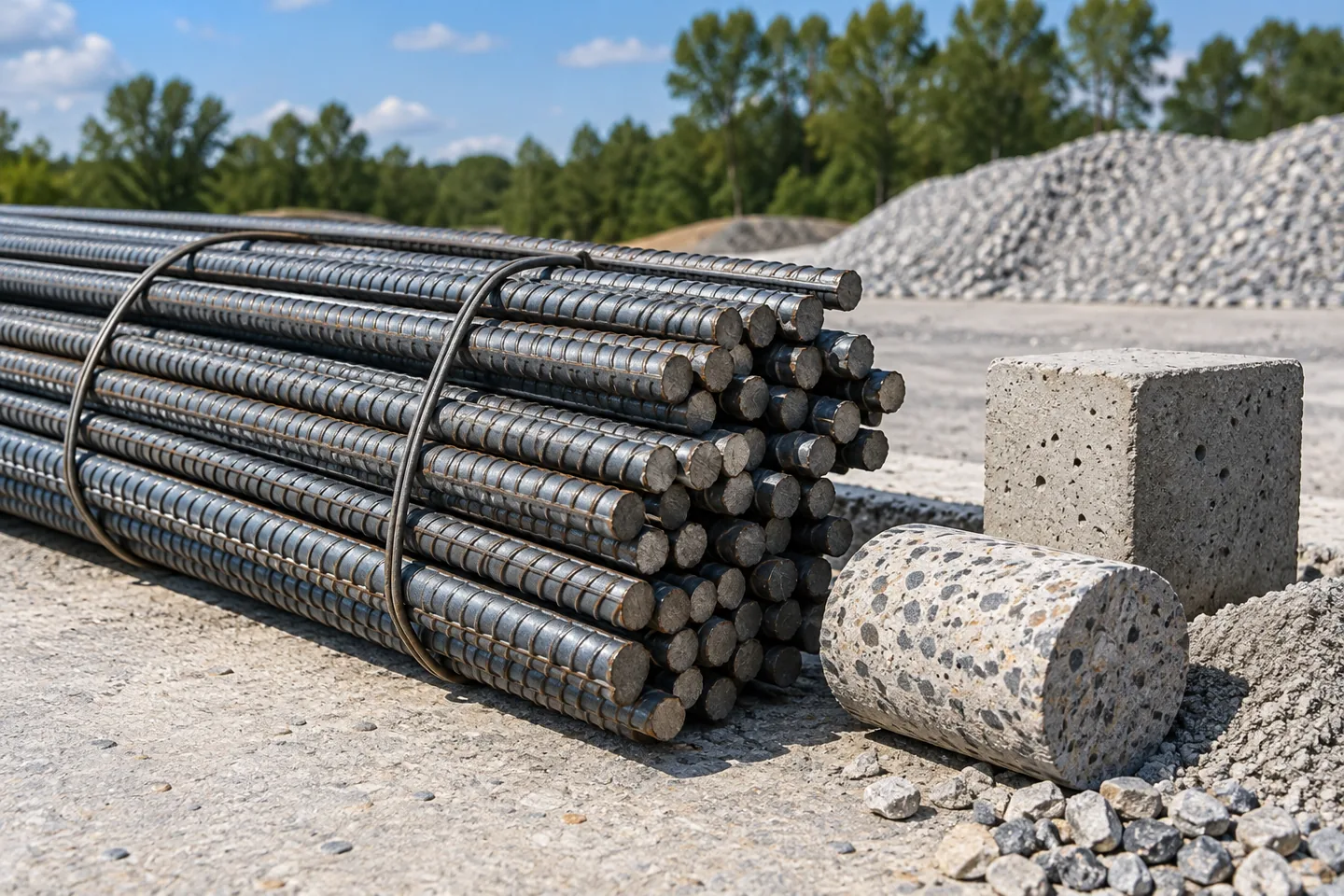
Reinforcement belongs to a complete concrete design
Concrete reinforcement is material included to perform an intended role in a concrete element. The useful owner question is what that role is in the proposed project and how the material is described in the scope. A statement that a slab is reinforced does not explain the entire design, the prepared support, the concrete section or the joint arrangement.
Ask the responsible project professional to connect the reinforcement description to the intended use. Do not treat reinforcement as a stand-alone upgrade that makes every other decision unnecessary. Two proposals can both mention it while describing different materials or work. This guide helps the owner identify those differences without selecting bar sizes, spacing, cover or another project-specific detail from a generic online example.
Material names should be explained rather than grouped together
Steel bars, welded wire reinforcement and fibers are different material descriptions that may appear in concrete discussions. Their mention does not establish that they are interchangeable for a particular purpose. Ask the contractor which material is proposed, what role it serves and which project requirement or design informs that selection.
If one offer names a specific material while another says only reinforced, request clarification before treating them as equivalent. An owner does not need to resolve the design independently to recognize that the descriptions differ. Keep the contractor's explanation with the written scope. Avoid accepting a verbal claim that one material replaces another in every situation without an explanation tied to the actual slab and intended work.
Position and detailing matter to the scope conversation
A list of materials does not explain where they belong in the completed element or how connections are addressed. Ask whether the proposal includes the applicable placement and detailing requirements and who is responsible for reviewing them. The answer should be based on the actual project, not on a photo of materials lying on a construction pad.
A material-delivery photograph can document that certain items were present, but it cannot by itself verify the finished installation. Likewise, a completed surface image cannot show every hidden component. Clarify any agreed inspection or records before the work is covered. The owner should understand what information will be available without assuming that a normal proposal includes a particular test, report or third-party inspection.
Intended use needs to be described accurately
Explain what the concrete area will support and how it will be used. Identify ordinary household parking, a delivery approach, equipment standing areas or another actual activity. Mention known future changes before the scope is selected. A contractor cannot interpret a request for a stronger slab precisely if the expected use remains undefined.
Use practical descriptions when exact technical data are unavailable. Name the vehicle or equipment type if known and show where it travels, turns or stops. Mark unknown information as unknown rather than guessing loads. The responsible professional can explain what additional information is needed. A visible reinforcing material should not be treated as blanket permission for every future activity on the finished surface.
Keep support, thickness and joints in the same comparison
Reinforcement is one part of the proposed work. Compare it alongside support preparation, concrete section, joints and connections to retained features. If one offer includes removal and rebuilding while another retains the existing conditions, the same reinforcement label does not make the offers equivalent. Ask the contractor to explain the complete included section.
This is particularly useful for a partial driveway replacement or a small commercial pad. Identify the surrounding panels, building edge, asphalt approach and other features that remain. Ask how the new work relates to them and which decisions are outside the price. A detailed material name can distract from an omitted connection if the owner compares only the most technical-looking line in the estimate.
Reinforcement is not a no-cracking promise
Do not interpret a reinforcement description as a guarantee that concrete will never crack. Ask what performance commitments, if any, are actually part of the agreement and how concerns are reviewed. A material's intended role and the contractor's contractual promise are different pieces of information. Both should be understandable without turning a general sales explanation into an unrecorded warranty.
If cracking or another condition is the reason for a repair inquiry, document its location and practical effect. Do not assume that visible cracking proves reinforcement was missing or that adding a named material resolves the cause. The actual condition and proposed response need review. Keep observed damage separate from conclusions about hidden work or responsibility until those questions have been assessed.
Replacement work can expose another decision
Ask what happens if removal reveals conditions different from those available during the estimate. The proposal should explain the process for reviewing changed scope and obtaining approval. This may involve the concrete boundary, support or connection details as well as reinforcement. An owner should not discover the approval process only after the work area is open.
A useful record identifies the affected location, the proposed change and the person responsible for confirming it. Keep revised descriptions with the original agreement so the accepted work remains clear. Do not authorize a substitution solely because two materials look similar or share a familiar name. Ask how the change relates to the intended role and applicable project requirements.
Arrange verification before placement
If the project requires an inspection, design review or specific installation record, clarify who arranges it and when it must occur. Ask what documentation the owner receives and which part of the work it addresses. Do not assume an after-the-fact surface photograph can replace a review that needed access before placement.
The owner should not enter an active work area or move reinforcing material to check a theory. Raise questions through the project contact and use the agreed process. A normal progress photograph may be helpful context, but its limits should remain clear. The goal is appropriate project verification and an understandable record, not an owner-directed technical inspection based on a glossary page.
Compare an actual reinforcement description
Imagine one driveway offer names a reinforcement material while another lists only a concrete thickness. The appropriate next step is to ask each contractor what its complete proposal includes and which design basis applies. Do not automatically add a material to the second offer or declare the first better from a single line. The missing information must be resolved in context.
Now consider that one proposal retains an adjoining panel while the other replaces it. Ask how each plan handles that boundary and whether the different area explains part of the price difference. A clear comparison groups material, placement responsibility, support and connections together. This keeps the owner focused on equivalent work rather than choosing the longest list of technical terms.
What to provide and retain
Send the address, intended use, overall area photographs and any existing plans or specifications with the inquiry. Include known repair history and identify retained features. Ask for the material description, responsible design or review role, included preparation and any verification obligations to be understandable before the work is accepted.
Retain the accepted scope, approved changes, supplied design information and any agreed installation records. If a concern arises later, identify its location and describe what is visible before making a claim about hidden reinforcement. Ask the responsible parties what information is available for review. Clear records support that conversation while avoiding invented conclusions from the appearance of a finished slab.
A concrete comparison example
For a small pad proposal, an owner might receive a material name without any explanation of the pad boundary or intended activity. Ask for those missing details before discussing a material substitution. The clarification may reveal that the original request was understood differently. A concrete decision is easier when the contractor and owner are discussing the same use and retained features.
Questions about concrete reinforcement
Meaning in plain language
Reinforcement is material incorporated into a concrete design to perform an intended role. Its type, position and details depend on the project’s requirements.
A practical example
Ask what material and placement are included in the proposed section. Reinforcement is one part of a concrete design and does not eliminate every crack.
Use the term in your project discussion
Ask for the proposed design details and avoid substituting assumptions based on a photograph.
Details that matter
- Design requirements
- Placement details
- Load needs
A mistake to avoid
Reinforcement does not guarantee that concrete will never crack.
Continue with the right next step
Property conditions determine the final scope. These planning notes do not replace a site evaluation. How to use our pavement guidance