
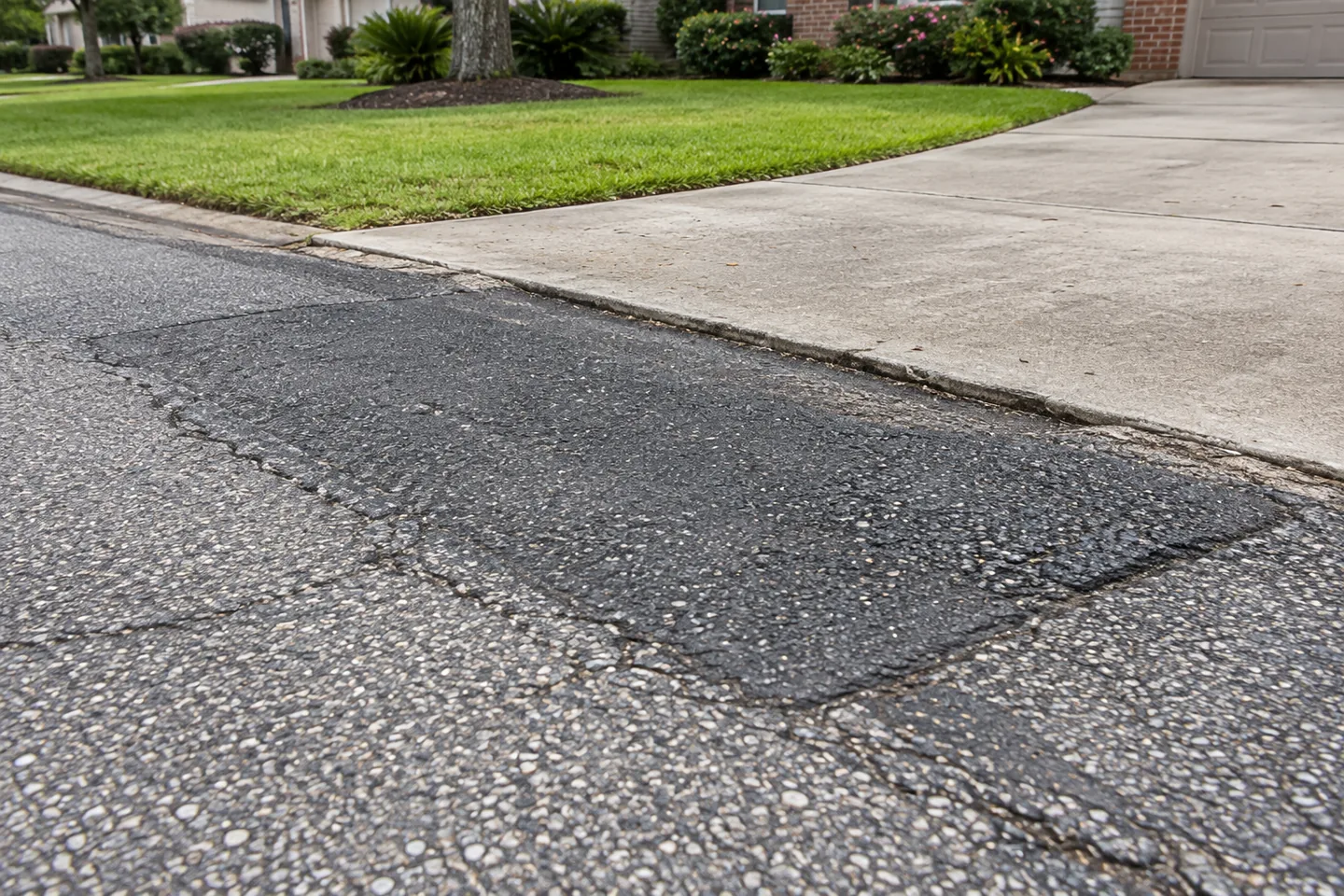
Settlement is a movement question supported by history
Settlement describes downward movement of pavement or supporting ground. An owner may notice a lower section, an uneven connection or a change in how water remains, but the current shape alone does not establish when movement occurred or what caused it. The useful first step is to document what is visible and any reliable earlier condition. A property assessment should connect that history to the work being considered rather than diagnose the full supporting condition from an image.
Distinguish settlement from depression in the initial inquiry. A depression is a low surface area, while settlement concerns downward change. If the earlier geometry is unknown, describe the low or uneven section and say that the movement history is uncertain. This is more accurate than assuming every low patch has settled. The contractor can discuss what assessment is needed and how the present condition affects an offered repair or surface recommendation.
A visible change can have practical consequences without proving a building problem. An uneven driveway near the house does not, by itself, establish structural movement of the building. Keep the pavement concern and any separate building concern distinct. Give known observations and ask which work or further assessment is appropriate. A paving glossary should not become a diagnosis of a foundation, buried utility or legal responsibility for conditions beyond the accepted pavement scope.
Build a reliable location and chronology record
Use fixed features to locate the uneven section in photographs. A retained garage apron, curb, building corner or utility feature can help identify the same area in older and current views. Keep dates where known and label uncertain dates. If an earlier image does not clearly match, do not present it as proof of a change at that precise location. A useful record connects verified observations without forcing a technical conclusion.
Take wide views of the section and closer views of its connections where safe. Show adjacent retained pavement and any visible crack pattern or missing material. The relative step or low area can be described in plain language without an owner selecting an excavation depth from the photograph. Ask the contractor how quantities and repair limits will be confirmed. Image perspective can make an uneven connection appear larger or smaller than it is, so keep measured information separate from visual estimates.
If previous work is known, share the accepted scope, invoices or dated photographs. A strip of different pavement may suggest a repair boundary, but cannot prove its depth or the reason it was installed. If utility restoration or another activity is documented, include the record without assigning blame for later changes. The contractor needs a factual history and clearly labeled uncertainty rather than an assumed story based on surface shape alone.
Explain the current use concern separately from the cause
Describe the observable effect that led you to ask for help. A changed garage connection, water at a low section or an uneven walking approach presents a specific question even when the cause remains uncertain. Identify the route and users affected. Use the property's normal access process if the area is concerning. The inquiry should not require driving, jumping or loading the section to demonstrate movement in a way that could create additional risk.
For a driveway, show the vehicle approach, retained concrete and usual parking or turning area. Explain whether the low section affects the only access route. If the owner also wants a broader renewal or a different driveway layout, separate that goal from the existing movement question. A localized repair recommendation and an expanded-use project can have different boundaries, even when they are discussed during the same visit.
For a business, connect the observation to pedestrian entrances, deliveries and ordinary vehicle routes. Include known changes in use and management arrangements without treating them as proven causes. Several tenants may notice different effects from one uneven section. Gathering those observations can make the operating discussion more useful, while the site assessment remains responsible for explaining the condition relevant to the proposed pavement work.
Ask what is evaluated, retained and replaced
A repair proposal should identify the intended operation and its limits. Ask what pavement is removed or retained, what supporting-material assessment or work is included and which findings could change the recommendation. The word settlement does not define an unlimited repair scope. The owner should understand the offered work and any need for further evaluation rather than selecting a numerical structural specification from a general explanation.
Where the recommendation depends on discoveries during removal, establish the decision path before acceptance. Ask how findings are documented, how extra work is priced and who can authorize it. An allowance should have an identifiable item or basis. This makes a potentially changing scope understandable without expecting the initial visible surface to reveal every condition below it or assuming that a fixed preliminary price includes all possible supporting-ground work.
Clarify the connection to retained features. A garage apron, drain, utility cover, curb or neighboring surface may need coordination by another party. Ask which adjustments and permissions are part of the offered work and which remain separate. Pavement settlement language should not silently authorize alteration of a retained structure. Keep the boundaries and responsibility for each item visible in the proposal so the planned work matches the owner's expectation.
Review water, access and follow-up in the actual setting
Record visible wet-weather behavior where safe. Show the low section, wider runoff route and nearby retained drainage features. Explain when water was observed and whether the appearance differs from earlier records. These notes can guide questions about assessment, but do not establish a hidden water path or prove that one surface operation will address the whole drainage concern. Separate any proposed drainage item from the pavement repair description.
Review closure and reopening arrangements against the affected route. A lower repair section near an entrance may require work that interrupts the whole driveway or a tenant approach. Explain normal movements before agreeing the sequence and identify who communicates changes. Follow the contractor's written directions for the actual operation rather than assuming an area is usable because a surface looks level again or equipment is temporarily absent.
At closeout, retain the accepted scope, approved changes, available project records and care instructions. Take photographs that locate the work and show retained connections. If another visible change is later observed, record the date and the same physical references. Avoid treating a new image as proof of a concealed cause or responsibility. For an Asphalt Solutions inquiry, provide the actual project address, current concern and verified history so the offered assessment can address the property specifically.
Downward-change history worksheet
Separate the current low or uneven appearance from verified earlier condition. Use matching physical references, dates and accepted scope records where available. Record unknown history honestly. Add safe photographs of the present connection and surrounding pavement. This provides context for a settlement question without treating a low patch, a different-colored strip or an image beside the house as proof of concealed ground movement or a building diagnosis.
Record what the contractor proposes to evaluate, retain and replace, including any supporting-material responsibility or additional assessment. Keep allowances and change approval explicit. Identify retained-feature coordination and the route affected during work. At closeout, store the accepted scope and new location photographs beside earlier records. This makes later review specific to the assessed area and offered work rather than relying on a general statement that the whole driveway has settled or assigning responsibility from appearance alone.
Questions about settlement
Meaning in plain language
Settlement is downward movement of supporting ground or pavement. Uneven movement can affect transitions, drainage and surface cracking.
A practical example
Retain dated photographs to show whether the lowered area is changing. Include nearby trenches, drains and fixed features in the view.
Use the term in your project discussion
Note when the movement appeared and whether it is continuing.
Details that matter
- Elevation change
- Utility work history
- Water conditions
A mistake to avoid
Surface repair does not automatically stop continuing movement below.
Continue with the right next step
Property conditions determine the final scope. These planning notes do not replace a site evaluation. How to use our pavement guidance