
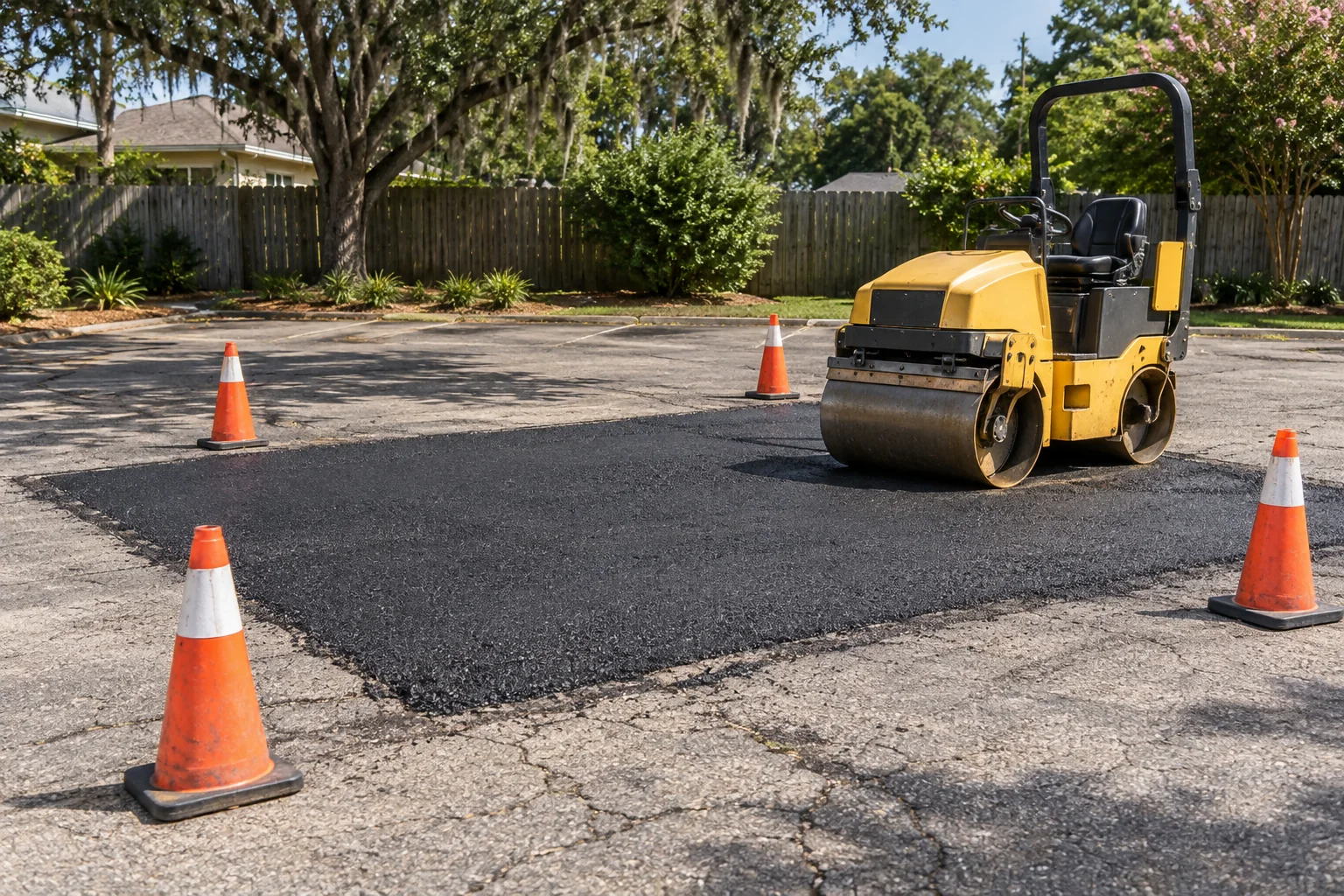
The work zone includes more than the visible repair
A work zone is the area affected by construction activity and its temporary controls. On a private driveway or parking lot, the affected space can extend beyond the pavement being repaired. Equipment needs to approach, materials need to arrive and people need to remain clear of active operations. An owner should understand that broader footprint before promising continued use of a driveway, entrance or parking row.
The exact boundary depends on the work and property. A small patch and a lot-wide surface project can create different access needs even if they use some of the same equipment. Describe the activities that normally occur near the proposed work so the contractor can explain what needs to change. A photograph of the damaged pavement alone may leave out the doorway, delivery path or neighboring access that matters to the sequence.
This glossary focuses on questions for private-site project planning. Work involving a public road, right of way or regulated traffic-control requirement needs the relevant authority and appropriately qualified planning. Do not copy the arrangement in an educational image as a control layout. The useful first step is to identify who plans and manages the actual affected area.
Define the boundary and who manages it
Ask the contractor to explain which areas are unavailable during the work and how that changes as activities move. The property contact should understand the boundary well enough to inform staff and occupants. Avoid interpreting an opening between objects or an apparently idle machine as permission to enter. If access is needed unexpectedly, contact the person managing the work and obtain instructions.
Clarify who supplies, places, checks and adjusts the temporary controls required for the project. A property owner may have responsibilities for keeping vehicles out before the crew arrives or after the crew leaves. Those responsibilities should be written down. A general statement that cones will be present does not explain who maintains the arrangement or what happens when someone moves an item during normal property operations.
Also ask how the work area is managed outside active work periods. The answer depends on the condition left at that stage and the property's use. The owner should not assume that every restriction ends at the crew's departure time. Keep the responsible contact and instructions available to anyone who might need to answer a tenant, delivery driver or household member after the day's work ends.
Bring people, vehicles and deliveries into one discussion
Property operations often create the most important access questions. Tell the contractor when people arrive, which doors are used, where deliveries go and which vehicles need to leave before work starts. On a home driveway, move the discussion beyond whether one car fits past the equipment. Include household members, visitors and any scheduled service provider who may arrive without knowing the work is underway.
For a business, identify both vehicle circulation and pedestrian approaches. A route available to a delivery truck is not automatically the route visitors should use to reach an entrance. Ask who evaluates and communicates temporary pedestrian access, including the needs associated with accessible parking and routes. Do not direct people through the work area simply because it appears to be a shorter path.
If a necessary delivery or service visit conflicts with the proposed sequence, resolve that before scheduling whenever possible. The contractor may need a different stage arrangement or the property may need to change the appointment. Record who makes the change and confirms it. An assumption that the crew can briefly move everything aside may be unrealistic and should not become the default plan.
Plan equipment and material access without guessing
The crew may need space for machines, material delivery and movement between parts of the site. Ask which owner-controlled items need to be moved and what access must remain available for the contractor. Trees, gates, parked vehicles, storage and overhead or underground site features can all be relevant to a project discussion. Describe the known conditions and let the appropriate parties determine the work requirements.
Do not mark underground facilities or give machine-clearance instructions based on memory alone. Tell the contractor about information you hold and ask who confirms the relevant locating, permissions and site constraints. Those responsibilities should be settled before work reaches the affected area. A paving scope should not rely on the owner informally declaring that an unseen utility or restricted access point will be fine.
Ask where materials and equipment may be kept and which surfaces are outside the work scope. This is useful where a crew must cross retained pavement or use a shared access. Clarify restoration and cleanup responsibilities for the agreed areas. The owner then has a basis for reviewing the completed job instead of trying to reconstruct which staging area was authorized after the equipment is gone.
Use one clear communication and reopening process
Choose the property contact who can receive updates and make the decisions assigned to the owner. Provide a reliable method for reaching that person during the work. If another staff member or family member needs to relay instructions, make the responsibility clear. Several people giving the crew separate directions can create confusion about which request has actually been approved.
Discuss how changes will be handled. Weather, occupied areas or unexpected preparation findings can affect the work footprint and sequence. Ask what information the contractor will provide and who communicates revised restrictions to occupants. Keep instructions specific to the affected area. A message that the project is delayed does not tell a delivery driver which entrance is available that afternoon.
Reopening needs an explicit release from the responsible party. Appearance, silence or the removal of one piece of equipment should not substitute for that instruction. Ask whether restrictions differ for walking, passenger vehicles or other site activity, and follow the project-specific answer. Keep any continuing limitations in the property record so someone arriving later does not receive outdated directions from an earlier stage.
A practical example and a useful quote request
Imagine that a manager asks for repair of a small damaged section near the service entrance. The pavement area may be modest, but the planned delivery route crosses it and a nearby door serves staff arriving for a shift. Those facts can influence the work-zone footprint and timing. Put the delivery and arrival needs into the request before accepting a schedule rather than waiting for the crew to discover the conflict.
Next compare two offers for that same repair. Ask whether both assume the same closure, vehicle removal, equipment access and owner communication duties. If one proposal depends on uninterrupted contractor access, make sure the property can provide it. If another describes staged access, clarify what that arrangement includes. The comparison should expose the operating assumptions behind the price, not select a traffic-control design from a short quote.
For Asphalt Solutions, send the actual job-site address, wide photographs and a description of the property activities affected by the repair. Call or text first so the next step can be arranged. Most work is performed at customer properties, and visits to the Slidell contact location are by appointment. Ask for the agreed work boundaries, access responsibilities and reopening process to appear in the project-specific scope.
Prepare the owner responsibilities before arrival
Before the crew arrives, check the owner actions listed in the agreement rather than improvising a control arrangement. Confirm that the designated vehicles or stored items have been moved and that the property contact is reachable. If an agreed condition cannot be provided, tell the contractor before directing the crew to start elsewhere. A revised location may create different access or staging questions. The goal is to confirm the assumptions under which the work was planned and let the responsible person evaluate any change.
Questions about work zone
Meaning in plain language
A work zone is the area affected by construction operations and temporary controls. Pedestrians, vehicles, workers and deliveries need a clearly discussed plan.
A practical example
Specify who coordinates notices, closures and site access. Clear responsibility helps prevent a construction area from becoming an improvised customer route.
Use the term in your project discussion
Identify who manages temporary access and how visitors are informed.
Details that matter
- Barricades
- Pedestrian movement
- Delivery coordination
A mistake to avoid
A cone alone is not a complete access plan.
Continue with the right next step
Property conditions determine the final scope. These planning notes do not replace a site evaluation. How to use our pavement guidance