
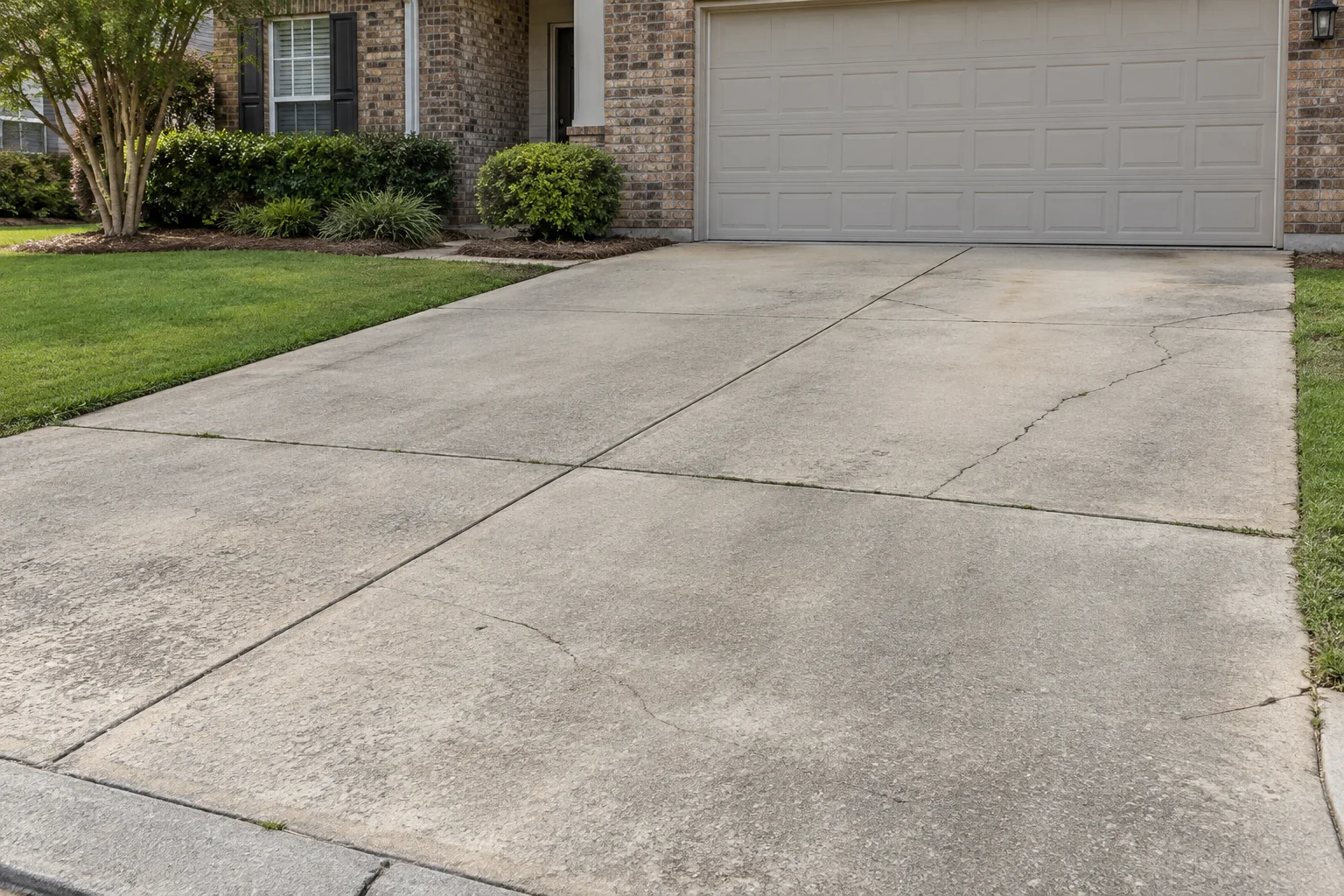
Begin with the panel and the crack you can observe
A cracked concrete driveway panel needs a description of the whole panel and its surroundings. A close image of a line in concrete does not establish whether the panel can be retained, what caused the crack or how much work is appropriate. Start with the visible pattern, location and practical concern, then arrange the level of evaluation suited to the project.
NRMCA's cracking guidance discusses concrete movement associated with moisture, temperature, loading and support conditions. That background explains why a single appearance should not be treated as a complete diagnosis. It does not determine the cause at your driveway or select a repair method. The actual panel layout, condition and use need review.
Tell the contractor what prompted the request. You may be concerned about appearance, a visible offset, repeated movement, water collection or access at a garage connection. Those are related but different questions. A clear request lets the evaluator explain what can be assessed and which information is needed before a repair or replacement scope is prepared.
Show the panel layout and neighboring features
Take a wider photograph showing the full panel, visible joints and adjoining panels when safe. Add close views of the crack and any observed difference in level. Include garage aprons, edges, drains or other retained features that help locate the concern. A very close crack image can hide the relationship that matters to the project.
Describe whether one panel or several are affected and whether the pattern seems to be changing. If you have genuine earlier photographs, keep their dates and context. Avoid estimating the depth of a crack or hidden support from the image. Ask the evaluator what measurements or additional information are needed.
Do not remove material, probe the crack or use a vehicle to test the panel. Those actions are not a substitute for an appropriate review and can change the condition being discussed. Provide observations from safe positions and request any interim use instructions needed for the actual concern. The owner can start the conversation without diagnosing concealed construction.
Record movement, water and known history
Tell the contractor if you have observed widening, a change in level or a recurring concern at a previous repair. State when you noticed it and what records support the observation. The sequence can help frame the evaluation, but it does not by itself establish why the panel changed.
Include water observations and the relationship to nearby retained surfaces. A crack and a low area may occur together while requiring different project questions. Ask whether the proposal evaluates drainage, panel condition or both. A repair focused on a visible line should not be interpreted as a complete correction of every surrounding water issue.
Share known construction, joint or repair information if available. If the driveway history is unknown, identify that gap. A visible reinforcement fragment, old patch or surface color is not a complete record of how the panel was built. The evaluator should know which facts are documented and which assumptions remain before recommending the next scope.
Clarify retaining the panel versus replacing an area
The existing short FAQ asks whether every cracked panel can be repaired instead of replaced. The answer depends on the actual condition and intended use. Ask the contractor to explain what the proposed activity addresses, why it is considered suitable and which limitations remain. Do not assume that a crack automatically requires replacing the entire driveway.
Equally, do not assume that treating the visible line resolves movement or support questions. A surface or crack-related activity can have a different purpose from work replacing a panel or addressing another condition. The quote should connect the proposed scope to the evaluated concern rather than rely on the reassuring sound of a repair label.
If another evaluation or appropriate design input is recommended, ask what question it answers. The owner should understand how its result affects the decision. Avoid selecting a test or construction section from an online example. Keep the actual findings, scope assumptions and open questions with the proposal comparison so the recommendation remains interpretable.
Read joints, boundaries and connections in the proposal
Ask which panels or areas are included and how the boundary was selected. A proposal may address a local area rather than every crack visible on the property. Retained panels, garage aprons and adjacent asphalt should be identified where they affect the connection. The owner needs a clear picture of what remains and what changes.
Discuss joint-related work as part of the proposed scope without prescribing a generic layout from the internet. If replacement or another activity is planned, ask who supplies the relevant project information and how retained features are coordinated. The construction details depend on the evaluated property and actual work.
Clarify removal, disposal and adjacent restoration responsibilities. If preparation reveals another condition, agree on how it is documented and how a revised response is approved. A preliminary price should not be interpreted as proof that every concealed detail is already known. Keep the limitations beside the affected panel so the comparison of offers remains accurate.
Compare the same outcome and plan driveway access
Give contractors the same photographs, history and stated concern. Ask each to identify what its offer retains, treats, removes or replaces. A cosmetic objective, localized condition response and broader replacement can produce different scopes. Compare the reasoning, preparation, boundaries and limitations before treating the prices as alternatives for identical work.
Tell the contractor which vehicles, doors and walking approaches need consideration during the project. Work on one panel may affect access to more of the driveway. Ask whether staging is proposed, who communicates restrictions and what owner actions must occur before the start. Related work at an apron or neighboring surface may also influence the sequence.
Follow project-specific reopening and use instructions after the work. Concrete appearance or the passage of a generic time interval should not substitute for the actual release. Keep the completion information, approved changes and any continuing limitations with the property record. If a separate question remained outside the work, record it plainly for the next review.
Prepare a clear panel-crack request
Send the job-site address, full-panel and close crack photographs, observed change and known work information. Explain whether the concern affects appearance, movement, water or access. Ask what evaluation is appropriate and what the next step would establish. A useful request describes the actual property rather than seeks a guaranteed repair answer from a single photograph.
Call or text Asphalt Solutions to discuss the driveway. Most projects occur at customer job sites. Visits to the Slidell contact location are by appointment, and listed phone availability is separate from construction scheduling.
Keep panel decisions tied to their actual location
At completion, record which panel or area was treated or replaced and retain any continuing recommendation. If a different cracked panel remained outside the agreement, identify it rather than describe the entire driveway as repaired. A location sketch and genuine photographs can support that distinction when another owner or contractor reviews the history.
If a later concern develops, state the new observation and its relationship to the previous work without assigning an unseen cause. The next evaluator needs the actual scope, dates and limitations. A new-looking panel does not document every concealed detail, and a retained panel was not necessarily evaluated under conditions that appeared later. Keeping those limits clear makes the record useful without exaggerating what the earlier project established.
Questions about cracked concrete driveway panels
The direct answer
Concrete cracks should be reviewed with panel layout, movement, support and drainage. A crack alone does not establish whether an entire driveway needs replacement.
What to discuss before choosing a repair
Compare joint or crack treatment, localized repair and panel replacement as distinct options.
What to observe and record
- Show the whole panel
- Note offsets or widening
- Record drainage conditions
A mistake to avoid
A promise to make concrete permanently crack-free is not a realistic scope.
Continue with the right next step
Property conditions determine the final scope. These planning notes do not replace a site evaluation. How to use our pavement guidance
Background reading: NRMCA CIP 4 on concrete cracking. General guidance does not replace evaluation of the actual property.