
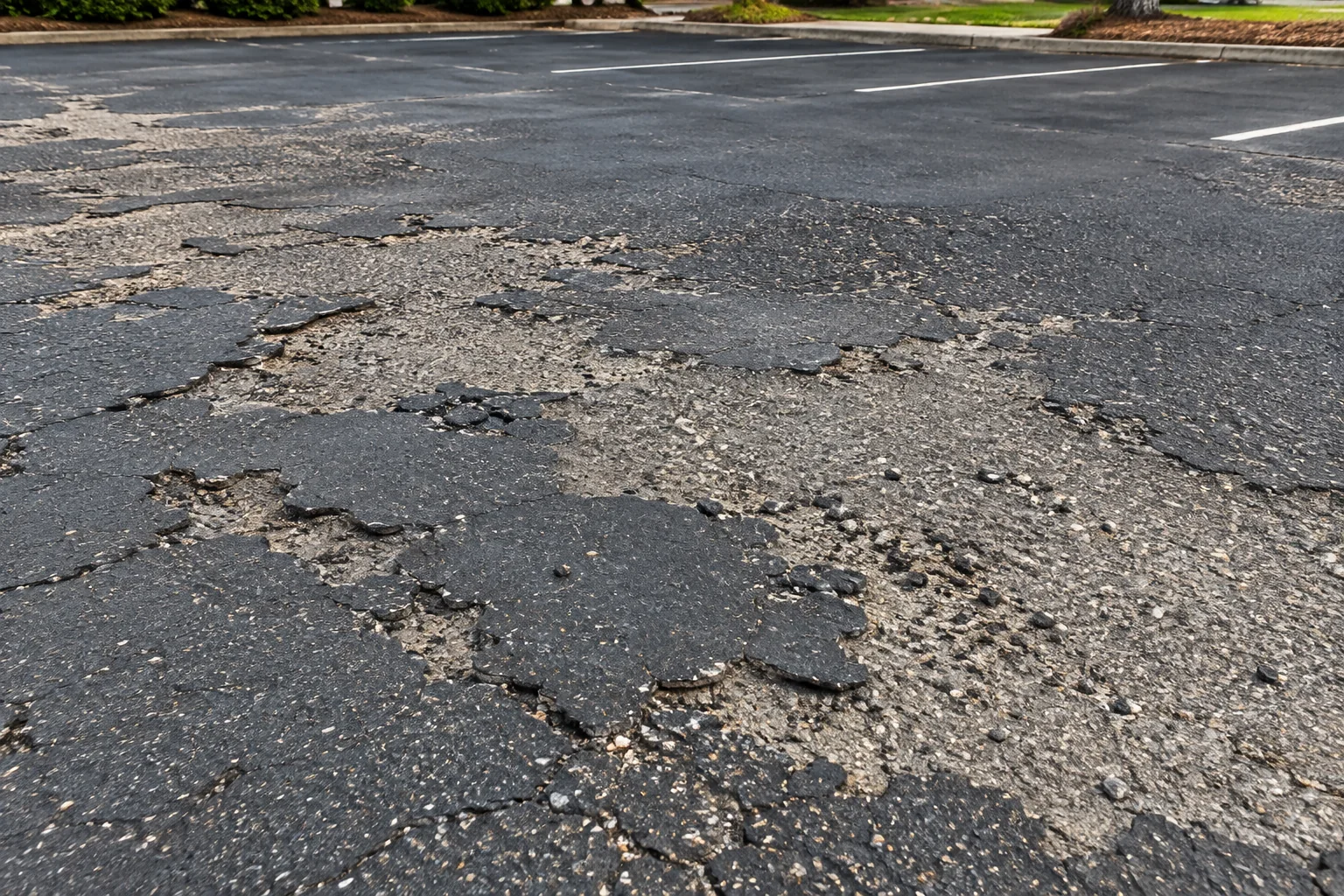
Describe what is wearing or coming away
An old treatment that peels or wears unevenly needs a condition review before another application is chosen. Show the affected area and the surrounding surface together. Thin coating loss, a color difference and broken asphalt are different observations. The contractor should understand which concern you are describing rather than infer every dark or light patch is the same kind of deterioration.
Explain the practical reason for the request. Appearance may be one concern, while loose material, recurring peeling or a question about the underlying pavement may be another. Identify where the change is concentrated and whether the area is used for parking, turning or travel. Those observations help frame the review without proving the cause of the earlier treatment's condition.
Do not assume that another coat will correct whatever is coming away. The provider needs to consider the existing treatment, the retained pavement and the preparation needed for the selected activity. An initial photograph can locate the problem, but it cannot establish product compatibility, bond condition or the appropriate repair scope for an unseen surface.
Gather the treatment history that actually exists
Share previous invoices, product information, dates and scope descriptions if you have them. Records of earlier preparation, repairs or applications can help the contractor understand what is known. If the treatment type or number of applications is uncertain, say so. The current appearance should not be used to invent a complete product or construction history.
Describe when you first noticed peeling or uneven wear and whether you have genuine earlier photographs of the same area. Explain known changes in use, such as a different parking arrangement or more turning at an entrance. Timing and use are context for the review; they do not by themselves assign fault or establish a single explanation for the visible pattern.
If recent work is still being addressed with the original provider, retain the agreement and instructions and contact that provider about the concern. Avoid altering the surface before discussing the issue. A new contractor's appearance review is not automatically a determination of another provider's warranty obligations or proof that the earlier work used a particular product incorrectly.
Show intact-looking and affected areas together
Take an overall view that identifies the peeling or worn areas within the driveway or lot. Add safe close views of representative locations and their transition to surrounding surface. If several different patterns exist, show each separately. A single dramatic close-up can make it difficult to understand how much area is actually affected or where the proposed boundary might lie.
Describe loose material, visible cracks, depressions or other pavement concerns separately from coating color. A surface can have more than one issue, and the proposal may need to distinguish preparation from pavement repair. Ask what additional examination is needed rather than perform a scrape test or assume that an intact-looking dark area is ready to receive another application.
Do not pressure-wash, strip, burn or apply a household product to create a demonstration area before the review. Those actions change the condition being evaluated. Tell the contractor about any cleaning or treatment already performed, using actual records where possible. The initial request can begin with undisturbed photographs and an honest description of what is known.
Make preparation and suitability explicit
Ask the provider to explain how the existing treatment affects the proposed activity. What can remain, what needs attention and what must be confirmed before work begins? Preparation should be described for the actual surface and selected system. A general promise to add another layer does not explain how the peeling concern is being addressed.
If the contractor identifies unsuitable pavement or a separate repair need, locate it in the scope. A coating activity and replacement of damaged asphalt are different work items. Ask how they connect and in what sequence they would be performed. The owner should be able to tell whether a concern is included, excluded or awaiting further review.
Do not select a removal method or new coating solely from an online photograph that looks similar. The proposed system, retained condition and provider's instructions matter. This guide does not prescribe a chemical, stripping technique or universal application schedule. It helps you ask for a clear, property-specific explanation before committing to another treatment.
Compare alternatives and their appearance limits
When reviewing estimates, identify whether the proposals address the same affected area and preparation need. One may include separate pavement repairs, another may exclude them and a third may require further review before pricing. These differences matter more than treating every total as a price for the same simple recoating activity.
Discuss what visual result is reasonably expected where repairs and retained pavement meet. Ask whether texture or other differences may remain and how they relate to the actual scope. A promise of a darker surface is not the same as a promise that every previous pattern, pavement condition or repair boundary will disappear.
Keep any warranty terms connected to the work being proposed. Ask what observations should be reported later and what records to retain. The goal is a clear agreement about purpose and limits, not a universal claim that another application permanently resolves every cause of peeling. If a condition remains uncertain, identify the needed decision before work rather than hide it in vague preparation language.
Plan the work sequence around real property use
Explain which parking, turning and walking areas need to remain usable and which can close. Include deliveries, household access or tenant operations as applicable. The contractor can then discuss sequencing against actual needs. A site that looks empty during the review may still have scheduled use that affects preparation and treatment plans.
Ask how preparation, repairs and application will be scheduled and how changes will be communicated. If different providers handle parts of the project, identify who coordinates the handoff. An owner should not have to guess whether one completed stage means the area is ready for vehicles or whether additional work and restrictions still apply.
Follow the reopening instructions for the actual system, activities and conditions. Appearance alone does not determine readiness, and a waiting period from a different project may not apply. Communicate the same instructions to everyone using the property. Keep turning, parking and equipment-use questions visible so the provider can address the intended use rather than issue an ambiguous general release.
An example of reviewing uneven treatment
An owner may see peeling near a turning area and a different worn appearance in parking spaces. Present both patterns with their locations and known history rather than label them as one confirmed cause. Ask whether the proposed preparation and any pavement repairs differ between those areas. If an estimate describes only a new application, request an explanation of how the existing concern is addressed and what remains outside the scope. If prior product information is unavailable, identify that uncertainty in the discussion. The useful outcome is a proposal tied to the actual retained surface and intended activity, with realistic appearance expectations, rather than a general promise that one more layer will make every previous condition disappear.
Review and document the completed scope
At closeout, compare the completed work with the agreed affected-area boundary, preparation items, repairs and exclusions. Keep genuine photographs identifying those locations. If an issue was deliberately excluded or deferred, retain that fact in the project record. A wide view of a uniform color should not replace the discussion of what was actually prepared or repaired.
If uneven wear or peeling appears later, report the location and timing with safe photographs. Describe any known new spill, operational change or other relevant event without assigning a cause from appearance alone. The original treatment history and written scope make the follow-up more useful than an unsupported conclusion that every visible change is the same failure.
Contact Asphalt Solutions with the project address, safe photos and any available prior-treatment records. Most jobs take place at customer properties. The Slidell contact location is by appointment only, and the listed hours mainly refer to phone availability. Call or text to discuss the next step before assuming a new application is the right activity for the existing surface.
Questions about old sealcoat peeling or wearing unevenly
The direct answer
Uneven wear or loss of an existing coating can reflect surface condition, preparation, use or material compatibility. The remaining coating needs review before another application.
What to discuss before choosing a repair
Ask how loose material and existing treatments will be handled.
What to observe and record
- Show intact and worn areas
- Record past treatment if known
- Identify traffic concentration
A mistake to avoid
Another coat should not simply be assumed to bond to every existing surface.
Continue with the right next step
Property conditions determine the final scope. These planning notes do not replace a site evaluation. How to use our pavement guidance
Background reading: SealMaster product-specific surface preparation context. General guidance does not replace evaluation of the actual property.