
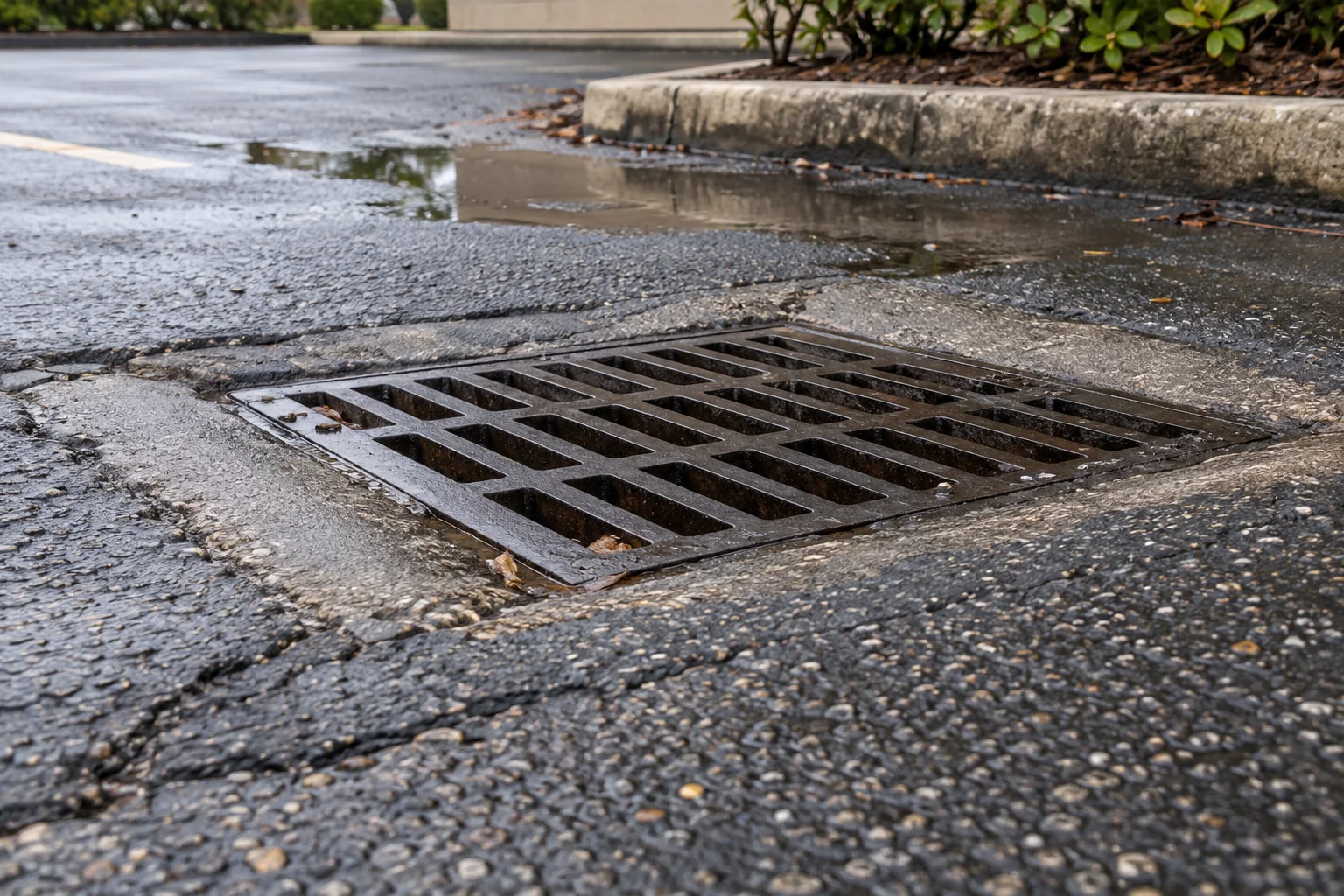
Describe the complete approach to the inlet
A concern about pavement higher than a drain inlet needs a description of the whole connection. Identify the inlet, surrounding asphalt and the path by which water is expected to approach. A difference in level alone does not establish what is wrong or which work is needed. The useful question is how the observed surface arrangement relates to the reported water or access concern.
Tell the evaluator where water collects and whether it appears to reach the inlet. A photograph may show a raised edge, retained patch or another visible feature, but it cannot establish the complete levels or connected drainage-system condition. Ask what site information and measurements are needed before choosing a correction.
This page helps organize the request and quote comparison. It does not prescribe an inlet adjustment, finished grade or drainage design. Keep the actual observations and property-specific evaluation as the basis for any construction decision.
Include water observations and a wider surface view
Provide a wide photograph identifying the inlet in relation to the parking area, entrance or traffic route. Add close views of the surrounding connection when safe. If the concern is most visible after rain, record that context with the image. Explain where the water remains rather than simply label the entire drain as failing.
Note whether the observation is new, recurring or associated with a known surface activity. If you have authentic earlier photographs, keep their date and location clear. Do not infer a required adjustment height or water depth from the photograph. The evaluator can explain which measurements are needed to understand the relationship.
Do not remove grates, enter drainage structures or attempt to clear an unknown system as a way to prove the cause. Describe what can be observed from a safe position and arrange the appropriate review. A surface concern and a question about the connected drainage system may require different responsibilities and information.
Share resurfacing and repair history at the connection
Tell the contractor about known overlays, patches or other work around the inlet. An added surface layer changes the relationship between retained features and the pavement, so the actual sequence matters to the review. Provide the earlier scope where available. A broad invoice for lot work may not establish what was done at the named inlet.
If the history is incomplete, identify that uncertainty. Surface color or a visible patch can suggest that work occurred without documenting its date, extent or purpose. The evaluator should know what is confirmed and what remains an assumption. Do not describe an inlet adjustment as completed unless records or appropriate review support that statement.
Also mention other nearby work that may affect the discussion. A retained concrete strip, utility activity or revised entrance can create a coordination question. Record the observed relationship without treating timing as proof of causation. Ask which features are included in the evaluation and which need information from another party.
Clarify surface work and drain-related responsibility
A paving contractor may address surrounding asphalt while another party handles the inlet or connected system. Ask the proposed scope to identify those boundaries. A quote for pavement repair should not automatically be interpreted as including internal drain work, structural assessment or every adjustment associated with the inlet.
If an adjustment or another trade is proposed, identify who supplies the relevant design or evaluation and who coordinates the sequence. Finished pavement and a retained inlet need a coordinated plan where their relationship is being changed. The owner should understand the dependency before scheduling rather than expect the surface crew to invent a solution at the last moment.
If another owner or authority controls a feature, ask who confirms the applicable requirements and authorization. This guide does not establish a local permission rule. Record the actual responsible contact and what must be resolved before work begins. A project can have a clear pavement boundary while still depending on information about a retained drainage feature.
Read an overlay or repair proposal at the named inlet
The existing short FAQ asks how resurfacing changes the inlet relationship. Keep that question specific to the proposed work. Ask what finished connection is intended, what preparation or adjustment is included and which relevant levels are evaluated. An additional asphalt layer should not be assumed to improve every existing water path simply because it produces a new surface.
Request a location-based description of the repair boundary and retained materials. If the offer includes only a local area, clarify whether the surrounding water concern is also evaluated. The owner should know whether the proposal addresses cracking, the pavement approach, a retained feature or a combination. These outcomes can involve different work and responsibilities.
Agree on what happens if preparation reveals a condition different from the pricing assumptions. Ask how findings are documented and a revised response approved. A preliminary allowance is not proof that every concealed feature has been assessed. Keep that limitation with the relevant inlet so it remains visible when comparing offers or planning another trade's work.
Compare the same water and construction questions
Give providers the same photographs, observations and known work history. Ask each to explain which issue its proposal addresses and which questions remain outside it. A surface patch, broader pavement correction and drain-system evaluation are not automatically equivalent offers. Compare the scope and reasoning before comparing totals.
Consider a manager asking about a puddle near an inlet while also requesting new asphalt elsewhere. Ask whether the inlet-area concern is included in the new work or needs a separate evaluation. If another provider must complete an adjustment first, record the handoff and who confirms readiness. This avoids turning a broad resurfacing description into an assumed whole-system drainage promise.
The location may affect parking, deliveries or walking access during work. Describe those needs and ask how restrictions and release will be communicated. Follow the actual reopening instructions for the affected area and any related work. The appearance of a finished patch or a newly exposed grate does not independently authorize every use.
Prepare an inlet-connection request and retain the result
Send the actual job-site address, inlet location, wide and close views, known surface-work history and safe water observations. Explain the practical concern you want reviewed and any constraints on closing the area. Ask which evaluation and construction responsibilities belong in the next step. Keep the response with the accepted scope rather than rely on a general promise to fix drainage.
Call or text Asphalt Solutions to discuss the property. Most work takes place at customer job sites. Visits to the Slidell contact location are by appointment, and listed phone availability is separate from construction scheduling. Retain the final boundary, coordinated handoffs, completed work and any open drainage question for future maintenance.
Retain the intended connection and any open system question
At completion, keep the actual scope and relevant coordination notes with the named inlet. A photograph of a new asphalt surround should not become the only record of whether a feature was adjusted, retained or evaluated by another party. Record the work and any unresolved system question separately.
If another surface project is proposed later, provide that history before the new finished levels are selected. The next contractor can then ask the appropriate questions about retained features and previous assumptions. A location record does not design the future drainage arrangement, but it prevents the owner from treating an undocumented adjustment as an established fact. Keep the accepted boundaries, supporting information and continuing limitations together so the next review begins with accurate context.
Questions about pavement higher than a drain inlet
The direct answer
If pavement sits above or changes the relationship to an inlet, runoff may not reach the drain as intended. Existing and proposed elevations need a coordinated plan.
What to discuss before choosing a repair
Ask how the drain transition and finished pavement elevation will be handled.
What to observe and record
- Show the drain and surrounding surface
- Note where water collects
- Record any previous overlays
A mistake to avoid
Adding another layer without checking inlets can reduce drainage performance.
Continue with the right next step
Property conditions determine the final scope. These planning notes do not replace a site evaluation. How to use our pavement guidance