
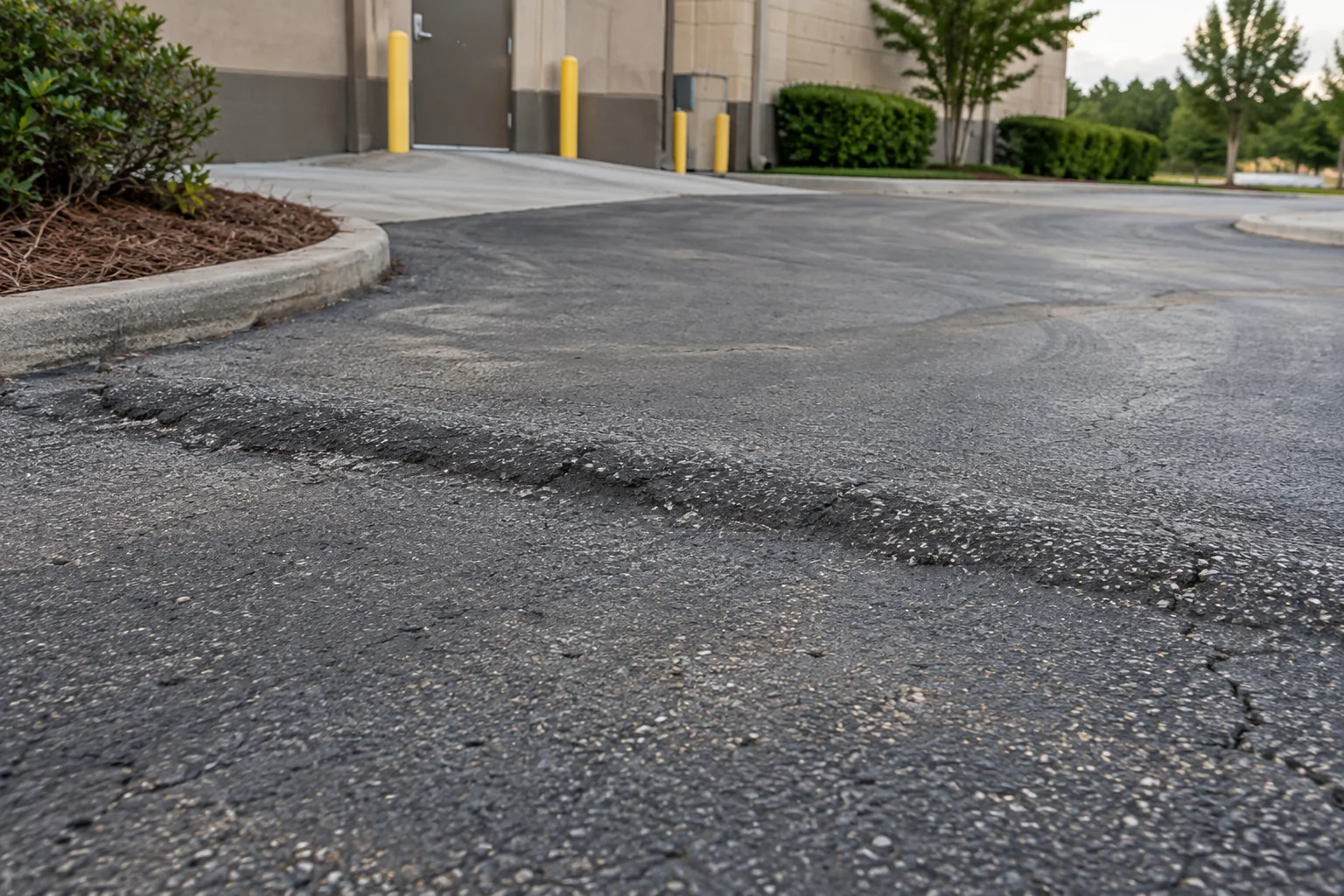
Identify the ridge and its role in the entrance
A pavement ridge at a delivery entrance needs a description of the feature and the way vehicles approach it. State whether the concern is newly observed, changing or part of a known existing arrangement. A photograph alone does not establish whether the ridge results from pavement movement, a retained connection or another condition.
If the feature was intentionally installed for a purpose, provide that information and any relevant plan. Do not assume every raised area is an accidental defect or that every hump is an approved traffic-control feature. The evaluator needs the actual history before recommending a change. The owner's useful starting point is the reported effect on access, clearance or operation.
Use the guide to organize observations and questions, then rely on a property-specific evaluation and agreed scope for construction decisions.
Show the approach and the reported crossing concern
Provide a wide view of the delivery approach, ridge and retained entrance features. Add close or side views from safe positions to help locate the concern. Explain where vehicles brake, turn or cross the feature. A close surface image can miss the approach that determines how the entrance is used.
Record reported scraping, impacts or difficulty as observations, including the relevant vehicle type when known. Do not stage a loaded-vehicle crossing or ask a driver to reproduce a problem for photographs. The owner can describe normal operations without conducting an improvised clearance or pavement test.
If earlier photographs or project documents exist, keep their date and location clear. A reported change over time may help the evaluator identify the next question. It does not establish which layer moved or who caused the condition. Ask what measurements or additional information are needed before a correction is selected.
Describe delivery use and changes in operations
Tell the contractor which vehicles use the entrance, how often deliveries occur and whether the pattern has changed. A new provider, different unloading location or revised parking operation may affect the project discussion. Describe the actual activity rather than infer a pavement design requirement from a vehicle photograph.
Identify the turning, stopping and waiting areas around the ridge. The entrance may function as part of a larger route through the property. A local repair should be considered with the retained connections and actual movement it serves. Ask which areas are included in the evaluation and which remain outside the proposed scope.
If several tenants or service providers use the approach, identify the property decision contact and communication responsibilities. A delivery entrance cannot always be closed or changed without operating coordination. The contractor should understand those needs before the sequence is priced or scheduled rather than learn them when a vehicle arrives during work.
Include water, retained surfaces and known work history
Describe water collection or a changed runoff path near the ridge as a separate concern. A raised feature can affect a reported crossing while nearby water raises another question. Ask whether the scope evaluates clearance, pavement condition, drainage or a combination. Do not assume a surface correction answers every concern at the entrance.
Provide known paving, patching, concrete or utility work records for the location. If the history is uncertain, say so. A visible color change can suggest a past surface activity without establishing its complete scope or hidden construction. The evaluator should know what is documented and which retained conditions remain assumptions.
Identify aprons, doors, drains, curbs and adjoining pavement that constrain the proposed work. If another party controls a feature, ask who confirms the applicable information and authorization. This guide does not set a local approval requirement. The responsibility needs to be clear for the actual property before work affecting that feature proceeds.
Ask what the proposed correction actually addresses
The existing short FAQ treats the ridge as more than an appearance question because the owner may report effects on crossing, clearance or water. Ask the contractor to explain which condition its proposal addresses and why the approach fits the evaluated site. A smoother-looking surface is not a substitute for that explanation.
Request the preparation, work boundary and retained-material assumptions. If localized removal or another activity is proposed, ask how its limit was selected. The owner should not choose a generic grinding, patching or reconstruction detail from an image. The actual response depends on the evaluated condition and intended use.
If preparation may reveal a different condition, agree on documentation and change approval. A preliminary quote may rely on information that needs confirmation at the site. Keep the limitation beside the entrance location so the property contact knows which decision may be required. A clear scope describes both the intended work and what remains open.
Compare offers and schedule the operating handoff
Give providers the same approach photographs, delivery description and known history. Ask each to identify what it evaluates, retains, removes and restores. A localized surface activity and a broader correction may carry different assumptions and outcomes. Compare those differences before treating the totals as alternative prices for identical work.
Discuss deliveries and other essential activity before the closure. Identify who reschedules service visits, moves vehicles and notifies tenants or staff. If staging is proposed, ask who evaluates temporary access and how the current route is communicated. A narrow repair area can still affect the only delivery entrance.
Follow the actual reopening and use instructions. The departure of equipment or a finished-looking crossing does not independently authorize a delivery vehicle to use the location. Retain the release and any continuing limitation with the project record. If another entrance or route question remained outside the work, keep it visible for the next evaluation.
Prepare a useful delivery-entrance request
Send the job-site address, wider approach views, close ridge photographs and the reported effect on normal deliveries. Include vehicle and work history, nearby water concerns and closure constraints. Ask what evaluation is needed and which operating and construction responsibilities belong in the next step. Keep observations distinct from an assigned cause.
Call or text Asphalt Solutions to discuss the actual property. Most projects take place at customer job sites. Visits to the Slidell contact location are by appointment, and phone availability is separate from construction scheduling. Ask for the accepted scope and delivery-access assumptions to be documented so the property can plan the work and handoff clearly.
A practical entrance comparison using the same vehicle needs
Imagine two offers for a ridge where delivery vehicles turn into a service entrance. One covers a local surface activity and another describes a broader connection correction. Give both providers the same approach information and reported vehicle needs, then ask each to explain its intended outcome. A smaller price may represent a narrower boundary rather than a different price for the same result.
Now identify the retained apron, doorway and nearby water concern. Ask whether each is evaluated or excluded. If the proposed work depends on another party confirming a feature or changing an operating practice, record that dependency before scheduling. The surface crew should not be expected to settle an unknown clearance or design question as an unrecorded field decision.
Finally, compare the closure assumptions. A property that cannot clear the approach during a planned delivery may need to change the appointment or discuss another sequence. Identify who confirms that action. The useful agreement connects the evaluated construction scope with an operating plan the property can actually provide.
Questions about pavement ridge at a delivery entrance
The direct answer
A ridge may be related to pavement movement, a transition or underlying conditions. Loading and repeated turning make a delivery entrance a distinct use area.
What to discuss before choosing a repair
Ask how the new transition accommodates the vehicles that actually use it.
What to observe and record
- Show the ridge profile
- Describe delivery vehicles
- Record scraping or wheel impacts
A mistake to avoid
Flattening the visible high point alone may not address the pavement movement.
Continue with the right next step
Property conditions determine the final scope. These planning notes do not replace a site evaluation. How to use our pavement guidance