
The decision in plain language
Construction deliveries and stored materials can interfere with new driveway work.
The situation to discuss
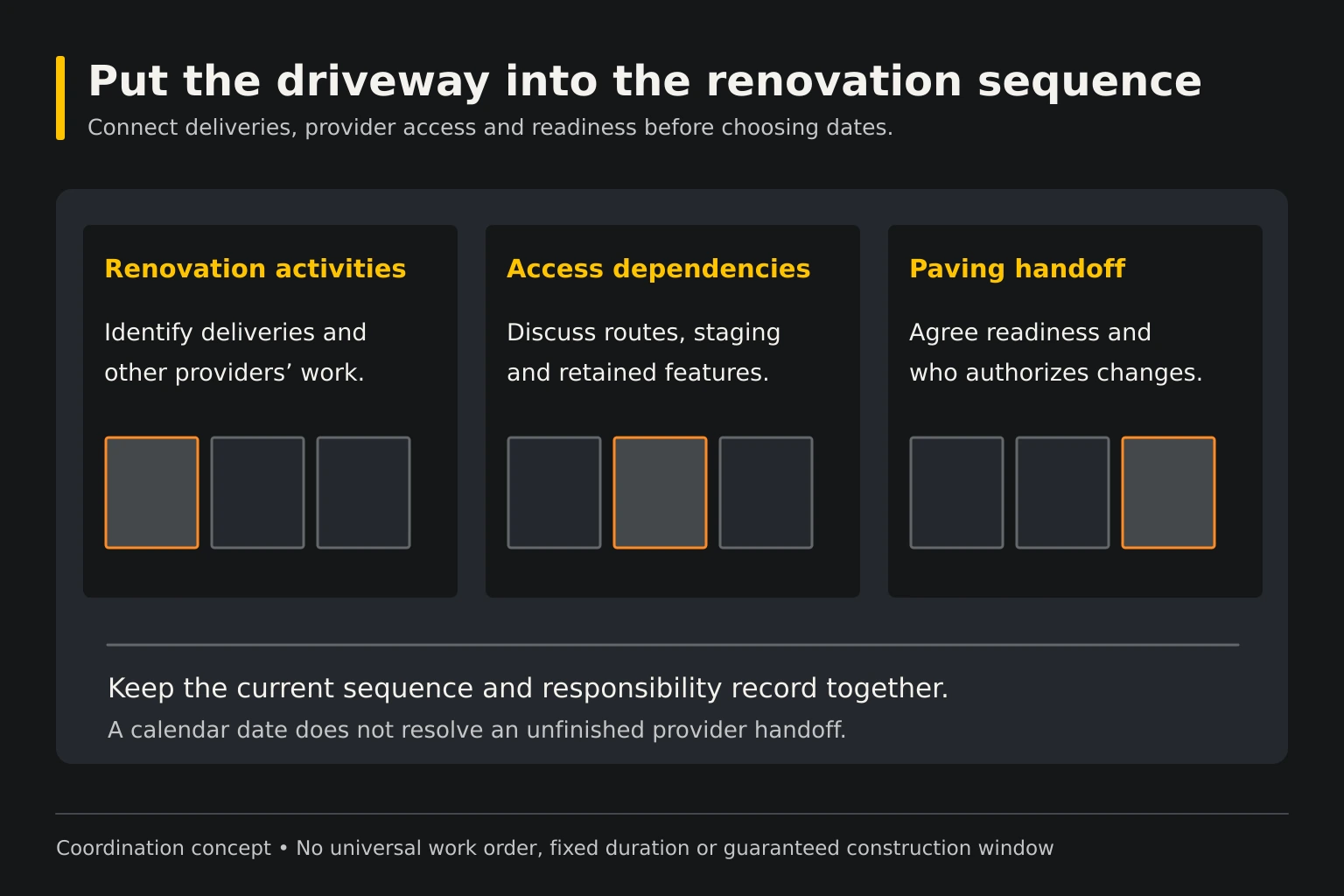
Coordinate the paving date with heavy deliveries and the last trade needing driveway access. Establish who protects the finished surface and follows reopening guidance.
Your five-point decision sheet
Use these headings on a simple sketch or in your project notes. Under each one, write the actual property observation, the question you still need answered and the person responsible for the decision. Leave an unknown item marked as a question instead of assuming it is included.
- Which renovation movements still affect the driveway?
- Which retained connections will other providers change?
- Who clears stored material and confirms the required milestone?
- What household closure and provider handoff are agreed?
- Which later construction uses still require reopening guidance?
What not to assume
The best-looking date in the renovation calendar may not be the best paving sequence.
Turn the discussion into a clear work boundary
Keep a copy of the marked site sketch with the estimate. Identify the area being authorized and any adjoining feature that must remain protected or available. If the contractor recommends an investigation or a separate trade, record that next step before treating the proposal as a final solution. A planning guide helps you ask questions; it cannot establish hidden conditions from photographs.
When a decision changes the work, request an updated description showing what was added, removed or deferred. Confirm how any additional quantity will be measured and approved. Make sure the person giving the approval has authority for that part of the property. This prevents a useful site conversation from becoming a different job than the one the owner expected.
Bring the right information to the visit
Send your address, the overall project goal and photos showing this specific connection or operating area. Include a wide view for context and a closer view of the detail under discussion. Describe any timing or access constraint that affects the decision. Avoid placing yourself in traffic or entering inaccessible structures to collect information.
List work that still affects the driveway
Identify renovation tasks that use or change the driveway, entrance and adjoining features. Include deliveries, collection, stored materials and separate-provider visits. The last day of one interior task may not be the end of construction movements on the property. A paving sequence needs the activities that will actually affect its route and connections.
Ask the renovation coordinator or responsible providers for confirmed current information. Keep tentative dates distinct from completed milestones. Do not assume a driveway can be scheduled against an early renovation calendar that no longer reflects the property. The paving contractor should understand remaining tasks before reviewing access and sequence.
Define the final retained connections
Show the garage, entrance, walks, drains, gates and other features that meet the proposed pavement. Mark which remain and which another provider will change. The accepted driveway scope should relate to the intended final arrangement rather than an intermediate condition that exists only during the renovation.
Ask which connections must be reviewed or completed before final paving. Record the responsible provider and required handoff. If a building threshold, drain or gate changes after estimating, send current information and request a connection review. Keep an earlier photograph available as history, but do not use it as the current construction plan.
Describe actual deliveries and collection movements
List the vehicles and movements still expected, using confirmed provider information where available. Show the arrival route, stopping position and area needed for unloading or collection. A delivery's effect on the paving plan should not be inferred solely from the name of the material being brought to the property.
Ask the paving contractor how those movements relate to the proposed work and reopening instructions. Keep later construction use distinct from ordinary household access. If a provider changes its vehicle or arrival arrangement, communicate that change before assuming it can use the same route under instructions issued for a different activity.
Move storage decisions into the plan
Identify materials, containers, equipment and owner possessions occupying the driveway or staging area. Distinguish items that will leave from those expected to return. Ask who moves them and what must be cleared before the crew arrives. An estimate visit with temporary storage does not itself establish the finished parking arrangement.
Record the clearing milestone and responsible contact. If stored items remain because another task is delayed, notify the paving contractor before scheduling or arrival. Avoid making the crew route depend on an assumed collection date that the responsible provider has not confirmed. Keep the current property arrangement visible in the sequence.
Separate paving from renovation restoration
Clarify which disturbed surfaces and adjoining features belong to the paving scope and which another provider restores. Fence, landscape, utility and building tasks should have named responsibilities. A driveway replacement does not automatically include every area disturbed by the renovation, even when those tasks share the same construction route.
Photograph retained features and existing concerns with location references. Ask how the paving connection and restoration limits are defined. Keep optional work distinguishable from the base proposal so the owner can compare estimates addressing the same area and responsibility rather than totals attached to different renovation cleanup assumptions.
Coordinate services and water-related tasks
Share known utility, irrigation and service changes and confirm appropriate locating responsibilities before excavation. If a provider is changing a drain, outlet or building connection, identify its approved task and current status. Owner recollections can help the discussion but should not be treated as confirmation of a buried route or completed installation.
Record which water-related connections the paving contractor is reviewing and which remain another provider's task. Photograph current observations with timing relative to rain rather than diagnose them from a single image. The accepted scope should not rely on an unassigned service or drainage change as though it were part of the completed renovation.
Plan a realistic closure for the household
Explain essential household vehicle and walking access before approving the driveway work. Include any residents, visitors or providers who need current instructions. Ask whether a practical phase arrangement exists for this property or whether a full closure and temporary parking plan are needed.
Assign vehicle movement and notices before the crew arrives. Keep the closure plan separate from the renovation's general arrival instructions. A provider who has used the driveway throughout the renovation may otherwise assume it stays open when paving begins. Record the current restrictions and the contact who communicates changes.
Use milestones to choose the sequence
Ask both the paving contractor and affected providers which tasks must be complete before the next stage can proceed. A milestone should identify the actual completed activity or reviewed connection, not only a preferred date. Keep pending items visible where another provider's work affects the accepted paving arrangement.
If that work is delayed, request a current sequence rather than force the original schedule. Record any effect on access, scope or return visits. The owner should understand whether the driveway is being completed after relevant construction movements, or whether specific later activities still need coordination under project-specific guidance.
Keep changes with one current project record
Name the person who approves revisions and communicates them across providers. Use a dated current sketch for changed paving limits, retained features and crew routes. A verbal update to one provider should not leave another working from an older arrangement that conflicts with the accepted connection.
Ask how exposed conditions, owner requests and renovation changes affect the paving scope and sequence. Keep those reasons distinguishable in the revision record. Before authorizing added work, request an understandable description of the change and price effect, with the current boundary or handoff where relevant to the decision.
Close out the driveway and remaining renovation tasks
Save the paving scope, approved changes and final photographs of retained connections. Include project-specific care and reopening guidance for actual uses. Keep any later construction activity or pending separate task visible, with a responsible provider and current access instruction, instead of treating a completed driveway as the end of every property task.
For later observations, identify the location, timing and actual use. Compare the current condition with the accepted paving and renovation records without assigning a cause from one photo. A clear handoff helps the household understand what is complete, which provider handles a remaining task and which movements need review before returning to the route.
Questions before you approve the work
Discuss the actual property and work limits
Send the property address, current photographs, intended use and access needs. Keep planning with these related decisions.
Reviewed October 14, 2026. Owner preparation guidance; the accepted proposal defines the actual work.