
The decision in plain language
Compare the investigation and water-path scope as well as the visible repair limits.
The situation to discuss
Ask each bidder which observations support the recommendation and which questions remain open. Distinguish surface work from deeper investigation.
Your five-point decision sheet
Use these headings on a simple sketch or in your project notes. Under each one, write the actual property observation, the question you still need answered and the person responsible for the decision. Leave an unknown item marked as a question instead of assuming it is included.
- Do the offers address the same located section and water record?
- How does included preparation differ between proposals?
- Which features are retained, excluded, optional or separately reviewed?
- What coordination and timing assumptions affect each offer?
- Which current version and actual selected items are approved?
What not to assume
Two proposals covering the same wet spot may be proposing very different work.
Turn the discussion into a clear work boundary
Retain the same section reference beside every offer being compared, with its actual included boundaries visible. Keep each provider's explanation and separate-review assumptions attached to that proposal rather than combining them into one preferred description. The owner should be able to identify the work authorized in the selected offer. Unselected alternatives remain useful comparison history, but their additional items do not become part of the accepted price automatically.
If clarification changes an offer, keep the revised description and explain which item was added, removed or deferred. Ask whether preparation, access, price or timing changes with it, and identify the person authorized to select that version. Compare the actual current proposals after the response. A useful comparison should not rely on an outdated total paired with scope details taken from a different version or provider.
Bring the right information to the visit
Send your address, the overall project goal and photos showing this specific connection or operating area. Include a wide view for context and a closer view of the detail under discussion. Describe any timing or access constraint that affects the decision. Avoid placing yourself in traffic or entering inaccessible structures to collect information.
Define the section before requesting alternatives
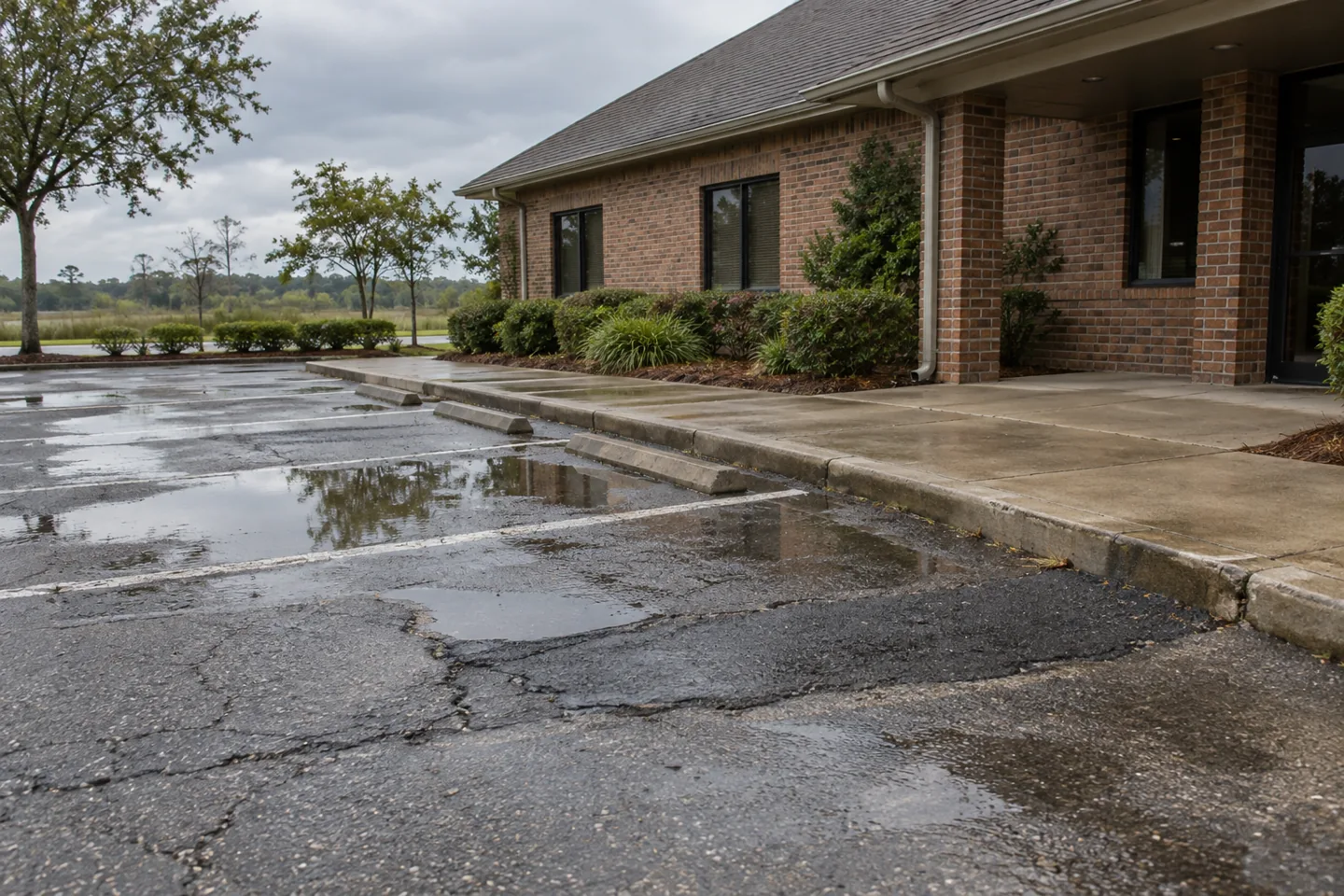
Identify the pavement area with a plain name, wide photographs and fixed landmarks. Describe the visible water concern and the improvement the owner wants reviewed. Avoid requesting several generic driveway prices that do not refer to the same boundaries. A close photo of a puddle may help describe a detail, but it should be connected to the larger section each provider is being asked to consider. The first comparison question is whether the offers concern the same actual property area and intended use. Without that shared starting point, similar headings or totals may describe substantially different tasks before any treatment details are considered.
Give each provider the same observation record
Share current dated photographs, actual event timing and relevant provider records consistently. State which details remain uncertain rather than offering one bidder a confirmed-looking explanation and another only a surface picture. If the owner supplies an additional important record later, identify it clearly and ask how it affects the offer under review. Keep a report from another contact distinguishable from an owner's direct observation. Comparable starting information does not guarantee identical proposals, but it makes differences easier to discuss without assuming they result from the same assessment or requested work when each provider received a different description.
Read the preparation description before the price
Ask what preparation is included for the actual pavement section and which visible concerns the provider is addressing. A broad repair or resurfacing label may omit the detail needed to understand that task. Keep a provider's proposed method distinguishable from an owner's preferred wording or an example on a resource page. If the offer leaves a relevant preparation question open, request clarification rather than filling the gap with an assumption. The comparison should show what each provider is actually offering to do at the located area, allowing the owner to assess the scope described instead of treating every surface-work heading as an equivalent response.
Identify retained outlets, inlets and neighboring surfaces
List the visible features that help locate the water question, then review how each offer treats them. Ask whether an item is retained, included, excluded, optional or dependent on separate review. A pavement quote should not silently become a promise to change every nearby drain, threshold or lawn boundary. Keep the actual feature description beside the relevant offer. The owner can then compare a repair confined to pavement with an alternative that includes a specifically described additional task. This distinction is especially useful when one total appears lower because it does not address an item another provider has explicitly priced.
Keep scope explanations separate from hidden-cause claims
Ask each provider how its offered pavement work relates to the recorded concern and save the actual response. Do not convert an owner photograph into a confirmed diagnosis merely to make the comparison simpler. If another assessment is required, identify who obtains it and which proposal item depends on the response. Different providers may describe different approaches or limitations. A useful comparison records those actual statements without claiming the worksheet has established the correct technical design. The owner should see where the offer is specific and where uncertainty remains, rather than treating a general drainage phrase as a complete explanation of the property.
Compare the actual work boundaries and intended use
Connect each offer to the same recognizable section and state whether any proposal includes a different area. Describe the ordinary vehicles, access and property activity relevant to the requested improvement. An isolated repair and a broader parking section can have different boundaries even when both are described as work near water. Ask a provider to clarify that difference. Keep retained surfaces identifiable, and do not assume omitted areas are included because they appear in a photograph attached to the request. The owner needs an understandable map of offered work before comparing the practical implications of price, timing or optional items.
List separate-provider tasks and coordination assumptions
Identify which offers rely on another provider response or work item affecting the same area. Record who coordinates that task, what information is needed and whether the arrangement is confirmed. A proposal that excludes a separate inlet review should not be compared as though it includes the same task as another offer. Keep a preferred sequence distinct from an accepted plan. This makes the comparison useful to the property contact who must coordinate the actual work and prevents an unassigned task from disappearing between providers merely because every estimate uses a similar general heading about drainage or pavement improvement.
Keep options and exclusions visible beside the base offer
Write down each optional item's actual location and described work, then record whether the owner selects it. Keep exclusions, unselected options and deliberately deferred items as different categories. A proposal containing an optional feature does not mean its base total includes that work. Ask how accepting an option affects preparation, access or other scope assumptions when relevant. The comparison should preserve the provider's actual structure rather than combine several alternatives into one imagined offer. Clear choices help the owner approve an identifiable scope and give a later property contact a reliable account of which suggested items were actually accepted.
Ask about timing and instructions for the selected scope
Review the contractor's actual scheduling and owner preparation response for the proposal being considered. Identify assumptions that depend on another provider, property access or unresolved information. Keep a tentative date distinguishable from a confirmed work window. Do not replace the contractor's instructions with the owner's preferred access plan to make competing offers appear similar. If a proposal changes after clarification, ask whether its timing or preparation description changes as well. This connects practical coordination with the actual selected work instead of treating an early general estimate discussion as a settled arrangement for every task in the comparison.
Approve a recognizable current version
When the owner chooses an offer, retain the current written scope and actual selected options together. Identify the authorized approval contact and any open item that must still be resolved. If a clarification changes work boundaries, preparation, price or timing, ask that change to be recorded rather than relying on an earlier version. Keep other proposals as comparison history without treating their different items as part of the accepted work. The completed decision file should let the owner and contractor point to the same agreement, avoiding a later expectation built by combining favorable details from several offers that were never accepted together.
Review completed work against the chosen offer
After the contractor permits the relevant access, connect recognizable closeout observations with the selected boundaries and included items. Raise a specific question about that scope rather than comparing the result with an unselected alternative. A visible photograph does not prove every hidden condition or establish an additional water-performance commitment. Retain the contractor's response, provided instructions and agreed follow-up with the relevant section. For an estimate discussion, send Asphalt Solutions the address, dated wide views, actual intended use and the water question you want reviewed. A focused request helps create a clear offered scope that can be compared on its own terms.
Questions before you approve the work
Discuss the actual property and work limits
Send the property address, current photographs, intended use and access needs. Keep planning with these related decisions.
Reviewed October 14, 2026. Owner preparation guidance; the accepted proposal defines the actual work.