
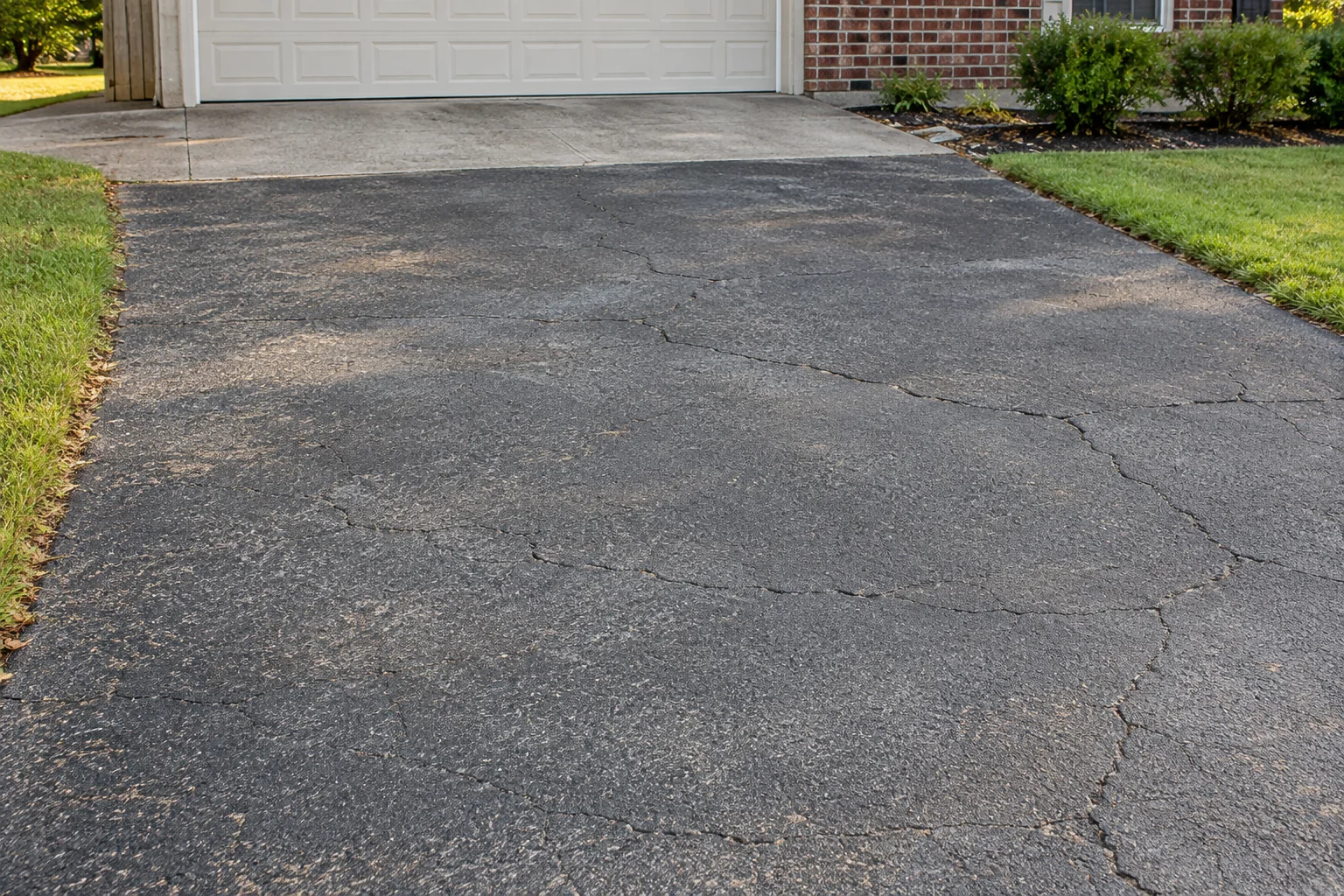
Keep the maintenance comparison tied to the project goal
When comparing sealcoating with a larger paving proposal, give each provider the same description of the property and the concern you want addressed. A surface appearance question and a request to change the driveway's use may lead to different discussions. State the actual goal before comparing totals so the owner understands what each task is intended to accomplish.
Ask which observations support the proposed work and which conditions remain outside its scope. Keep the work boundary, retained surfaces and any separate assessment visible. A maintenance label should not silently become a promise about hidden support, while a broader replacement label should still describe the actual area and activities included. General reading cannot settle that choice for a property that has not been evaluated.
Retain the provider's explanation with the written proposal and any approved change. If the intended use or another household project changes, bring that information back into the discussion before authorizing work on an outdated assumption. At completion, follow instructions for the actual task and keep genuine location photographs with the project record.
Call or text Asphalt Solutions with the address and the decision you need reviewed. Most work takes place at customer job sites. Slidell contact-location visits require an appointment; listed hours mainly concern phone availability, with site visits and construction timing arranged separately.
Choose the job the pavement needs
Sealcoating and replacement answer different questions. A surface-maintenance treatment is considered for pavement whose condition supports that treatment. Replacement changes the pavement within an agreed boundary. Between those choices, a property may also need localized repairs or evaluation for resurfacing. The useful decision starts with the condition and intended use, rather than a preference for a darker surface.
For a homeowner, that means separating appearance from broken edges, depressions, missing material and changes near the garage or street. Asphalt Solutions can discuss the property and help define the questions for an estimate. A website photograph cannot confirm which treatment is suitable or promise a service life for the work.
Separate cosmetic concerns from functional concerns
Write down what you want to improve before asking for a particular treatment. A faded surface, a trip concern at a connection, a recurring low area and a driveway that no longer fits your vehicles are different goals. Some can be discussed as maintenance; others may require changes to material, geometry or the work boundary. Combining them under make it look new can hide the most important requirement.
Use two lists: the features you would like to improve and the conditions that interfere with using the driveway. Include where each occurs. This makes it easier to ask which concerns the proposed work addresses and which will remain after completion.
What sealcoating does not decide
A surface treatment should not be treated as proof that underlying support is sound. It does not replace missing pavement, establish a new drainage layout or resolve every crack mechanism. Ask what preparation and repairs are recommended before the treatment, and which existing conditions will still be visible or require later attention.
Avoid comparing a maintenance-only proposal with a replacement proposal as though they deliver the same result. The first may preserve a usable surface; the second may include removal and reconstruction within specified limits. The price difference is meaningful only after the included work and the intended outcome are understood.
Map the driveway instead of using one condition label
Walk the accessible area and identify distinct sections: the street entrance, main travel area, parking area, garage connection and edges. Photograph each from a safe position. One section may be serviceable while another has repeated damage. Ask whether the recommendation applies to the entire driveway or to a defined portion.
A marked photograph can help explain an option that combines repair and maintenance. Keep the boundaries with the written quote, including any area deliberately deferred. That prevents the assumption that a broad title such as driveway maintenance includes every adjoining walkway, apron or concrete connection.
Inspect connections before raising the surface
If resurfacing is being considered, ask how the new surface relates to the garage threshold, street connection, gates, drains and neighboring pavement. A proposal should explain the intended transitions rather than leaving the owner to assume additional material fits everywhere. The relevant measurements belong in the site assessment.
Show any place where water, door clearance or vehicle movement is already a concern. If another trade controls a feature, identify who must coordinate it. Resurfacing is a separate option from sealcoating and full replacement; its suitability cannot be determined solely by the apparent age or color of the driveway.
Review removal and replacement as a defined scope
For replacement, ask which materials are removed, how the existing support will be evaluated and what preparation is included. Clarify the limits beside landscaping, walls and other surfaces. If an unsuitable condition is uncovered, the proposal should describe the process for explaining and authorizing additional work.
Do not assume removal includes changes outside the private work area. Street aprons, drainage features and utility connections may need separate coordination. Ask about responsibility for permissions and related work. The purpose is to identify decisions before construction, without inventing permit requirements for a property that has not been assessed.
Tell the contractor about changes in vehicle use
The intended driveway use belongs in the decision. Mention delivery trucks, trailers, recreational vehicles, sharp turning movements and planned parking changes. A driveway used only by passenger cars today may have a different requirement after a renovation or a new storage arrangement.
Describe known use rather than prescribing a pavement thickness yourself. Ask how the proposed scope addresses that use and what limitations apply. If widening is part of the project, show the planned parking position and route, not just the strip of ground you want surfaced. Connections and runoff should remain part of the discussion.
Weather affects the construction conversation
Ask what conditions the selected material and work sequence require. A contractor may need to adjust timing for weather, preparation or site readiness. Treat the proposed date and the return-to-use instructions as details to confirm, rather than borrowing a fixed waiting period from another driveway.
Plan where vehicles will go while access is restricted. If the driveway serves a shared entrance, include the other users before scheduling. Keep the contractor’s instructions in writing and clarify who will communicate a change. A treatment can be technically appropriate yet inconvenient if the household has no workable access plan.
Compare the maintenance cycle with the project goal
Ask what follow-up care the proposed work requires and which observations should prompt another discussion. A maintenance decision is easier to manage when the owner keeps dates, photographs and written instructions together. Do not assume a universal calendar applies to every driveway, material or traffic pattern.
If you are preparing a property for sale, distinguish an appearance goal from a need to disclose or evaluate an existing problem. A fresh surface appearance is not evidence that a drainage or structural concern disappeared. Request a scope that describes the actual work, rather than wording that suggests an inspection or certification was performed when it was not.
Build a comparison you can read
Put proposals side by side with headings for boundaries, preparation, repairs, materials, transitions, disposal, exclusions, additional-work approval and return to use. Ask for clarification when an item is absent. A shorter quote is not automatically incomplete, but an unanswered responsibility can create a different expectation for each party.
For optional work, keep the reason and price separate from the base recommendation. You can then decide whether the option solves a current problem or adds an improvement. Confirm which conditions the contractor expects to remain. A clear limitation is useful information when choosing between maintenance, resurfacing and replacement.
A hypothetical homeowner example
Suppose a driveway is faded across most of its area, but one corner near a roof outlet has broken edges and standing water. These are observations, not a diagnosis. The owner can ask whether the corner needs separate investigation or repair, whether the roof-water path needs coordination and whether the remaining surface is a candidate for maintenance.
That conversation is more useful than asking for one price to sealcoat everything. The example does not describe an Asphalt Solutions job or establish the right treatment for another property. It illustrates why a mapped concern and a specific question can improve the estimate discussion without requiring the homeowner to diagnose the pavement.
Questions before choosing
Discuss the actual property
Explore sealcoating or request a project quote. Include the address, your goal and safe photos. Call (985) 788-0493 if you prefer to begin by phone. An inquiry does not confirm price or a construction date.
Reviewed October 8, 2026. Owner planning guidance; no property-specific diagnosis, engineering specification or completed-project claim. Guidance and image-source policy.