
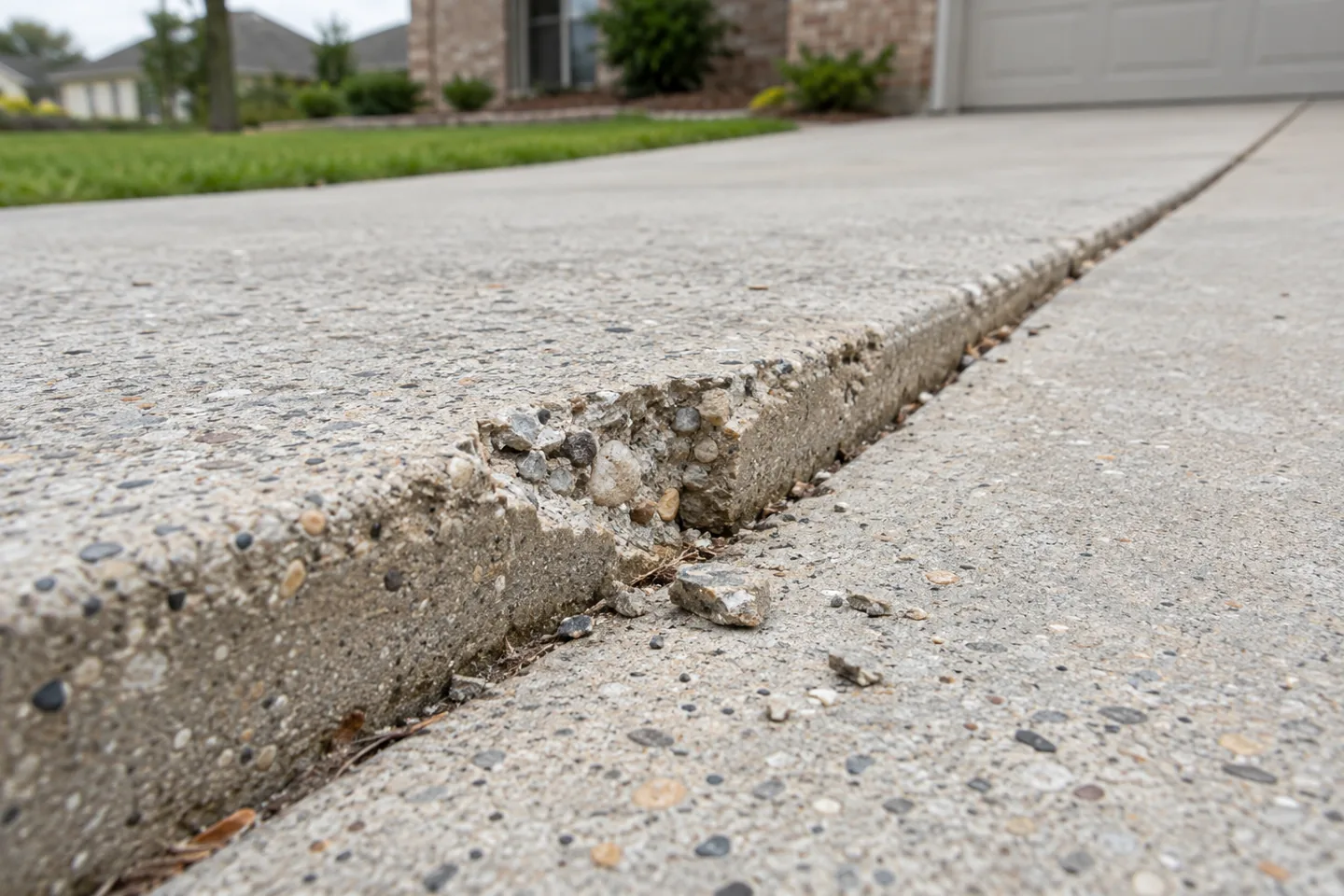
Spalling describes material breaking away
Concrete spalling describes pieces breaking or flaking away from concrete. The observation may be at a panel edge, beside a joint or across another exposed area. The label identifies a type of visible damage; it does not establish its cause, its full depth or the appropriate repair. Start with the location and extent rather than assuming every chipped corner needs the same response.
A small missing piece can matter differently on a little-used edge, an entrance step or a route used by carts. Describe the practical effect along with the appearance. Ask the project contact what assessment is needed and which adjacent areas should be reviewed. This glossary supports a useful inquiry about pavement and flatwork. It does not diagnose structural damage or select a repair product from a photograph.
Separate edge breakup from other surface observations
Show whether material is missing mainly along a joint, at an outside edge or in the middle of a panel. Note any nearby crack, offset or previous patch as a separate observation. A broad description such as bad concrete can hide those differences and lead two contractors to price different things. Label each area so the proposed repair locations are comparable.
Surface flaking, loose aggregate, staining and a broken panel are not interchangeable observations. If you are unsure which term fits, use plain language and photographs instead of forcing a diagnosis. A contractor can help clarify the condition during an assessment. The important owner task is to show what is visible, where it is located and how it affects use, without claiming a hidden mechanism has already been confirmed.
Make the extent visible in the inquiry
Use an overall view that shows the affected panel and its neighboring concrete. Add a closer view of the missing material and a location label that matches a simple property sketch. If there are several damaged edges, identify them separately. A close photograph alone can make a small chip look like a much larger repair or hide a longer deteriorated boundary.
Do not pry off material or enter an unsafe area to improve the record. If pieces are loose or the edge affects a walking route, keep people away from the immediate concern and arrange an appropriate review. Record approximate area descriptions as estimates rather than precise repair quantities. The final scope may depend on what assessment or preparation reveals, and that uncertainty should remain explicit.
A patch and a panel replacement have different limits
Ask whether the proposal addresses localized material loss, a larger repair area or complete panel replacement. These approaches may involve different preparation, retained edges, finish and access restrictions. A quote using only the word patch is not enough to understand what will be done. Request the actual area and intended repair approach in property terms.
If a limited repair is proposed, ask which surrounding concrete is considered part of the work and what happens if unsound material extends beyond the first visible boundary. If replacement is proposed, ask which panels remain and how the new work connects. An owner should understand the boundaries and approval process before comparing totals. Do not assume a thin cover over visible damage is equivalent to addressing the condition beneath it.
Ask about preparation and the intended finished surface
A repair proposal should explain the included removal and preparation well enough for the owner to understand its limits. Ask which existing material is retained, what surface is being repaired and what finish is intended. The owner does not need to prescribe tools or installation steps. The useful question is whether the contractor's described work actually covers the locations and concerns submitted.
Discuss appearance separately from the repair boundary. New material can differ in color and texture from weathered concrete, and a repair line may remain visible. Ask what result is realistic rather than expecting the damaged area to disappear without a trace. If a later coating or finish is planned, raise that before the scope is agreed so the repair and later system can be coordinated.
Read the joint and neighboring-panel context
Spalling beside a joint should be shown with the adjoining panels and the visible line between them. Ask whether the proposed work includes only broken concrete, joint material or a broader connection decision. Rebuilding an edge and treating a joint are different descriptions, even when they occur in the same small area. Make sure the estimate explains both if both are intended.
If one panel appears higher than another or a nearby edge affects cart travel, describe that separately. A photograph of chips does not establish why an offset exists or whether movement is continuing. Ask the project professional which related observations need review. Avoid assuming a cosmetic repair will also resolve every elevation, joint or support concern around the damaged location.
Include service history and exposure information
Provide known placement or repair dates, previous invoices and dated photographs when available. State whether the area is crossed by vehicles, used by delivery equipment or exposed to an unusual activity you can actually describe. Mention known cleaning or surface-treatment history without guessing a chemical cause. Missing records should be identified as missing, not replaced with a confident story.
If the damage appears to be changing, compare dated views from the same position. Note what changed in the visible area and what remained similar. A larger-looking patch in a closer photograph is not reliable evidence of progression. Clear records can help the reviewer ask useful follow-up questions, but they do not replace an assessment of the actual concrete or establish responsibility for the condition.
Plan protection and access during repair
A small repair can still interrupt the main path to a door, garage or service area. Explain the route people and vehicles normally use, and ask which area will be closed during preparation, repair and the required care period. Keep the contractor's return-to-use instructions rather than assuming a small patch is immediately available because its footprint is limited.
For a business, identify the person responsible for redirecting deliveries and notifying other users. For a home, plan for parked vehicles, children and pets before the work starts. Ask how a schedule change will be communicated and who authorizes reopening. Those arrangements belong beside the repair scope so an otherwise useful treatment is not undermined by an avoidable misunderstanding about access.
Compare offers by the same damaged locations
Use the same photographs and location labels for each contractor. Compare included removal, preparation, repair area, retained concrete, joint treatment, finish and cleanup. Ask what uncertainty remains and how additional work is approved if the affected area is larger than expected. A lower total may reflect a smaller repair boundary rather than a directly equivalent method.
Also ask which performance or follow-up terms are actually part of the agreement. Do not infer a guarantee from a product name or from a general explanation that a repair can be considered. The appropriate approach depends on the assessed condition and the actual scope. Keep the accepted description and approved changes together so completion can be reviewed against a shared record.
A focused next step for an owner
If a driveway joint has several chipped edges, start with a wide photograph of both panels and a closer view of each damaged section. State whether the concern is loose material, appearance, an uneven crossing or another practical effect. Ask for an assessment that distinguishes the concrete damage from the joint and any other nearby observation.
After a repair, retain dated views, the accepted area list and the supplied care instructions. If a new concern develops, identify whether it is inside the repaired area, along its boundary or elsewhere. Avoid treating all later damage as the same condition without review. This makes follow-up more specific and useful while preserving the distinction between what the owner can observe and what the responsible professional needs to evaluate.
Questions about concrete spalling
Meaning in plain language
Spalling is flaking or breaking away of concrete, often near edges, joints or the surface. The depth and extent determine what repair options should be discussed.
A practical example
Photograph broken material at the edge of a joint together with the adjoining panels. A chip can be part of a larger connection problem.
Use the term in your project discussion
Provide close images and a wider view of the slab or joint.
Details that matter
- Breakup depth
- Affected edges
- Surrounding condition
A mistake to avoid
A thin cosmetic cover may not address deeper deterioration.
Continue with the right next step
Property conditions determine the final scope. These planning notes do not replace a site evaluation. How to use our pavement guidance