
The decision in plain language
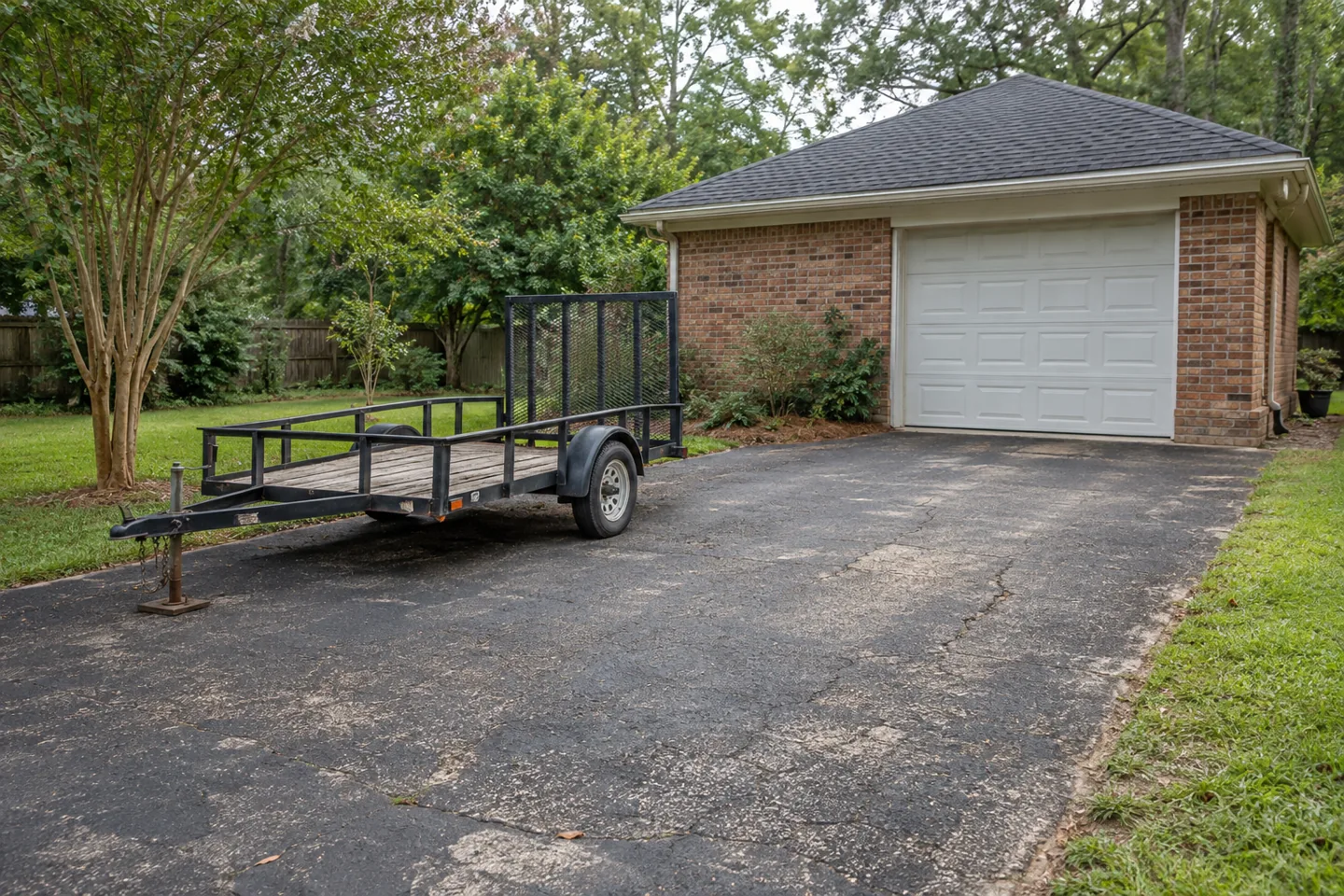
Long-term trailers can hide pavement condition and obstruct treatment boundaries.
The situation to discuss
Record when each trailer can move and inspect the newly exposed area before defining the final scope. Identify supports or attachments that need separate coordination.
Your five-point decision sheet
Use these headings on a simple sketch or in your project notes. Under each one, write the actual property observation, the question you still need answered and the person responsible for the decision. Leave an unknown item marked as a question instead of assuming it is included.
- Which normal standing positions and trailer movements are confirmed?
- What pavement is accessible and what remains obscured pending relocation?
- Who arranges authorized movement and the temporary position?
- Which reviewed preparation, repair and treatment limits are accepted?
- What activity-specific return guidance and equipment records stay separate?
What not to assume
The surface beneath a parked trailer should not be assumed to match the visible surrounding pavement.
Turn the discussion into a clear work boundary
Keep a copy of the marked site sketch with the estimate. Identify the area being authorized and any adjoining feature that must remain protected or available. If the contractor recommends an investigation or a separate trade, record that next step before treating the proposal as a final solution. A planning guide helps you ask questions; it cannot establish hidden conditions from photographs.
When a decision changes the work, request an updated description showing what was added, removed or deferred. Confirm how any additional quantity will be measured and approved. Make sure the person giving the approval has authority for that part of the property. This prevents a useful site conversation from becoming a different job than the one the owner expected.
Bring the right information to the visit
Send your address, the overall project goal and photos showing this specific connection or operating area. Include a wide view for context and a closer view of the detail under discussion. Describe any timing or access constraint that affects the decision. Avoid placing yourself in traffic or entering inaccessible structures to collect information.
Describe the normal trailer arrangement
Explain which trailers occupy the property and how they are normally used. Identify long-term standing positions separately from trailers that move regularly. Include confirmed provider or equipment information where available. The contractor needs the actual occupied arrangement rather than infer it from a photograph showing only the open surface beside a trailer.
Keep future use distinguishable from the current routine. If a different trailer, standing position or service movement is planned, tell the contractor before approval. The accepted maintenance scope should be reviewed against the arrangement that will actually be present after work, not an earlier empty-area sketch or temporary storage condition.
Mark treatment and retained areas separately
Show the proposed treatment boundary, trailer positions and retained access route on a dated layout. Ask which area can be reviewed now and which surface remains obscured until relocation. A general maintenance description should not imply that the contractor has assessed a pavement section it has not yet been able to see.
Keep optional or excluded areas clear in the proposal. If moving a trailer reveals a concern affecting the recommended limit, request a current scope review. The owner should know what is included and what remains pending before an exposed surface becomes an assumed part of the accepted work.
Separate standing contacts from travel movements
Describe the trailer's actual parked arrangement and the route used to move it. Include confirmed support or equipment-provider information where relevant. A trailer may occupy one footprint while its arrival and departure use a different retained section, so the two should be understandable in the quote discussion.
Ask the appropriate provider about any support-related requirement outside the paving scope. Do not select a pavement or treatment detail from a trailer name alone. Keep equipment instructions separate from the contractor's accepted surface work and activity-specific care guidance rather than combine them into an unsupported general parking promise.
Assign relocation before scheduling
Identify who may arrange and perform the necessary movement, where the trailer will stand temporarily and which route it will use. Do not assume the paving crew handles trailers or that an adjoining area is authorized simply because it appears vacant during the estimate visit.
Record required permission and provider tasks before the plan relies on them. If the movement remains unconfirmed, leave the item pending. The contractor should receive a current status rather than an owner statement that the area will be clear when another responsible party has not agreed to the proposed relocation or route.
Review pavement when it becomes accessible
Keep wide and closer location photographs of visible concerns, with dates and confirmed work history where available. If relocation exposes a previously hidden section, tell the contractor before treatment is selected for that area. An open-looking surface should not be assumed to have the same condition as the pavement already reviewed beside it.
Ask what the visit can establish and what additional review is needed. Keep owner observations separate from findings and unverified recollection. The accepted proposal should describe the actual reviewed condition and included preparation rather than treat a newly visible stain or defect as proof of one predetermined treatment need.
Clarify preparation and separate repairs
Ask which preparation, repair or stain-related task is included within the accepted boundary. A surface-treatment label should not silently include every condition found beneath a long-term trailer. Keep the described tasks, retained surfaces and pending questions together before comparing quotes or agreeing the construction sequence.
If a revision is proposed, request the location, task, work limit and price or sequence effect. Name the authorized contact. Distinguish a changed condition from the owner's request to add another standing area, even when both decisions are raised after a trailer has been moved from the property.
Coordinate retained features and services
Show gates, posts, landscape edges, exterior equipment and known service concerns affecting the work or trailer route. Assign clearing, protection and separate-provider tasks expressly. A maintenance quote should not be assumed to include moving every adjoining feature that complicates the occupied arrangement.
If excavation or a separate task is part of the selected project, confirm the appropriate locating responsibilities. Keep known owner records as context rather than a complete buried-service map. Send current information when another provider changes a retained feature after estimating so the route and boundary remain aligned with the actual property.
Make temporary access understandable to other users
Explain household, tenant or business movements sharing the retained route and temporary trailer position. Ask how the construction approach, staging and closure affect those activities. Moving a trailer out of the treatment footprint may still leave a conflict on the route needed to reach another part of the property.
Assign notices and a current coordination contact before arrival. If the sequence is phased or delayed, request updated instructions rather than use an earlier opening assumption. Users who were not at the estimate conversation should receive the same current route information as the person who arranged the trailer relocation.
Compare scopes after the area is defined
Read proposals for matched treatment limits, actual trailer use, exposed-condition review, preparation, repairs, exclusions and movement responsibilities. A smaller price may leave an obscured section or provider task outside the offer. Ask about those differences before comparing totals as the same completed standing-area project.
Keep allowances and pending decisions with the accepted layout. If the owner changes trailer use or parking positions after estimating, request a current review before approval. The construction document should describe the selected arrangement and work rather than an earlier version based on a different trailer location.
Locate newly exposed surfaces consistently
After an agreed relocation, use the same wider layout and standing-position labels when documenting the exposed pavement. Pair a closer concern photo with that context. This helps the contractor identify which area became accessible without assuming it was already reviewed in a previous image or confuse the newly visible location with a different retained section beside the trailer.
Keep the return instruction with the trailer record
Ask for project-specific care and reopening guidance for actual travel and standing activities. Do not assume ordinary passenger-vehicle access authorizes the trailer's movement or parked arrangement. Share the current instruction with the person responsible for returning and positioning the trailer after the accepted work.
Save scope, changes and final location photographs with equipment-provider guidance and pending tasks separately identified. For a later concern, record the location, actual use and observation timing without diagnosing a cause from one image. A useful record explains what was reviewed and completed, which surface remained and who handles the next question.
Questions before you approve the work
Discuss the actual property and work limits
Send the property address, current photographs, intended use and access needs. Keep planning with these related decisions.
Reviewed October 14, 2026. Owner preparation guidance; the accepted proposal defines the actual work.