
The decision in plain language
A useful treatment proposal identifies areas and conditions it does not include.
The situation to discuss
Discuss repair work, markings, drainage structures and adjacent materials separately. Ask the contractor to mark excluded areas on a sketch.
Your five-point decision sheet
Use these headings on a simple sketch or in your project notes. Under each one, write the actual property observation, the question you still need answered and the person responsible for the decision. Leave an unknown item marked as a question instead of assuming it is included.
- What dated layout identifies included, excluded, optional and pending areas?
- Which preparation and repair tasks are expressly offered?
- What adjoining surfaces, service or marking tasks remain separate?
- Who clears items and communicates the actual access arrangement?
- Which limitations and revisions accompany the final maintenance handoff?
What not to assume
A broad treatment name is not proof that every related task is included.
Turn the discussion into a clear work boundary
Keep a copy of the marked site sketch with the estimate. Identify the area being authorized and any adjoining feature that must remain protected or available. If the contractor recommends an investigation or a separate trade, record that next step before treating the proposal as a final solution. A planning guide helps you ask questions; it cannot establish hidden conditions from photographs.
When a decision changes the work, request an updated description showing what was added, removed or deferred. Confirm how any additional quantity will be measured and approved. Make sure the person giving the approval has authority for that part of the property. This prevents a useful site conversation from becoming a different job than the one the owner expected.
Bring the right information to the visit
Send your address, the overall project goal and photos showing this specific connection or operating area. Include a wide view for context and a closer view of the detail under discussion. Describe any timing or access constraint that affects the decision. Avoid placing yourself in traffic or entering inaccessible structures to collect information.
Read the offer for its actual boundary
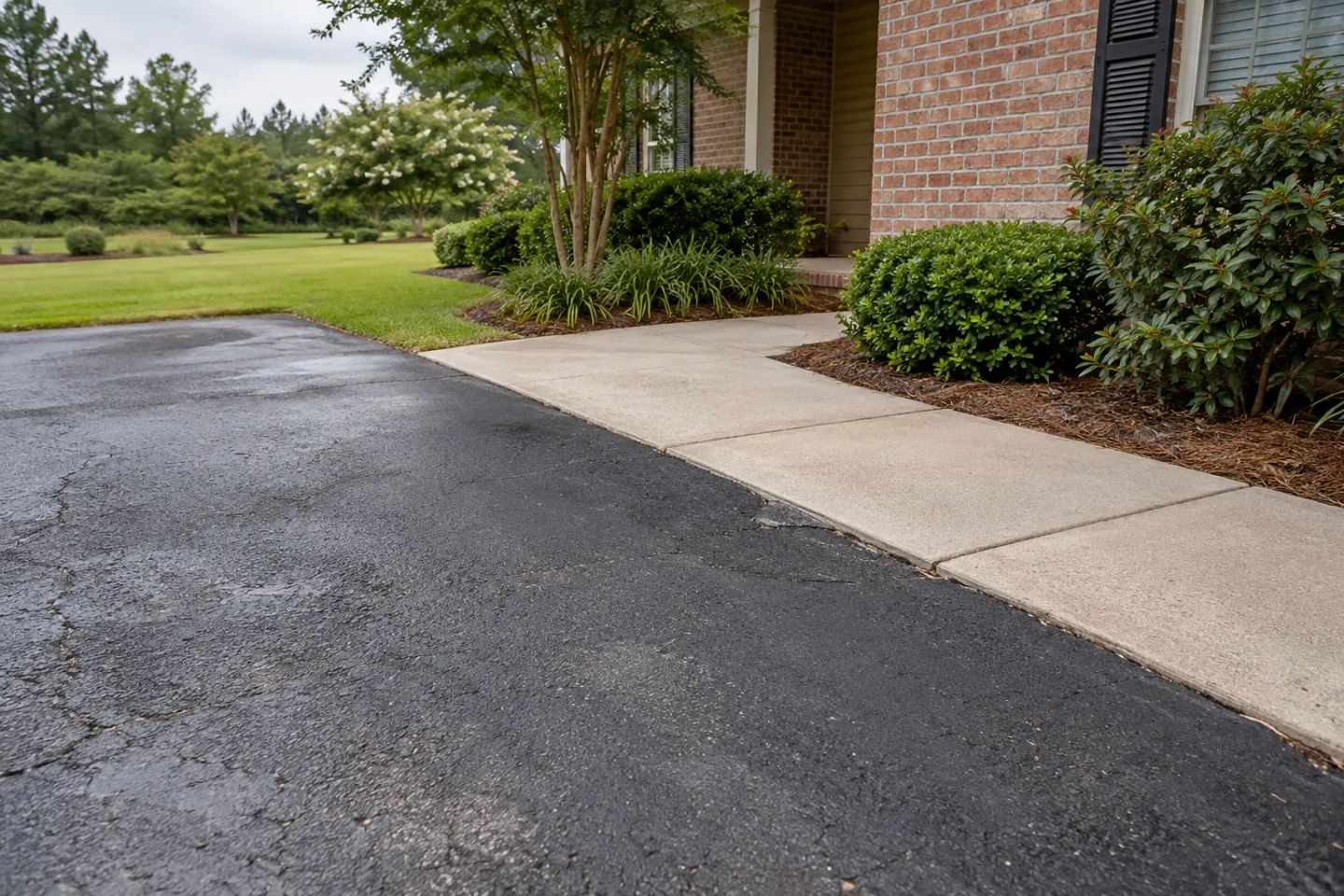
Find the area receiving treatment and mark it on a dated layout with retained surfaces. Ask the contractor to explain any boundary that differs from the owner's request. A general sealcoating description should not be assumed to cover every paved surface, entrance connection or adjoining feature visible at the property.
Keep optional and excluded areas distinguishable from the base scope. The owner should understand what is offered before comparing totals or scheduling a closure. A price attached to an unclear footprint can describe a different job from another estimate even when both use the same treatment name.
Separate asphalt from adjoining surfaces
Show concrete walks, aprons, curbs, building edges and other retained materials around the included asphalt. Ask how they are handled in the accepted arrangement and which protection or separate task is expressly covered. A surface-treatment quote should not silently become a proposal to alter every material it meets.
Keep photographs with location references so another contact can identify the same boundary later. If a retained feature changes after estimating, request a current review where it affects the work. The crew should receive the accepted arrangement actually present, not a layout based on an earlier adjoining surface or connection.
Identify repairs separately from treatment
Describe visible defects, recurring concerns and confirmed work history where available. Ask which repair or preparation task is included and which remains outside the treatment scope. Do not assume a darker finished surface establishes that every observed concern has been corrected or that hidden support conditions have been assessed.
Keep owner observations separate from contractor findings and pending review. If a separate task is recommended before treatment, name its contact and next action. The accepted quote should make that dependency understandable rather than rely on a repair being completed when it remains unassigned or unapproved.
Clarify stain and preparation wording
Show stains or other surface concerns with wide context and dates. Ask what preparation the offer includes for the actual reviewed area. Manufacturer guidance can describe product-specific preparation, but it should not be turned into a claim that the company uses a particular material or one method suits every stain.
Keep product-related information sourced and applicable to the selected work. If the condition needs further review, leave it pending before treatment is approved for that section. An exclusion should help the owner understand a limitation, not hide an assumed preparation task behind a familiar general description.
Keep service and equipment tasks assigned
Identify lids, drains, exterior equipment, gates and other retained features affecting the work or route. Ask which provider is responsible for any proposed adjustment and whether it is included. A treatment boundary should not carry an assumed instruction to move or modify equipment controlled by another party.
Record required reviews and handoffs before scheduling. If excavation or a separate task is included, confirm appropriate locating responsibilities. Share owner records as context rather than a complete buried-service map, and keep unconfirmed feature identity or authority questions distinguishable from the paving contractor's offered work.
Distinguish clearing from construction preparation
List parked vehicles, stored items, movable signs and unrelated materials affecting the area. Ask who clears them before arrival. Surface preparation performed by the contractor should not be assumed to include relocating every user's vehicle, negotiating temporary parking or handling all contents beside the treatment footprint.
Keep existing unrelated debris separate from material generated by the maintenance job. Clarify cleanup at the accepted work area, crew route and staging position. The owner should know which task is included and which remains its operating responsibility before the construction plan depends on a cleared arrangement.
Discuss marking and later tasks explicitly
Ask whether line marking or another later stage is expressly included, separately quoted or excluded. Keep its accepted layout, provider and handoff distinguishable from the surface treatment. A refreshed pavement appearance does not establish that every marking or operating arrangement has been reviewed or is part of the maintenance offer.
If another provider performs the next stage, record which milestone and access instruction it needs. Do not assume the later visit can proceed under guidance issued for a different activity. Keep the current sequence with the accepted scope so pending work remains visible after the first maintenance task is complete.
Keep access responsibilities visible
Describe essential entrances, walking, parking and provider movements before approval. Ask which closures or practical phases the quote assumes and who communicates current instructions. An excluded area does not automatically become a usable temporary route simply because it receives no treatment during one stage.
Assign vehicle movement and notices before arrival. If the sequence changes, request updated access guidance rather than continue using an earlier opening assumption. The owner should understand both the construction boundary and the occupied operating arrangement reviewed for the job, with pending requirements clearly identified.
Compare exclusions as well as totals
List each offer's included areas, preparation, separate repairs, marking, clearing and access responsibilities. Ask about material differences before comparing prices. A shorter quote may leave tasks unresolved rather than offer the same completed property project at a smaller total.
Keep options and assumptions with the accepted layout. If the owner selects additional work after estimating, request a current proposal or approved revision. The crew should use the chosen scope rather than a general owner expectation that every item discussed during the visit became included in the final offer.
Use an understandable boundary legend
On the owner copy of the accepted layout, distinguish included, excluded, optional and pending areas in plain language. Keep the proposal with the same dated version. This is a discussion record rather than a construction specification or legal interpretation, but it helps another property contact locate the actual task and avoid treating every area mentioned during estimating as selected work.
Retain the accepted limitations at closeout
Save the scope, exclusions, approved changes and final location photographs with project-specific care and reopening guidance. Record separate or deferred tasks with their responsible contacts. A tidy completed area should not erase a retained concern or imply that work expressly excluded from the quote was performed.
For later observations, identify the location, actual use and timing and contact the appropriate provider. Keep the accepted boundary and limitations available without diagnosing a cause from one image. A clear record explains what the maintenance job included and which decision or task remained outside it at completion.
Questions before you approve the work
Discuss the actual property and work limits
Send the property address, current photographs, intended use and access needs. Keep planning with these related decisions.
Reviewed October 14, 2026. Owner preparation guidance; the accepted proposal defines the actual work.