
The decision in plain language
Delivery timing can conflict with closures and newly placed surfaces.
The situation to discuss
List recurring and exceptional deliveries. Coordinate a temporary route or alternate date and share the actual reopening guidance with dispatchers.
Your five-point decision sheet
Use these headings on a simple sketch or in your project notes. Under each one, write the actual property observation, the question you still need answered and the person responsible for the decision. Leave an unknown item marked as a question instead of assuming it is included.
- Which deliveries use the proposed pavement section and receiving entrances?
- Which arrivals are booked, usual or still unconfirmed?
- Who can coordinate changes with each receiving business and provider?
- How does each proposed phase intersect the delivery calendar?
- What access confirmation is needed before a booked delivery uses completed work?
What not to assume
A delivery driver may not know that an ordinary entrance is temporarily unavailable.
Turn the discussion into a clear work boundary
Keep a copy of the marked site sketch with the estimate. Identify the area being authorized and any adjoining feature that must remain protected or available. If the contractor recommends an investigation or a separate trade, record that next step before treating the proposal as a final solution. A planning guide helps you ask questions; it cannot establish hidden conditions from photographs.
When a decision changes the work, request an updated description showing what was added, removed or deferred. Confirm how any additional quantity will be measured and approved. Make sure the person giving the approval has authority for that part of the property. This prevents a useful site conversation from becoming a different job than the one the owner expected.
Bring the right information to the visit
Send your address, the overall project goal and photos showing this specific connection or operating area. Include a wide view for context and a closer view of the detail under discussion. Describe any timing or access constraint that affects the decision. Avoid placing yourself in traffic or entering inaccessible structures to collect information.
Record the deliveries that actually use the area
Start with the proposed pavement section and list the deliveries that normally reach it. Include recurring shipments, waste-service visits handled in another plan and unusual scheduled arrivals that the property contact already knows about. Identify the receiving entrance and the business expecting each delivery. Avoid turning a general statement about daily deliveries into a complete calendar when the actual times vary. The contractor needs a practical description of how the requested area is used, while the owner needs to see which events are confirmed, which are approximate and which still require a conversation with the provider or receiving tenant.
Give each entry a useful location reference
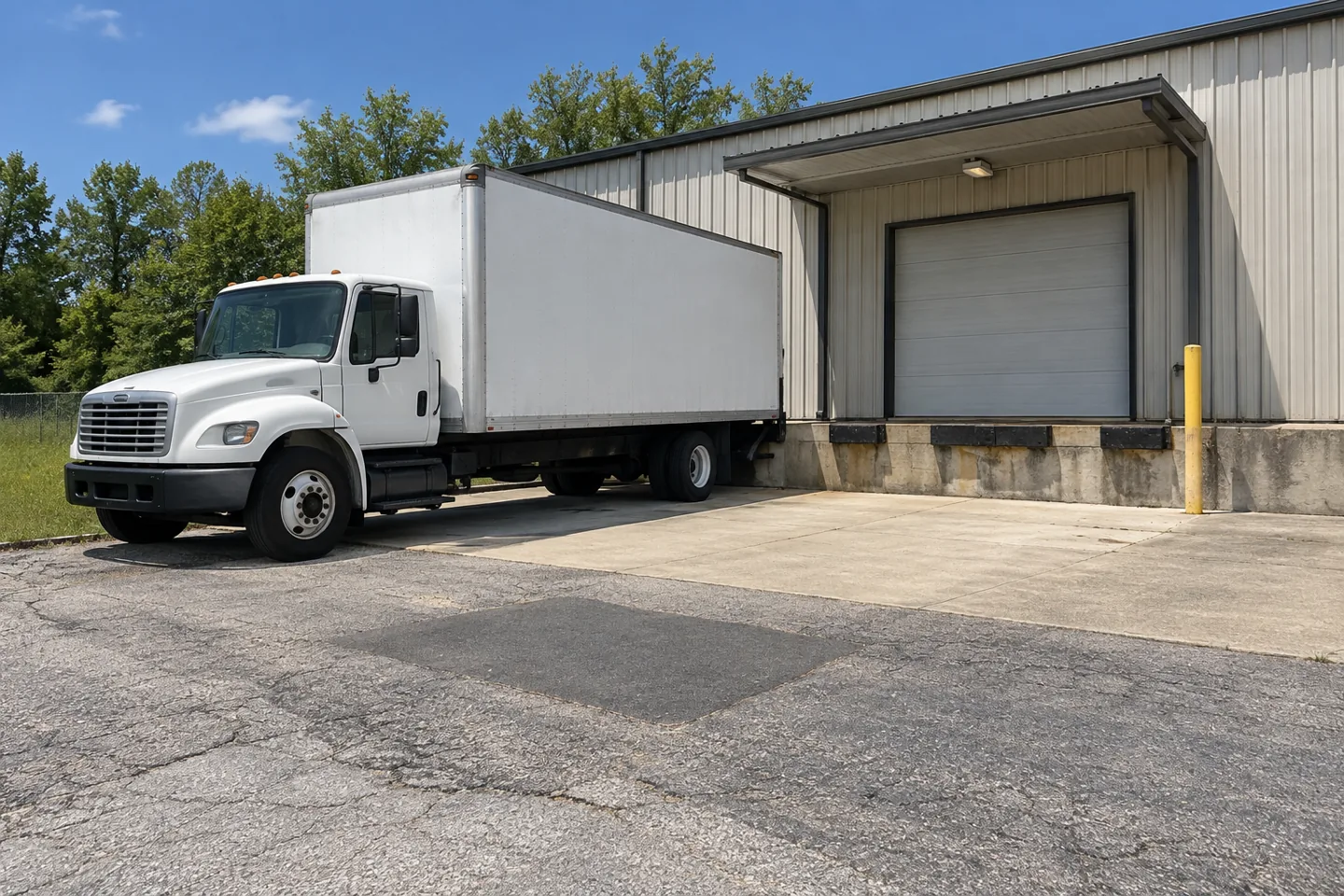
Connect the delivery entry to a recognizable entrance, dock, gate or pavement section. Use the same names on the property sketch and in the contractor discussion. A rear delivery entry can mean different doors on a shared site, so add enough detail to distinguish the actual receiving point. A photograph showing fixed landmarks can help without exposing private shipment information. Do not infer a complete vehicle route from one image. The location reference should identify the access question that needs review, not claim that an alternative route is approved or suitable for every vehicle expected at the property.
Separate booked arrivals from ordinary patterns
Distinguish an actual scheduled delivery from a usual pattern and from an unconfirmed expectation. Record who supplied the information and when it was checked. A weekly carrier visit may still have a variable arrival window, and a tenant may be waiting on confirmation from its supplier. Keep that uncertainty visible rather than presenting a precise time the receiving business has not agreed. The owner can then discuss a proposed closure against realistic information. If an important event is unresolved, assign a contact to confirm it before the delivery calendar becomes the basis for an approved pavement work window.
Describe vehicles and unloading needs plainly
Ask the receiving business what kind of vehicle it expects and where ordinary unloading occurs. Use confirmed practical descriptions rather than guessing weights, dimensions or hidden pavement capacity. Explain if a delivery normally waits, turns, backs into a receiving area or relies on a particular gate being available. This information helps identify the operating question for the contractor and property representative. It does not approve a vehicle maneuver or establish that a surface is designed for it. When a technical access question arises, have the responsible parties review the actual situation before putting a substitute arrangement in the calendar.
Name the contact for each important event
Record the business contact who can communicate with the supplier or carrier and confirm an access change. A contractor should not be expected to reach every delivery provider without an agreed responsibility. Identify a backup when the normal receiving contact is unavailable. Keep direct operating responsibilities separate from the person who approves the pavement contract. The owner needs a clear path for changing a delivery window or resolving a conflict, especially on a site with several tenants. A name attached to each event turns an uncertain calendar entry into a question someone can actually answer before the project is arranged.
Discuss rescheduling before promising a solution
If a proposed work window conflicts with a delivery, ask the receiving business whether another arrangement can be considered. Do not assume that a shipment can be moved at no cost or that a supplier will use another entrance. The relevant contact should confirm the provider's response and the property should review any access implication. Record the result as agreed, declined or still unresolved. This helps the contractor understand the available work window without treating a hopeful rescheduling request as a completed decision. Keep the response with the affected calendar entry so the owner can explain the final arrangement later.
Connect deliveries with the selected work phases
Ask which pavement section the proposed phase affects and how that section relates to the recorded deliveries. A phase covering front customer parking may have a different access discussion from one involving a rear receiving approach. The contractor and authorized property contact need to resolve the actual sequence and boundaries. Do not assume that dividing the job into smaller areas eliminates every operating conflict. Keep each confirmed phase tied to the relevant calendar entries and identify any delivery still requiring attention. This makes the schedule useful as a coordination record rather than a list of unrelated dates beside an undefined pavement project.
Plan how changed arrival times reach the property
Ask the receiving contact to report a changed delivery window through the agreed property contact path. Explain where the current pavement instruction can be found and who tells the contractor about a relevant conflict. A carrier's updated arrival estimate should not automatically change the crew's work boundaries or operating plan. The responsible parties need to review the information and agree on the response. Record what changed and when it was confirmed. This prevents a last-minute message from being mistaken for authorization to reopen a section or route a vehicle through an area whose availability has not been established.
Keep delivery instructions and reopening distinct
An agreed delivery date and permission to use a completed pavement section are separate pieces of information. Ask the contractor who provides the instruction for the intended use and how it reaches the receiving contact. Do not choose a universal waiting period or infer readiness from the appearance of the surface. If a delivery relies on a specific vehicle movement, make that need clear during the proposal conversation. The owner's calendar should show which event is planned and what access confirmation is still required, rather than promising that the area will be available merely because the shipment has already been booked.
Maintain the calendar when the project changes
When a phase is postponed or its boundaries change, review the affected delivery entries instead of only moving the headline project date. Confirm which tenants, receiving points and providers need an updated instruction. Save the earlier calendar version as history but make the current version obvious to users. An event that was successfully rescheduled once may need another discussion if the work window changes again. Keep the response tied to the new version. The useful record explains what the property has actually arranged, with unresolved conflicts visible before they become competing instructions during the planned work.
Bring a focused calendar to the quote review
Send Asphalt Solutions the address, relevant pavement photographs, receiving locations and a concise summary of confirmed delivery patterns. Identify the authorized property contact and the people who can coordinate important events. Explain which dates are approved and which windows still need review. The contractor can then discuss the requested scope with the actual use of the property in view. Keep the accepted proposal, final calendar and provider responses together. A clear delivery record helps the owner prepare for the agreed work without expecting the paving estimate to supply an entire logistics plan or guarantee an unreviewed alternative route.
Questions before you approve the work
Discuss the actual property and work limits
Send the property address, current photographs, intended use and access needs. Keep planning with these related decisions.
Reviewed October 14, 2026. Owner preparation guidance; the accepted proposal defines the actual work.