
The decision in plain language
Arrival and departure peaks can make an otherwise quiet work area busy.
The situation to discuss
Collect shift schedules and truck movements separately. Use both when comparing proposed phases and release times.
Your five-point decision sheet
Use these headings on a simple sketch or in your project notes. Under each one, write the actual property observation, the question you still need answered and the person responsible for the decision. Leave an unknown item marked as a question instead of assuming it is included.
- Which employee parking or receiving section is being reviewed?
- What actual arrival, departure and delivery windows are confirmed?
- Who approves changes and communicates with each shift?
- Which events or preparation duties conflict with the proposed phase?
- What provider instruction applies before the next shift uses completed pavement?
What not to assume
Truck traffic and employee traffic should not be treated as one identical access need.
Turn the discussion into a clear work boundary
Keep a copy of the marked site sketch with the estimate. Identify the area being authorized and any adjoining feature that must remain protected or available. If the contractor recommends an investigation or a separate trade, record that next step before treating the proposal as a final solution. A planning guide helps you ask questions; it cannot establish hidden conditions from photographs.
When a decision changes the work, request an updated description showing what was added, removed or deferred. Confirm how any additional quantity will be measured and approved. Make sure the person giving the approval has authority for that part of the property. This prevents a useful site conversation from becoming a different job than the one the owner expected.
Bring the right information to the visit
Send your address, the overall project goal and photos showing this specific connection or operating area. Include a wide view for context and a closer view of the detail under discussion. Describe any timing or access constraint that affects the decision. Avoid placing yourself in traffic or entering inaccessible structures to collect information.
Locate the proposed warehouse section
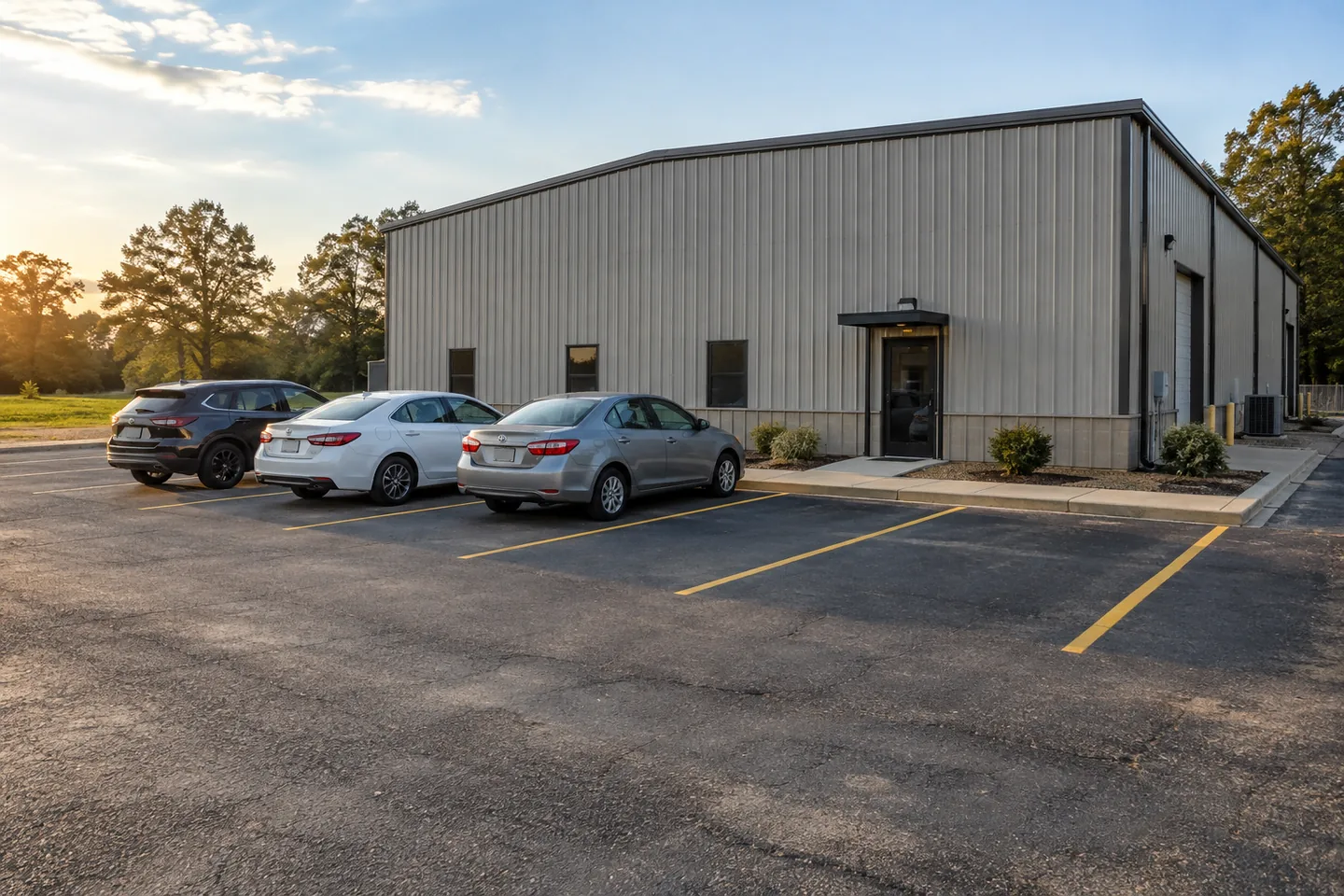
Identify the requested pavement area in relation to employee parking, receiving entrances and retained building features. Use a wide photograph or property reference with consistent section names. Explain whether the proposal concerns an employee lot, a delivery approach or another surface near the warehouse. Those areas may support different vehicle movements and operating schedules. Ask the contractor to describe the actual work limits instead of assuming the entire yard is included. A recognizable section gives the property and facility contacts a practical reference for discussing a shift-related access question before they choose a date or issue a notice.
Describe the real arrival and departure pattern
Ask the facility contact for the confirmed shift times and the actual pattern of pavement use around them. Employees may arrive before a shift or leave after the headline end time, so identify the window the facility considers relevant to the proposed area. Distinguish an ordinary pattern from overtime, training or another scheduled event already known to the contact. Do not turn a quiet interval observed once into a guaranteed work window. The contractor needs a realistic description of use, while the owner needs to know which information has been confirmed and which operating question remains under review.
Keep employee parking and receiving separate
Identify where employees normally park and how receiving vehicles use the nearby approach. Explain which sections intersect the requested work and which entrances connect them to the building. A gap between shifts may still contain a delivery or service visit. Keep those events on the same planning calendar without treating their access needs as identical. Do not assume one user group can move into another's area unless the responsible parties have reviewed the arrangement. A property sketch helps locate the question, but it does not approve a substitute vehicle route or establish the suitability of another surface for the intended use.
Identify facility and contract decision roles
Name the person who approves the pavement scope and the contact who can confirm warehouse operating information. Identify who communicates with staff, receiving teams and relevant providers. Those roles should reflect actual authority rather than a broad list of everyone who works at the facility. Give the contractor one approved path for a conflict or change and a practical backup contact. An employee can report a parking concern through that path without independently changing the work plan. The owner should know which question needs a facility response and which decision needs approval before it becomes the current instruction.
Review overlaps beyond the basic shift calendar
Ask about scheduled overtime, weekend use, training, inventory activity, receiving appointments and separate building providers that affect the proposed section. Include only relevant confirmed events and make uncertain information clear. A calendar with two shift labels may omit the actual use that prevents a requested closure. Assign someone to confirm an important unresolved event before the proposed work window is approved. This does not ask the contractor to direct warehouse operations. It gives the property a more complete view of the access overlap so a pavement phase is arranged around information the facility has actually reviewed.
Discuss phases against recognizable boundaries
If the contractor and owner consider separate work sections, connect each proposed phase to the warehouse uses it affects. Ask which employee parking, receiving point or building connection needs another access discussion. Dividing the job into areas does not automatically eliminate every conflict or establish that the facility can remain fully available throughout. Keep the actual phase boundary and the responsible contact's response together. A preferred sequence should remain planning information until the relevant arrangement is confirmed. The owner can then communicate what has been agreed rather than promising an operating outcome that the proposal has not established.
Assign staff parking preparation clearly
Ask who arranges ordinary vehicle relocation from the agreed work area and how employees receive the preparation instruction. Identify the section and deadline confirmed for that task. Do not invent a substitute parking arrangement on another property or assume every neighboring section is available. The responsible facility and property contacts need to review alternatives for the actual site. Keep movable owner items and specialized equipment tasks distinct in the proposal record. This helps the contractor understand what area will be provided as agreed and helps the facility avoid sending different preparation instructions to different shifts.
Communicate through the actual shift contacts
Identify how the approved pavement message reaches employees and relevant teams on each shift, including people who are not present when the first notice is issued. The facility can use its own communication process; the contractor's estimate does not need personal staff records. Keep the message focused on the affected section, confirmed window, preparation responsibility and source of updates. Save the issued notice and distribution date with the property record. If the plan changes, make the replacement instruction clear so an earlier shift's forwarded message is not treated as the current access plan by the next group arriving.
Keep reopening distinct from the next shift start
A scheduled shift does not itself establish permission to use a completed pavement section. Ask the provider who supplies the actual instruction for the intended use and how it reaches the facility contacts before users arrive. Explain the relevant employee, receiving and service-provider needs during the proposal conversation. This guide does not choose a universal waiting period or certify a surface for a particular vehicle. Keep the handoff message with the calendar and review any conflict through the approved contact path instead of assuming that the next shift's arrival automatically releases every restricted section.
Account for contractor and service-provider parking
Ask the facility contact whether other scheduled providers normally park or unload in the same employee section. Connect those visits to the proposed phase and identify who can confirm a change with each provider. A calendar covering staff and receiving trucks can still miss a building-service visit that uses the affected pavement. Keep the provider response with the current plan instead of asking the paving crew to resolve an unannounced arrival. This gives the warehouse a more complete operating record while leaving each provider's own tasks and equipment methods with the responsible business.
Preserve a useful warehouse handoff record
Keep the accepted work limits, confirmed operating calendar, phase decisions, preparation duties, notices, revisions and reopening information in a dated property file. Identify completed sections and any deliberately deferred area. If a user later reports a concern, record its location and observable condition without converting it into a hidden-pavement diagnosis. For an estimate discussion, send Asphalt Solutions the address, current pavement views, actual warehouse-use windows and authorized contacts. A focused record helps the contractor review the requested work and coordination questions without being expected to infer a complete facility operating plan from two shift times and a parking photograph.
Questions before you approve the work
Discuss the actual property and work limits
Send the property address, current photographs, intended use and access needs. Keep planning with these related decisions.
Reviewed October 14, 2026. Owner preparation guidance; the accepted proposal defines the actual work.