
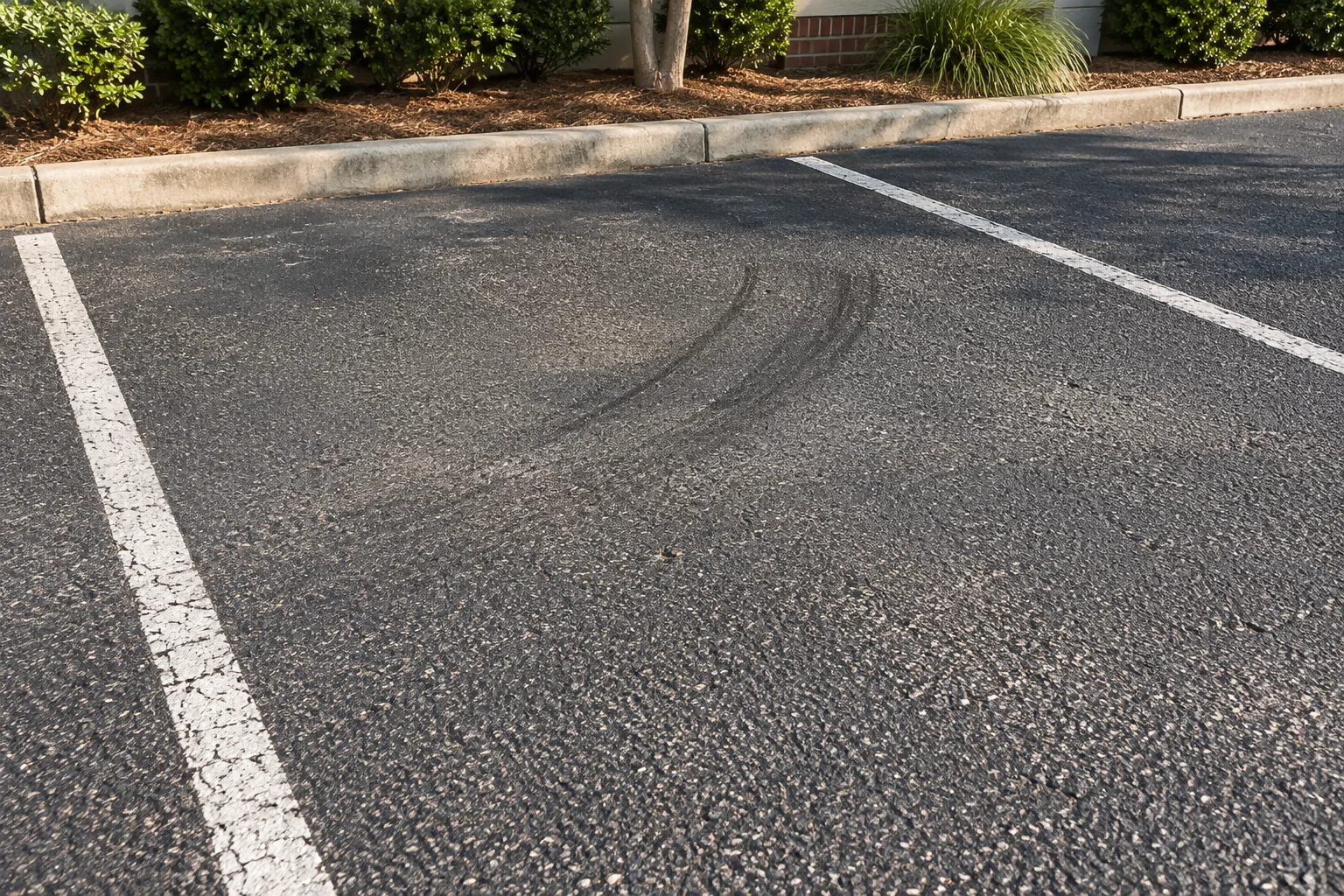
Describe the marks before assigning a failure label
Tire scuffs in a parking position are a surface observation that should be described with timing and use. Appearance alone does not establish affected depth or prove structural failure. Show the marked area and surrounding pavement and explain what prompted the concern. The evaluator can then distinguish visible marks from any other condition requiring review.
Identify curved marks, displaced material, a depression or another visible change separately. Those observations are not interchangeable. A close photo may make a dark line look more dramatic while leaving its relationship to the wider surface unclear. The initial request should be accurate enough to prepare a site conversation without diagnosing an unseen pavement assembly.
Tell the contractor what the owner needs to understand: whether an observation should be reported to a recent-work provider, whether care instructions apply or whether a separate activity is appropriate. The first step is a condition explanation supported by actual history, not an automatic treatment selected because the parking surface no longer looks uniform.
Record location, timing and known surface history
Take an overall view locating the marks within the driveway or lot and safe close views showing surrounding texture. Mark separate locations if several positions are affected. Include apparently unaffected areas nearby. This helps the evaluator understand extent rather than infer an entire property condition from one close image.
Describe when the marks appeared and whether the same area has changed. Keep genuine dated earlier photographs if available. If paving or treatment is recent, retain the actual work date, agreement and care instructions. Do not invent a surface age or treatment method from its dark appearance.
Note known weather and surface conditions when observations were made without estimating a surface temperature from an air reading. Report actual spills or other events separately and identify substances only if known. The provider needs a reliable record of what happened and what remains uncertain, rather than a confident story built from the color or shape of a mark.
Explain actual parking and steering use
Describe vehicles normally using the position and steering movements observed during ordinary parking. Include standing, turning or repeated use at a particular point if known. These facts can inform the review without independently proving the cause or extent of the condition. Keep unknown vehicle or operation details identified as unknown.
Do not ask a driver to turn wheels in place or recreate marks for evidence. Existing observations and safe static views can begin the request. If additional operational information is needed, coordinate a suitable method with the provider and responsible site parties. The quote process should not depend on repeating an activity that might change the surface.
Share planned changes in parking layout, equipment or site use before a scope is finalized. A recommendation should relate to intended use, not only the empty position seen during a visit. Identify any fixed features or walking connection nearby so a parking-use discussion does not ignore other people and routes sharing the area.
Use actual care instructions for recent work
Where recent paving, repair or treatment has instructions, follow them and contact the responsible provider about the concern. Appearance is not a substitute for project-specific guidance. A waiting period or care method from another site should not be assumed appropriate to the actual work and conditions here.
Describe what use occurred and when as accurately as possible without deciding the warranty outcome. Timing and observations are relevant context, but they do not independently establish fault or coverage. Keep the agreement and instructions available so the responsible provider can address the report against the activity actually performed.
Do not apply a household solvent, aggressive cleaning method or improvised surface treatment to hide marks before review. Such actions change the condition and may complicate the discussion. Ask what observation or preparation is appropriate. The owner does not need to scrape, cut or clean the pavement as a home test to prove whether a mark is superficial or deeper.
Ask for a condition explanation and a defined purpose
The evaluator should explain which observations support the recommendation and what uncertainty remains. Ask whether the next step is reporting and observation, an appropriate maintenance activity, a separate repair or further review. This guide does not establish affected depth, material suitability or a universal response from photographs.
If work is proposed, identify its intended purpose. An appearance activity and removal of unsuitable pavement are different objectives. Ask what each option retains, prepares and changes and which concern remains outside the scope. A uniform color should not be interpreted as evidence that every underlying question has been investigated or resolved.
Compare alternatives by their boundaries and assumptions before price. Clarify any investigation question, its location and limits and how findings would change the plan. Agree on how unexpected conditions during authorized work are communicated, priced and approved. The owner should receive a reviewable decision rather than an unexplained instruction to accept another treatment because tire marks are visible.
Coordinate parking access and the work sequence
Tell the contractor which vehicles need parking and whether the affected position or route can close. Include household departures, deliveries or business use as relevant. The operational plan should reflect actual needs, not assume an empty area at the visit can remain unused throughout review and any later activity.
Agree who communicates temporary parking and care restrictions. If another surface, marking or equipment task is related, identify sequence and handoffs. Users should understand where they may park and turn and what is still pending without interpreting a partly completed work area for themselves.
Follow actual provider instructions before normal use resumes, including any restrictions on turning or standing that apply to the work performed. A finished-looking surface does not independently release every parking operation. Keep the instructions with the scope and communicate one consistent arrangement to people using the property rather than rely on several assumptions about readiness.
An example of comparing a mark with another surface concern
Imagine an owner sees curved tire marks in one parking position and loose material in a different area after recent work. Present them separately with actual dates, photos and known use rather than label both structural failure. Ask the responsible provider which observations need further review and whether the existing care instructions affect the next step. If a new activity is proposed, identify the purpose at each location and what remains in place. A treatment intended to improve appearance is not the same scope as removal of unsuitable pavement. Compare those objectives and their boundaries before price. Do not recreate steering movements or apply a product to hide marks before the provider sees them. Keep the initial record, agreement and instructions together. At completion, identify any excluded concern and the actual restrictions on returning to use. That gives a follow-up discussion a factual basis without deciding affected depth or warranty coverage from the darkness of a tire line.
Keep expectations and later observations connected
At closeout, retain genuine photographs locating the completed work, the scope and approved changes. Identify retained pavement and exclusions. The record should explain what was provided rather than imply every future tire mark or operational change is covered by a new surface appearance. Expectations and warranty terms belong to the actual agreement.
If marks or another concern appear later, report actual timing, location and observations without reproducing steering events. Describe confirmed changes in use or site conditions separately. Before-work photos and care instructions help the provider understand follow-up against the actual history instead of assume every new mark is the same condition.
Contact Asphalt Solutions with the project address, safe surface views and known work and parking history. Most projects are handled at customer job sites. Visits to the Slidell contact location require an appointment; listed hours mainly concern phone availability. Call or text to discuss the appropriate review before assuming surface scuffs establish a deeper failure or require an immediate new treatment.
Questions about asphalt scuffing from parked vehicles
The direct answer
Scuffing can occur under particular turning, parking and temperature conditions. The pattern should be distinguished from deeper pavement movement.
What to discuss before choosing a repair
Ask what use and care guidance applies to the actual surface.
What to observe and record
- Photograph surface marks
- Record when they appear
- Describe steering movements
A mistake to avoid
A scuff mark alone does not establish that the entire driveway has failed.
Continue with the right next step
Property conditions determine the final scope. These planning notes do not replace a site evaluation. How to use our pavement guidance