
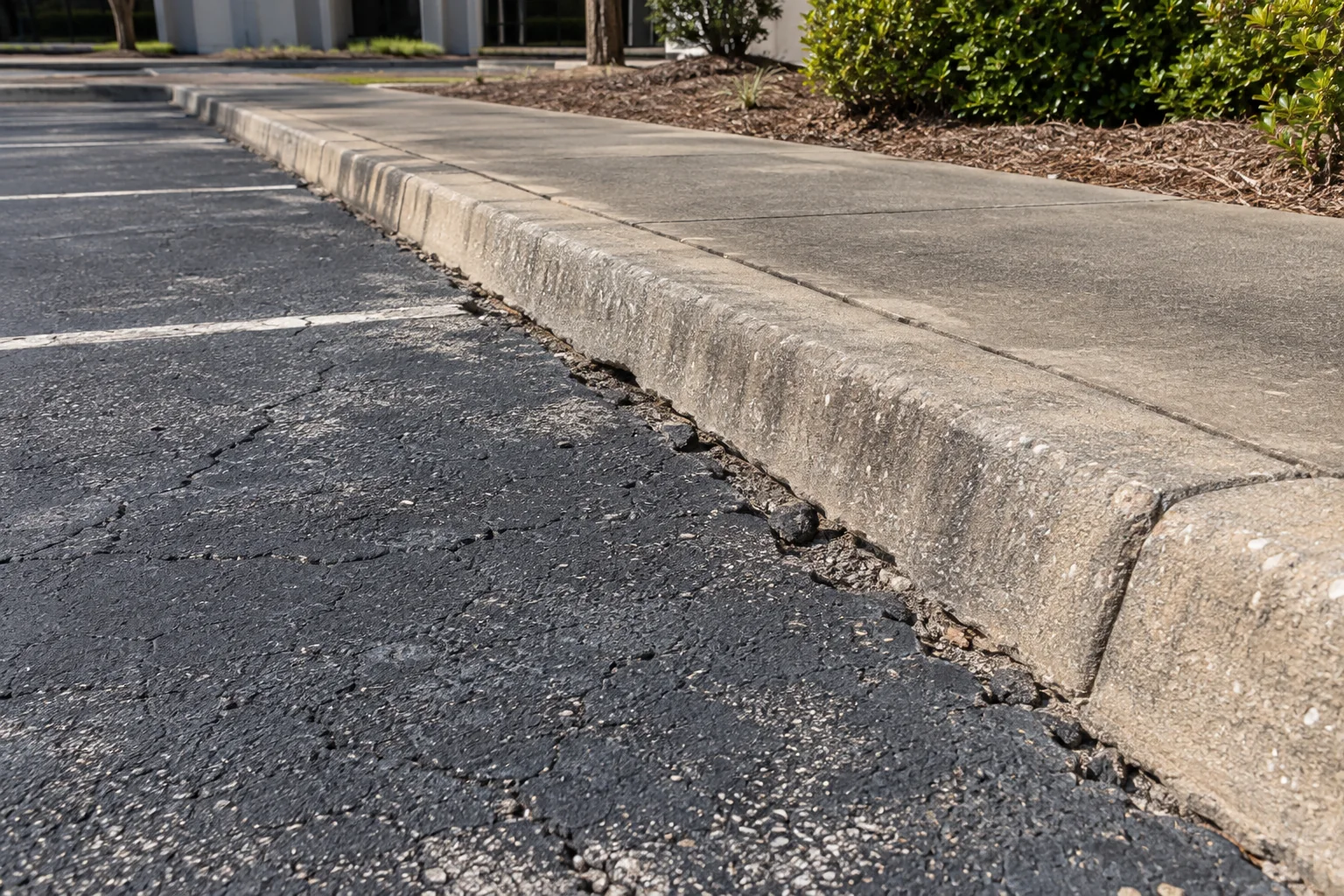
Describe the interface and the surrounding pavement
A gap beside a concrete curb is a concern at the connection between two surfaces. Start by locating the separation and describing what can be seen: its length, changes along the curb, adjacent cracking, loose edges or a difference in elevation. A photograph of the opening alone does not establish whether the appropriate response is maintenance, pavement repair, curb work or further investigation.
Show apparently sound connections nearby as well as the damaged stretch. The transition from one condition to the other can help the evaluator understand the proposed boundary. Identify whether the concern follows a parking edge, a driveway, a turning area or a drainage path. These uses give context to the interface without proving what caused the separation.
Avoid assigning an exact depth, hidden void or support condition from the visible gap. Explain the practical concern instead: water collecting, loose material, spreading damage or a connection that looks different from earlier photographs. The site review can then address what should be checked and which observations matter to the proposed work.
Record the pattern along the curb
Take an overall photograph that identifies the curb segment in relation to entrances, parking spaces and drainage features. Add closer views of representative sections and the ends of the affected area. If the gap changes noticeably along its length, show those differences rather than choosing only the widest location. Keep photographs tied to clear locations on the property.
Describe whether the concrete curb itself appears cracked, displaced or damaged, while keeping that observation separate from the asphalt concern. Include any nearby repair boundaries and known utility work. Genuine earlier photographs or maintenance records can help establish what changed. If the history is unknown, do not infer an installation date or construction method from the present appearance.
Do not pry at the edge, remove material or insert objects into the gap as an improvised investigation. Those actions can change the condition and are unnecessary for an initial request. Ask what examination or measurement is appropriate. The goal is a useful record that helps prepare the site discussion, not a homeowner test that appears to certify the interface.
Consider water without assuming the cause
Curb lines can also be water paths, so describe how rainwater behaves along the affected section. Show collection, staining or sediment if present and safely visible. Note the approximate time of an after-rain photograph. One image can locate water but cannot establish how long it remains, the condition of a drainage system or the full extent of any pavement support concern.
Ask whether the proposed work addresses only the visible opening or also a documented problem at the surrounding edge. A maintenance material placed at an interface is a different scope from replacing damaged pavement or correcting a connection. The evaluator should explain the purpose of the proposed activity and what it is not intended to resolve.
If an inlet, downspout discharge or other drainage feature is nearby, include it in the overall view. Clarify whether it is part of the review and who is responsible for related work. Do not assume that treating a curb gap includes inspection, cleaning or repair of underground infrastructure. Keep those responsibilities explicit when water is one reason for the request.
Separate retained-curb questions from asphalt work
The condition and position of the concrete curb can influence how adjacent pavement work is planned. Ask which surfaces will remain and what connection is proposed to them. If the curb also needs attention, clarify whether that work is included, excluded or dependent on a separate provider. The owner should not have to infer the division of work from a single line labeled edge repair.
Discuss whether the observed concern is isolated or extends beyond the visible separation. The proposal boundary should be explained in relation to the condition being addressed. A narrow visible opening does not by itself define the width of pavement work, just as a long gap does not automatically establish that the entire lot needs replacement.
Where the curb belongs to a shared or public area, confirm ownership and any necessary coordination before work. Existing pavement contact does not establish permission to alter the curb. Share relevant plans or prior correspondence, and identify who must resolve the connection requirements. This page does not determine local approvals or select an interface material for an unseen property.
Compare proposals by function and limits
Ask each proposal to identify what the contractor expects the work to accomplish. One option may concern a serviceable interface; another may involve removing damaged edge pavement. Those are different activities and should not be compared solely by the visible length of the gap. The useful comparison explains retained conditions, preparation, work boundaries and the resulting connection.
Clarify what must be confirmed before a final recommendation. If removal could expose conditions that change the scope, agree on the communication and approval process. Ask how allowances and exclusions are described. A written explanation of uncertainty is more useful than treating an unseen condition as either guaranteed sound or automatically defective.
Avoid selecting a generic filler solely from a product label or a photograph online. Suitability depends on the actual interface and proposed purpose. Ask the contractor to explain the chosen approach, preparation and maintenance expectations for this site. Keep any warranty terms connected to the actual work rather than assume that a filled opening guarantees the entire pavement edge or drainage system.
Plan access and keep a useful completion record
Show the contractor which parking spaces, travel areas and walking connections border the work. Discuss how closures will be marked and communicated, especially where drivers may park against the curb or turn along the edge. Include deliveries and any site operations that could bring vehicles back into the work area before it is ready for the intended use.
Ask for reopening instructions appropriate to the actual repair and conditions. Different activities can have different restrictions, and the owner should know who communicates the release. Give site users one consistent instruction rather than rely on an assumed waiting period. If access must remain available, settle the sequence and temporary arrangement before authorizing the work.
At closeout, identify the completed boundary and the connection to the retained curb and pavement. Keep genuine photographs with the scope and any approved changes. Ask how future concerns should be reported and which surrounding conditions remain outside the work. This record makes later maintenance conversations more precise without turning an image of a closed gap into proof of hidden construction quality.
An example of separating two scopes
A property manager may see a long narrow opening beside an otherwise intact curb and a shorter section where adjacent asphalt is visibly broken. Ask whether the contractor sees those as the same scope. A proposal could distinguish an interface activity in one location from pavement removal in another, but the actual site findings must support that distinction. Request a marked boundary and an explanation of the purpose of each activity. If water collects at the damaged section, keep that observation attached to the same location instead of treating it as a separate unspecified complaint. The resulting comparison should show what is being addressed, what remains and what would trigger further review. It should not depend on the owner selecting one generic treatment for every visible inch of separation.
Start with the actual curb location
Send Asphalt Solutions the project address, an overall curb-line photograph and a short description of the separation. Mention nearby water collection, known prior work and whether the curb itself appears affected. The first conversation can then focus on what needs to be reviewed at the property and whether other coordination is needed before the pavement scope is settled.
Most jobs are carried out at customer job sites. Visits to the Slidell contact location are by appointment only; the listed hours primarily concern phone availability. Call or text to discuss access and arrange the next step. Bring questions about retained concrete, adjacent pavement, water paths and the limits of each proposed activity to the site review.
Questions about asphalt separating from a concrete curb
The direct answer
A gap at a curb can be related to movement, edge condition or the original interface. Its significance depends on water entry and nearby pavement support.
What to discuss before choosing a repair
Discuss the interface and any nearby damaged pavement as a connected area.
What to observe and record
- Show gap width and length
- Record water flow along the curb
- Photograph adjacent cracks
A mistake to avoid
Filling the gap does not establish that the bordering support is sound.
Continue with the right next step
Property conditions determine the final scope. These planning notes do not replace a site evaluation. How to use our pavement guidance