
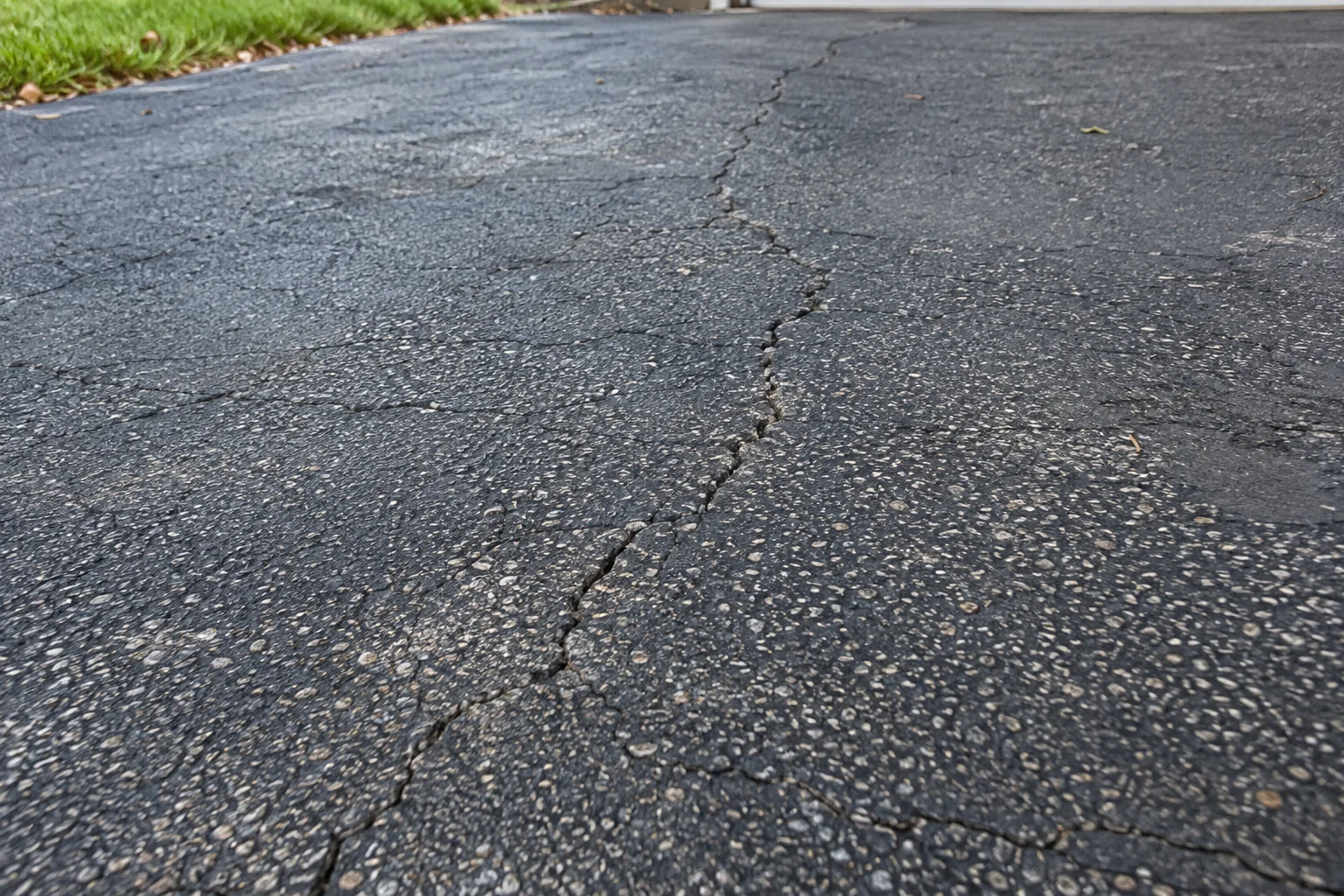
Map the returning line before assigning a mechanism
Cracks visible through or after an asphalt overlay should be recorded with their pattern and location. Start by showing where the line runs and whether it appears to follow a known earlier crack or joint. A surface photograph alone does not reveal the retained construction beneath it or establish the exact reason a crack returned.
FHWA background describes reflection cracking as a concern where existing cracks or joints influence cracks in an overlay. That terminology helps frame a question about the relationship between old and new work. It does not mean every crack in a newer surface is automatically a verified reflection crack. The actual history and pavement need appropriate review.
Tell the evaluator what you know and what remains uncertain. The relevant next step may involve comparing genuine earlier records, reviewing preparation or gathering more site information. The owner does not need to expose a layer or select a repair before arranging a discussion. Clear observations are a useful basis for the evaluation.
Use authentic earlier patterns and work dates
If you have photographs or a sketch of cracks before the overlay, retain the originals and identify their location. Compare recognizable features rather than assume two images show the same line. State any difference in angle or uncertainty. A genuine but imperfect record is useful when its limits are clear.
Provide known overlay, repair and preparation dates with the actual scopes. An invoice describing a new surface may not establish what was done at every earlier crack. Ask which record identifies the relevant preparation and retained conditions. Do not invent a treatment history because a darker line or patch is visible in an old image.
If earlier records do not exist, say so. Describe when the current crack was first observed and whether it appears to be changing. The evaluator can explain what information is needed. A generated diagram or unrelated photograph should not be substituted for evidence that an underlying crack or joint existed at your property.
Show the crack and the surrounding pavement
Take a wider view showing the line in relation to the driveway, parking row or entrance, followed by close images from safe positions. Identify nearby joints, retained concrete, patches or other features that help locate it. The pattern across the area may be more useful to the initial discussion than a single very close image.
Record visible offsets, widening, loose edges or water associated with the line as separate observations. Do not treat one feature as proof of a hidden cause. Ask which concerns need evaluation and whether the proposed scope addresses the crack alone or other conditions too. The owner should understand the actual project question before comparing a service label.
Do not cut, probe or remove material to demonstrate what lies beneath the crack. Intrusive investigation has its own planning and authorization responsibilities. Follow any relevant use restrictions and arrange appropriate review.
Review preparation and retained conditions in the actual scope
The existing short FAQ correctly explains that underlying joints or cracks can influence a new layer and that a new surface does not guarantee movement stops. Use that principle to ask about the actual project, not to assign a cause without review. Identify what preparation was agreed and which retained conditions or limitations were documented.
Ask the responsible contractor or evaluator to explain how that history affects the next decision. Different preparation, repair or overlay scopes can have different purposes. A visible returning line does not by itself describe every activity performed or determine whether the entire surface needs replacement. The response should connect the actual condition with a clear proposed next step.
If additional evaluation is recommended, ask which uncertainty it addresses and how the result would influence the scope. The owner should not prescribe a test because another property used it. Keep findings, recommendations and accepted construction tasks identifiable in the record so an investigation is not mistaken for completed repair work.
Compare the proposed next response by purpose and boundary
Ask what a proposed activity is intended to accomplish at the returning crack. A maintenance response, localized repair and broader rehabilitation are not automatically equivalent scopes. Request the evaluated reasoning, preparation, work limit and limitations rather than assume a familiar service name provides a crack-free guarantee.
Identify retained features and adjoining areas that affect the work. A crack near a concrete connection or old patch may raise a different boundary question from a line crossing an open surface. Ask which locations are included and whether water or movement concerns require another response. Keep exclusions visible in the comparison.
If preparation may expose another condition, agree on documentation and change approval before added work proceeds. A preliminary allowance can depend on assumptions that still need confirmation. The owner should know which decision may arise at the site and who can approve it. This makes the scope clearer without pretending that concealed construction is fully known from the first photograph.
Plan access and retain the real outcome
Explain how vehicles and pedestrians use the affected location. A narrow crack-related operation can still affect an important entrance or parking row. Ask which areas are unavailable during review or work, who communicates changes and what owner actions are required. Coordinate related trades if another activity must occur first.
Follow the project's reopening and use instructions. A treated line or a finished-looking surface is not an independent release for every activity. Keep the actual instruction with the accepted scope so staff, tenants or household members receive current information. If different sections have different status, preserve that distinction when communicating availability.
After the evaluation or work, retain the actual response and any continuing limitation. A recommendation that remains deferred should not be recorded as a completed repair. If another crack or retained area was outside the scope, identify it. A useful maintenance history shows what was actually addressed and what remains open for a future review.
Prepare a useful overlay-crack request
Send the job-site address, wide crack-pattern views, close details, known work dates and genuine earlier images if available. Explain observed change, water or offsets and the use of the area. Ask what evaluation is needed before choosing the next response. The request can be clear without proving a hidden mechanism in the first message.
Call or text Asphalt Solutions to discuss the property and available history. Most projects take place at customer job sites. Visits to the Slidell contact location are by appointment, and listed phone availability is separate from construction scheduling.
A practical example using a genuine earlier crack pattern
Imagine an owner has an authentic photograph of a transverse line before an overlay and later sees a crack near the same location. Provide the complete context and known work scope to the evaluator. The alignment can be relevant information, but the photograph does not reveal all retained construction or establish the full mechanism. Ask what the review can determine and which uncertainty remains.
Now compare two offers for the next response. One may describe maintenance of the visible line while another proposes a broader evaluated repair. Ask each to explain its purpose, preparation and limitation at the same location. A more extensive description should have a reason, while a narrow activity should make clear what it does not establish.
After the decision, retain the actual accepted scope and any deferred recommendation with the earlier records. The next owner should not infer that every underlying crack was treated simply because a newer surface or repair is visible. Accurate location history supports future evaluation without turning a past proposal into a guarantee about all future movement.
Questions about cracks reappearing through an overlay
The direct answer
An underlying crack or joint can influence a new asphalt layer. Existing distress and the prior preparation help determine what the new crack represents.
What to discuss before choosing a repair
Ask whether the condition is a reflection crack, localized failure or another issue requiring evaluation.
What to observe and record
- Map repeated crack lines
- Record overlay and repair dates
- Show any vertical offsets
A mistake to avoid
Another surface layer does not guarantee underlying cracks will never become visible.
Continue with the right next step
Property conditions determine the final scope. These planning notes do not replace a site evaluation. How to use our pavement guidance
Background reading: FHWA reflection-cracking background. General guidance does not replace evaluation of the actual property.