
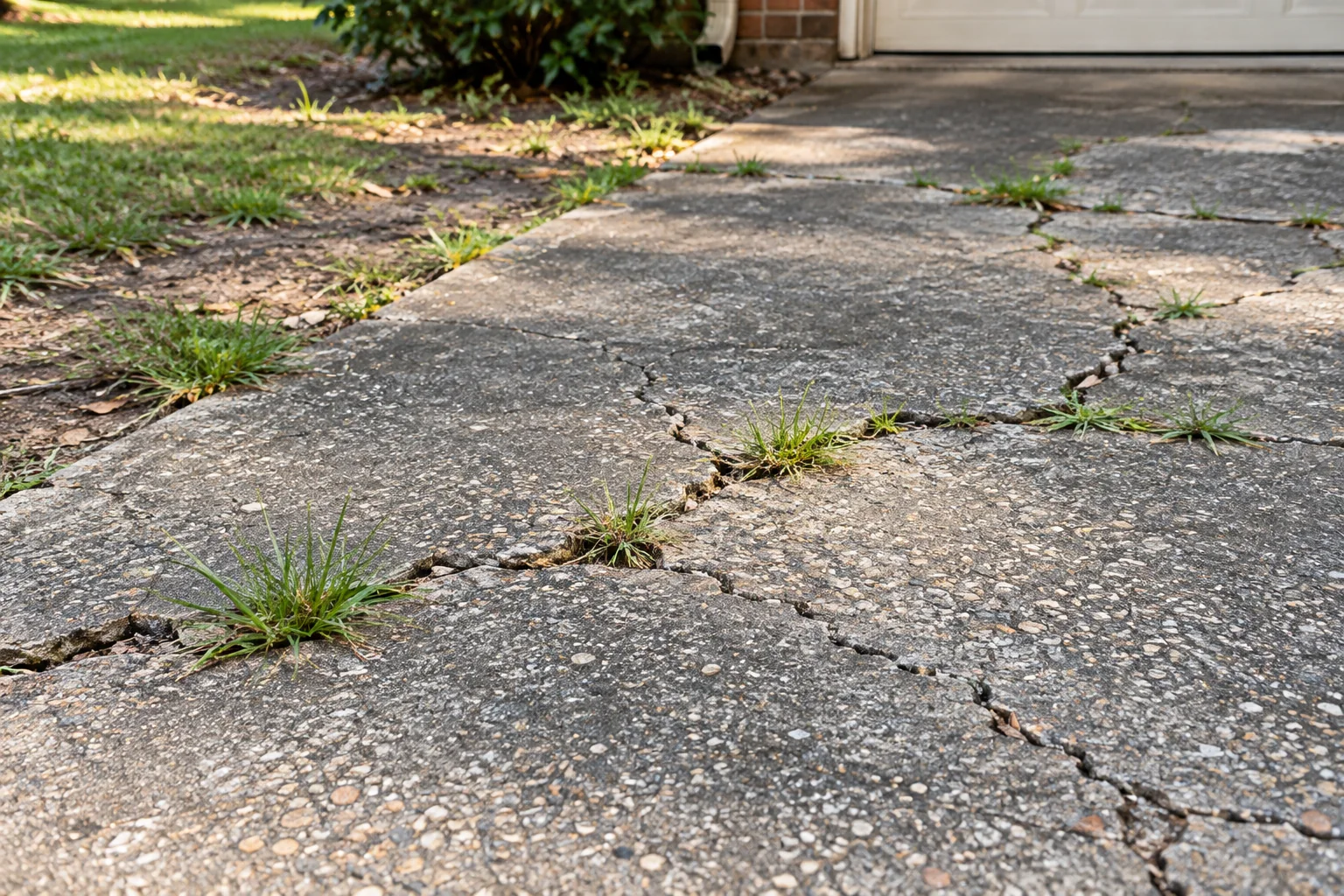
Treat the vegetation as part of the visible condition
Grass in an asphalt crack makes the opening easy to notice, but removing the grass does not answer every pavement question. Start by showing the crack and surrounding surface together. Describe whether there is one isolated opening, several connected cracks or a broader pattern. The site review should address the pavement condition and proposed activity rather than stop at the visible plant growth.
Explain what prompted the request. Appearance may be the first concern, while loose edges, water collection or a walking connection may make the same location more consequential. Keep those observations distinct. A photograph cannot verify the supporting material under the asphalt or establish that every vegetated crack has the same cause or suitable treatment.
Ask whether the proposed work is cleaning and maintenance of an appropriate crack, a separate pavement repair or further review before selecting either. That question gives the owner a useful decision point. It avoids treating vegetation removal as proof that the crack itself has been resolved or assuming that every small tuft requires a larger paving project.
Show the crack pattern and nearby soil
Take an overall photograph identifying the affected driveway or parking section. Add closer views of the openings and their connection to nearby soil, landscape beds or pavement edges. If the pattern continues beyond the visible grass, show that as well. The evaluator needs the whole pattern rather than only the most overgrown part.
Describe visible changes in elevation, broken edges or loose material without assigning a hidden cause. Show an apparently unaffected area nearby where useful. If roots or trees are close, identify that relationship and leave them undisturbed. Do not dig along the crack to prove what is beneath it. Any necessary investigation should have a defined purpose and appropriate review.
Keep photographs tied to specific locations. A marked overall image can distinguish several cracks and help the contractor understand which ones affect vehicle travel or the walking route. There is no need to step into traffic, pull apart the opening or perform a homeowner test to prepare the initial request. Accurate, safe views are enough to begin the conversation.
Explain previous work and changes over time
Share the actual history of crack work, resurfacing or other treatment if it is known. Earlier invoices and dated photographs can show where work occurred and what was included. If the age or method is unknown, state that plainly. The present vegetation does not establish when a crack first formed or what products were used previously.
Describe whether growth returns at the same location after maintenance and whether the pavement pattern has changed. Recurrence is useful context, but it does not prove that repeating the same activity is appropriate or that a particular earlier provider was at fault. Ask the evaluator to connect the current recommendation to the actual condition and history.
Include known landscape or drainage changes near the crack. Report what happened and when without turning timing into a definitive explanation. A new planting bed, disturbed soil or changed water observation may deserve attention in the site review. The written scope should make clear which adjacent conditions are relevant and which work, if any, is proposed beyond the pavement.
Separate vegetation removal from pavement preparation
Do not apply an improvised chemical, flame or aggressive mechanical method to make the crack look ready for an estimate. Such actions can change the surface and leave the evaluator with a less clear record. Tell the contractor about any products or methods already used, using actual information rather than guessing at what a previous owner may have done.
Ask how the selected maintenance or repair activity will be prepared for this location. The provider should explain what is being removed, what can remain and what condition must be confirmed. This guide does not select a herbicide, chemical cleaning method or crack-treatment product. The appropriate process depends on the actual pavement and proposed purpose.
If separate landscape work is involved, clarify who handles it and when. A paving estimate should not silently include ongoing grounds maintenance, and a landscaping activity should not be mistaken for a pavement repair. Clear responsibilities help the owner understand what each provider is expected to accomplish at the same vegetated opening.
Compare maintenance with a different repair scope
Ask the contractor to explain why the observed crack is suitable for the activity proposed. The recommendation should relate to the opening, surrounding pavement and intended use. A narrow-looking surface line does not by itself verify its depth or behavior, while plant growth does not automatically establish that the entire paved area needs replacement.
When alternatives are offered, compare their function and boundaries. One may address a serviceable opening as maintenance; another may involve removing damaged pavement. Ask what each option leaves in place, what it is intended to achieve and which concerns remain unresolved. Prices are easier to evaluate when the owner can see that different scopes may address different needs.
Include the process for findings that emerge during authorized preparation or removal. Who receives the observation, who approves added work and how is it priced? An allowance is different from a firm inclusion. A clear change process is particularly useful when the initial surface view cannot settle every condition that affects the final recommendation.
Consider water and the route people actually use
Record any actual water collection or flow observation at the crack, with approximate timing when safely available. Do not assume a vegetated opening proves the direction or amount of water movement below the surface. Ask whether drainage questions need separate review and whether a related activity is included in the proposed work.
Identify cracks at entrances, walkways and areas where vehicles turn or park. The use and consequences can affect how the owner prioritizes review. A remote crack and an opening beside the only building entrance may call for different access planning even when they look similar in a close photograph.
Discuss closures and temporary routes before the work begins. Follow the provider's instructions for the actual activity and conditions rather than choose a universal waiting period. If several providers are involved, agree who communicates the release for use. Keep walking access, vehicle access and any continuing landscape task understandable throughout the sequence.
An example of two different crack locations
Consider an owner with grass in a short driveway-edge opening and in a connected crack pattern near the garage approach. The vegetation may look similar, but the surrounding pavement and use are not necessarily the same. Ask the contractor to identify the purpose of the proposed work at each location. If one is considered suitable for maintenance and the other needs further review or pavement removal, request an explanation of that distinction and mark the boundaries. Include any known earlier treatment and water observations. The useful comparison is between clearly described scopes for actual conditions, not between one generic grass-removal price and an assumed permanent repair. Keep the decision and any landscape responsibility in the written agreement so the owner knows what will be completed at each opening and what remains outside the work.
Keep expectations and follow-up tied to the scope
At completion, record the treated or repaired locations with genuine photographs and keep the agreed scope and approved changes. Ask how later concerns should be reported. A clear record helps distinguish new growth, a change in the opening and another surrounding pavement issue without assuming all three mean the same thing.
Discuss what ongoing observation or property maintenance the provider recommends for this project. Do not infer a permanent vegetation-free guarantee from the appearance at closeout. Any warranty or exclusion should be stated in the actual agreement. A useful handoff explains the work provided and the limits of what can be concluded about retained conditions.
Send Asphalt Solutions the actual project address, safe photographs of the crack pattern and any known previous treatment history. Most work is handled at customer job sites. Visits to the Slidell contact location are by appointment only; the listed hours mainly concern phone availability. Call or text to discuss the condition and arrange the next step for the property.
Questions about grass growing in pavement cracks
The direct answer
Vegetation shows that a crack or joint is open enough to support growth. Treatment planning should consider the opening and surrounding pavement condition.
What to discuss before choosing a repair
Ask how vegetation removal, cleaning and the selected repair are coordinated.
What to observe and record
- Photograph the crack network
- Note nearby soil and roots
- Show any movement
A mistake to avoid
Removing the plant alone leaves the crack untreated.
Continue with the right next step
Property conditions determine the final scope. These planning notes do not replace a site evaluation. How to use our pavement guidance