
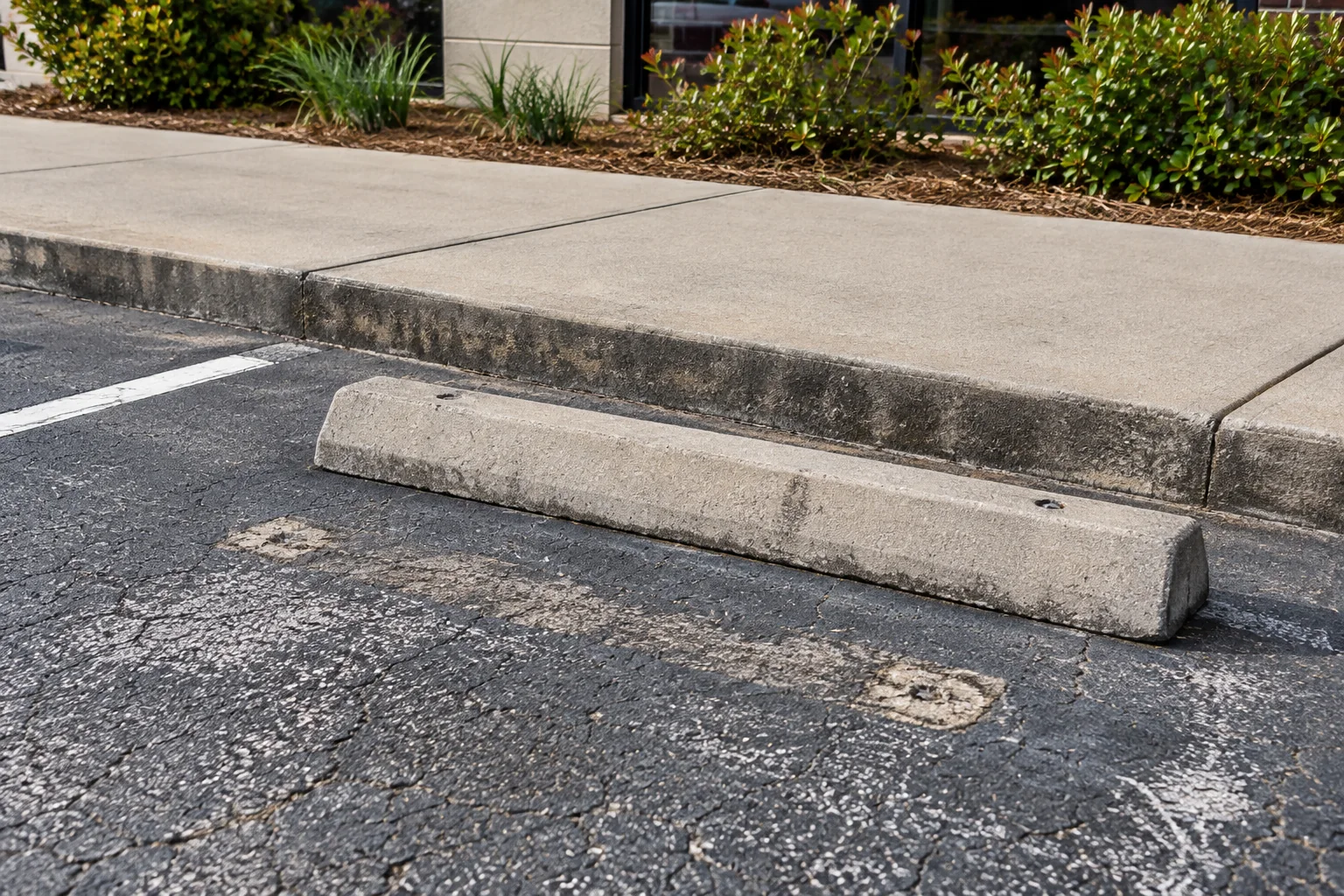
Review the bumper and its location together
A loose parking bumper should be reviewed with the surface, attachment and purpose it serves in the parking arrangement. Resetting it in the old location is not automatically the right next step. Show the space, adjacent curb or sidewalk and route people use. The location can matter as much as the visible equipment condition.
Describe what has actually been observed: a displaced position, visible broken material, an exposed attachment location or movement noticed during ordinary use. Keep observations separate from a finding about hidden anchoring or pavement condition. A photograph cannot verify every connection beneath the bumper or establish the suitability of a proposed installation method.
Tell the responsible property manager about the concern and discuss the review needed before handling or repositioning the object. An initial request does not require an owner to lift a heavy bumper or recreate movement. The goal is an appropriate equipment and layout decision, with responsibilities clear before repair work is priced as a simple reset.
Show the space and surrounding route safely
Take an overall image identifying the bumper within the parking row. Add safe close views of visible attachment locations and the condition of the surrounding pavement. Include neighboring bumpers and markings when useful. A close view of one hole does not show whether the equipment's location still fits the intended arrangement.
Show the adjacent walking connection and explain how people normally leave vehicles and reach the entrance. Describe observed vehicle overhang without staging a parking demonstration. Where access or specialized layout requirements apply, identify who needs to evaluate the actual property. A new attachment alone does not establish that the complete arrangement meets every relevant requirement.
Do not pull at anchors, move the bumper with a vehicle or place hands under it to produce evidence. Safe static views and known history can begin the request. If a provider needs to inspect the connection more closely, ask what the examination includes and how any equipment handling and interim site arrangements are managed.
Describe history, use and any layout changes
Share actual records of installation, relocation or earlier repairs where available. Identify when displacement or another concern was noticed without inventing a construction date from appearance. If the attachment method or original purpose is unknown, say so. The evaluator needs to know which facts are documented and which remain assumptions.
Explain known changes in vehicle use, parking layout, building access or surrounding pavement work. A location that once served one arrangement may need review against a changed operation. That does not prove the old installation was wrong or that the same correction fits every bumper in the row.
Describe other affected equipment separately. Several loose bumpers may raise a broader review question, while one displaced object may have a different context. Mark their positions on an overall view. The owner should not need to assign a universal cause before the contractor can explain the appropriate scope and any additional information needed for the actual locations.
Separate equipment work from pavement and layout tasks
Ask whether the proposal concerns the bumper itself, its attachment, the surrounding surface or a different location. Those are related but distinct activities. An estimate described only as parking-bumper repair can leave the owner uncertain about what is replaced, what remains and how the connection is intended to function.
If pavement around the attachment needs attention, identify its boundary and restoration. If relocation is proposed, clarify how the old connection is handled and how the new location relates to markings, vehicle stopping and walking access. The contractor should explain the purpose and limits rather than assume the old position or nearest intact surface is automatically suitable.
This guide does not prescribe an anchor, spacing dimension or universal equipment type. Appropriate selection and placement depend on actual site conditions and requirements. Ask who provides any needed layout decision and what must be confirmed before installation. Keep a pending design question visible instead of treating a fastening activity as a complete parking-plan review.
Make alternatives and responsibilities understandable
Compare reset, replacement, relocation and surrounding repair proposals by their actual objectives. They may address different conditions and retain different elements. Ask what supports each recommendation and which concern remains outside it. Prices are more useful when the owner can see the boundaries and assumptions behind each activity.
Identify who can approve the layout or equipment change, especially on a shared or tenant-managed property. A maintenance request does not automatically authorize every parking arrangement change. Resolve relevant owner, manager and specialized review responsibilities before the installer is asked to follow a revised position.
Agree how unexpected conditions found during authorized removal are communicated and priced. Name who approves a change and how it is recorded. An initial view may not settle every attachment or surface condition, but a clear agreement can still explain allowances, exclusions and restoration. Avoid leaving separate providers to assume the other has arranged an unlisted connected task.
Coordinate parking closures and release for use
Discuss which spaces and walking areas need temporary control while the concern is reviewed and work is performed. Tell the contractor about peak use, tenant needs and deliveries. The operational plan should reflect the actual property rather than assume the empty space seen during a visit can remain unused indefinitely.
Agree who communicates temporary parking arrangements and changes in the final layout. If pavement or marking work accompanies the equipment task, clarify sequence and handoffs. Users should understand where they may park and walk at each stage without interpreting an active work area or guessing whether a placed bumper means the space is ready.
Follow actual provider instructions for reopening and use. Conditions and activities can affect the release, and instructions from another project may not apply. Identify who confirms the complete connection and any related work are ready. Keep restrictions with the project record and communicate one consistent arrangement to the people operating and using the lot.
An example of comparing reset and relocation
Imagine a bumper has shifted in a row where the building entrance and walking connection have changed. A proposal to reset the object and one to relocate it may have different objectives. Ask who confirms the intended parking arrangement before the installation decision. Show the surrounding pavement and visible attachment locations, and identify whether surface repair or marking work is included. The owner should understand what happens at the old position as well as the new one. Confirm closure, temporary parking and the handoff between any providers. Do not use the old location as proof that it still serves the current operation. A clear agreement identifies the actual equipment activity, retained elements, restoration, appearance limits and pending layout decisions. At closeout, compare the overall location and connection with that agreement instead of treat the presence of a newly placed bumper as evidence that every parking or walking-route question was reviewed.
Retain a clear equipment and location record
At closeout, compare the completed locations and activities with the agreed scope and approved changes. Keep genuine overall photos as well as useful close views. Identify excluded markings, pavement or layout tasks so the record does not imply the whole parking area was redesigned or evaluated when the agreement covered limited equipment work.
If a later concern is observed, report the actual location, timing and condition without reproducing movement. Describe any confirmed new impact, layout change or surrounding work separately. The earlier record helps the responsible provider understand the follow-up against the actual agreement instead of assume every displaced object has the same cause.
Contact Asphalt Solutions with the property address, safe views and known equipment history. Most jobs are handled at customer sites. Visits to the Slidell contact location are by appointment only, and listed hours mainly describe phone availability. Call or text to discuss the bumper, surrounding pavement and route before assuming its old position and attachment are the correct scope.
Questions about loose parking bumpers
The direct answer
A loose bumper may involve anchoring, material damage or pavement support. Its position also affects pedestrian movement and vehicle overhang.
What to discuss before choosing a repair
Ask about repair, replacement and appropriate placement as separate decisions.
What to observe and record
- Show anchoring points
- Record movement
- Photograph the adjacent walking route
A mistake to avoid
Reanchoring a stop in an inappropriate position does not solve a layout problem.
Continue with the right next step
Property conditions determine the final scope. These planning notes do not replace a site evaluation. How to use our pavement guidance