
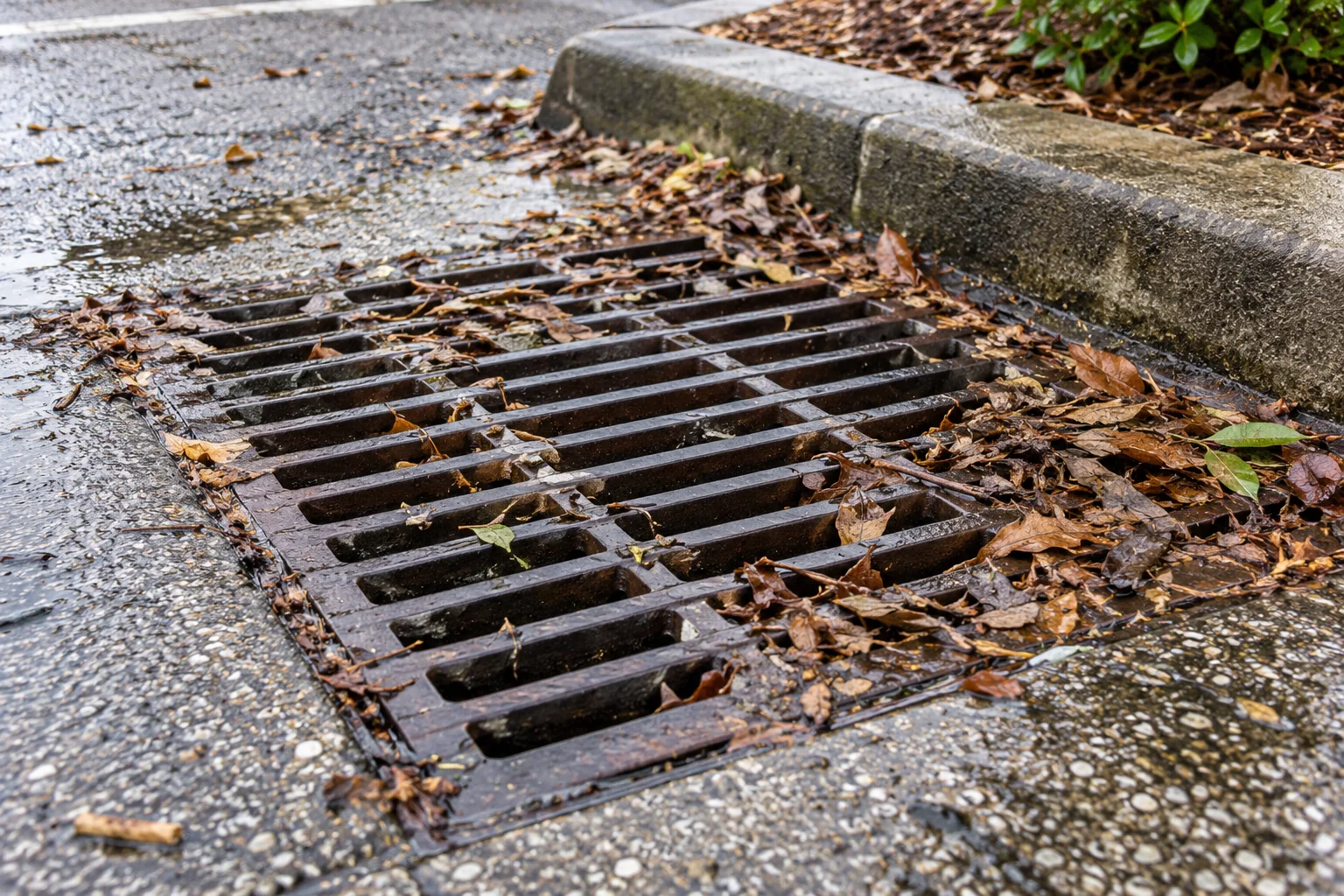
Describe the visible obstruction without assume the whole system is known
Leaves, litter or sediment near a parking-lot inlet can be an important maintenance observation. Record where the material is located, whether water is nearby and which portion of the lot feeds toward that area. A surface view can show a visible obstruction, but it cannot establish the condition of the downstream system or guarantee what will happen during another storm.
Keep the immediate observation separate from the broader drainage question. Clearing material at the surface may change how water reaches an inlet, while other issues may remain. If standing water has been reported repeatedly, retain that history rather than close the record as soon as the grate looks cleaner. The goal is an accurate account of what was seen, what action occurred and what still needs review.
Do not remove a cover, reach into a drain or enter water to obtain a photograph. Avoid active traffic and uncertain edges. If conditions affect access or create an immediate concern, coordinate with the responsible property operator. This guide supports project preparation and provider coordination; it does not direct an owner to open or service a drainage structure.
Identify the inlet and its surrounding catchment
Take an overall view showing the inlet, nearby curb and surrounding pavement when it can be done safely. Add a closer surface view of the visible material without obscuring the wider location. Use a stable property reference such as a building entrance or parking aisle in your note so the responsible provider can find the correct structure.
Explain where water appears to come from during actual rainfall. Describe observed flow, collection and any affected entrance or travel route. Do not assume that every wet area drains to the nearest visible grate. The site arrangement and relevant system connections may need examination. A useful owner record identifies the question rather than draws an unverified underground drainage plan.
If you know of an outlet or have existing drainage documents, tell the reviewer what those records are and where they came from. Do not enter a hazardous location to confirm a connection. Mark uncertain information as uncertain. An older drawing can assist the discussion without proving that every component remains in the location or condition shown.
Record conditions before and after an authorized maintenance action
Keep the date, approximate rainfall context if actually known and photographs of the observed condition. If an authorized provider clears visible material, record who performed that work and the area covered. Retain their description rather than translate a limited service into a claim that the complete drainage system was inspected, cleaned or repaired.
After later natural rainfall, document the water behavior from a safe location if practical. Note whether the previous collection changed and whether a different location became apparent. Avoid staging a flow test or entering water for a comparison image. The useful comparison describes actual conditions and its limits, including when the photographs were taken under different circumstances.
Keep the maintenance action and subsequent observation connected in the record. A dry photograph immediately after clearing does not show how the lot behaves in rain. Likewise, a later wet photograph does not independently establish why water remains. Share both the sequence and any relevant provider findings so a follow-up assessment begins with the facts already available.
Distinguish maintenance, pavement work and drainage-system work
Ask which provider is responsible for the visible material, the inlet structure, connected drainage and surrounding pavement. These responsibilities may be divided on a commercial property. A pavement repair estimate should not silently become a promise to inspect or restore the entire drainage network. Identify the separate scope when a drainage specialist or another responsible party is needed.
If pavement near the inlet is damaged, describe that condition separately from debris on the grate. An edge defect, settlement or water collection may need its own evaluation. Ask how the proposed pavement work relates to the structure and retained surface levels. Do not assume that surface cleaning or resurfacing automatically resolves every nearby drainage concern.
Keep exclusions and dependencies visible in writing. If a drainage review must happen before a paving decision, state that dependency before scheduling. If a separate maintenance provider is responsible for routine clearing, identify the handoff. The owner should understand which action is proposed, what evidence supports it and which part of the system remains outside that provider's work.
Coordinate access and safe observation on an operating lot
Tell the responsible operator about customer routes, deliveries, collection vehicles and tenant access near the inlet. A small visible obstruction can be located in a busy part of the property. Any examination or work should account for those operations instead of assume a person can stand in an active aisle whenever an image or measurement is wanted.
Identify who can authorize access restrictions and communicate changes to affected users. If another provider needs a visit, agree how they will reach the location and who will meet them. Avoid announcing that the lot will remain fully operational before the actual work and access arrangement are understood. Coordination should reflect the real task rather than the apparent size of the grate.
Ask who communicates the return to ordinary use after maintenance or related repairs. Follow the instructions for the actual work, including any remaining structure or pavement concern. A cleaned surface appearance does not independently establish that the surrounding location is ready for every use. Keep operational decisions with the responsible people and retain any unresolved issue for follow-up.
Compare estimates by the task actually described
When requesting proposals, provide the same inlet location, observed debris and water history to each provider. Ask whether the price concerns surface maintenance, investigation, system cleaning, structural work or pavement repair. Different services should not be compared as if they are interchangeable simply because all mention the same drain on the property.
Clarify what documentation or findings will be supplied and what could trigger additional work. An initial visit may identify a need for further evaluation rather than establish a complete correction. Keep the approval process clear so the owner knows who can authorize a changed scope and when another responsible party must participate.
Avoid promises based only on the visible material. A proposal should describe the actual task and any stated limitations rather than guarantee future storm performance without the necessary review. If the concern is recurring, include the dates and prior actions in the request. A concise, consistent history helps providers evaluate the problem without repeatedly rediscovering the same information.
Keep routine observations consistent between providers
Use one location name for the inlet throughout maintenance records and pavement discussions. If different providers use different labels, connect those names in the property file so later reports can be matched. Record a task as completed only when the actual provider confirms what occurred, rather than infer completion from a cleaner photograph.
If material returns, document the date and visible condition without assuming the previous service was unsuccessful or the new material came from the same source. Share the sequence with the responsible operator. Consistent notes support a maintenance discussion while leaving technical interpretation and the next authorized task to the appropriate provider.
Retain the sequence when the appearance changes
Imagine an inlet beside a retail parking aisle with leaves covering part of the grate and water near the curb. The property manager records the location and arranges an authorized maintenance visit. The provider documents the surface action. At the next natural rain, the manager observes less collection at that point but still sees water farther along the aisle. The useful record keeps both observations and avoids claiming that the first action fixed the entire lot. Share the changed pattern with the responsible reviewer, together with the original photographs and work description. That evidence supports a more precise next conversation than either an isolated before image or an unsupported conclusion that clearing never helps.
Contact Asphalt Solutions with the property address, inlet location, overall images and known maintenance history when surrounding pavement or project coordination needs review. Most work is at customer job sites. Visits to the Slidell contact location require an appointment, and listed hours mainly describe phone availability. Call or text to discuss the actual site and the right next assessment.
Questions about parking drainage blocked by debris
The direct answer
An obstructed inlet or drainage path may contribute to ponding. Cleaning and pavement correction solve different problems and should be separated.
What to discuss before choosing a repair
Ask which cleaning, inlet work and pavement tasks are included.
What to observe and record
- Photograph debris safely from the surface
- Record water entry points
- Note the outlet if known
A mistake to avoid
Do not enter drainage structures or assume cleaning proves the downstream system is clear.
Continue with the right next step
Property conditions determine the final scope. These planning notes do not replace a site evaluation. How to use our pavement guidance