
What positive drainage means in the discussion
Positive drainage generally describes an arrangement that gives water a path toward an intended drainage destination instead of leaving it trapped in an unintended low area. The phrase is a planning goal, not a complete description of construction. A proposal should explain which surface or drainage features it changes and what connection the work is intended to address.
Ask the contractor to describe the actual work rather than relying on the phrase alone. The property may involve pavement elevations, retained curbs, inlets, pipes, ditches, downspouts or other connections. Those features can have different owners and review responsibilities. General roadway drainage references explain relationships among slopes and drainage features, while the actual private-property plan needs its own conditions, uses and appropriate design review.
Begin with the water problem you actually observe
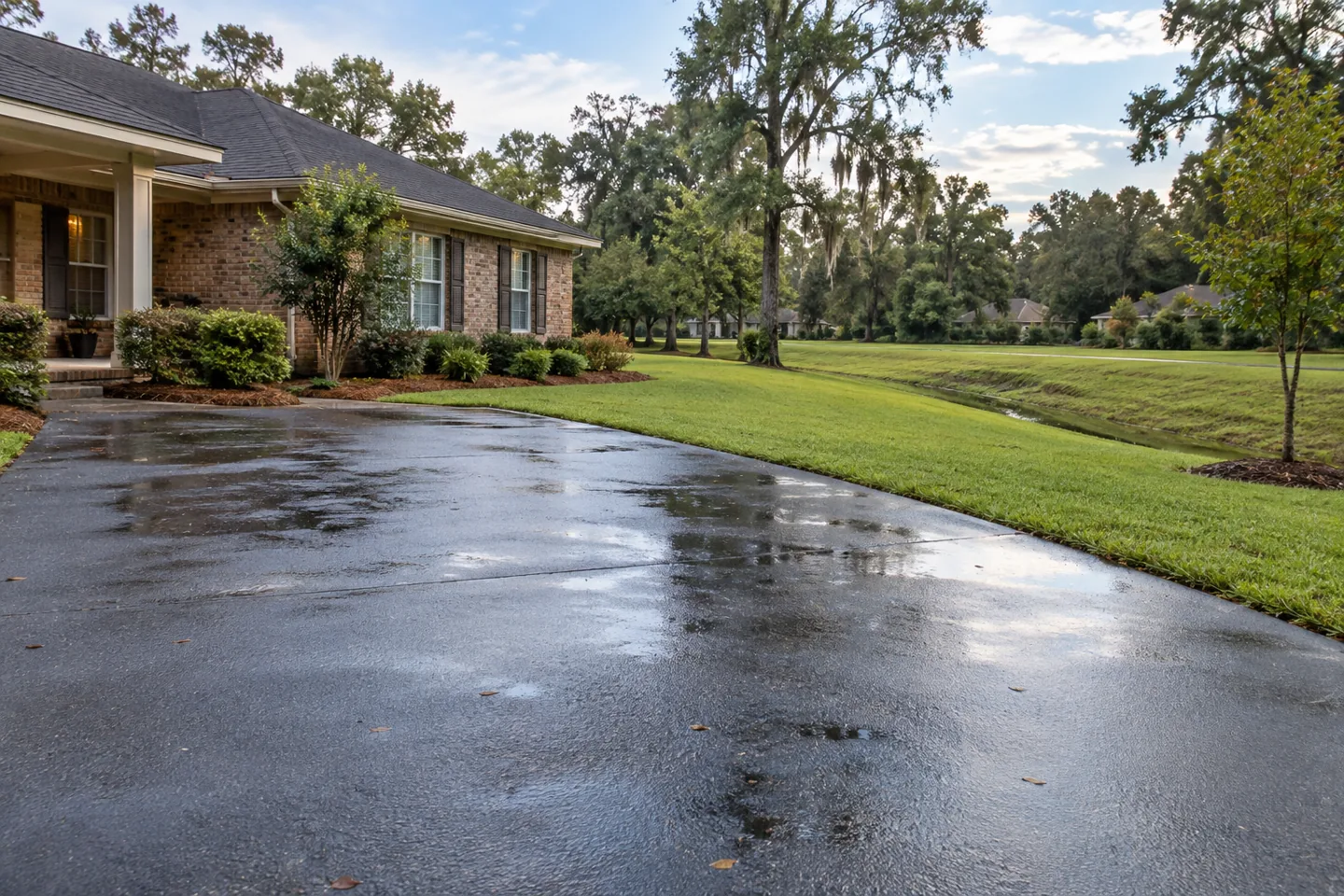
Describe where water appears, when it is observed and how it affects the property. Note whether it crosses an entrance, remains beside a garage, collects in a parking area or interferes with a provider route. Use an overview photograph and a simple location reference. A close-up of water without surrounding context may show the result while leaving the relevant connections unclear.
Keep the observation separate from an assumed cause. Do not decide that an inlet, surface grade or supporting layer is responsible solely from one image. The contractor needs the visible facts and property layout to identify the next review question. If the observation has occurred several times, retain a small dated set rather than an unorganized group of pictures with no timing information.
Record conditions before, during and after rain where safe
Note the timing of each useful image relative to the rain event. A photograph while rain is falling and a later image can represent different observations. Include whether the water location changes and which route becomes difficult to use. Do not enter traffic, moving water or another unsafe area to complete the record. A description of an inaccessible connection is better than a risky photo.
Use consistent viewpoints where practical so the same location can be recognized. Keep original files and identify any cropped copy. Do not modify an image to hide the condition or imply a result that was not observed. The record supports a discussion of the actual property; it cannot establish the capacity of an unseen pipe or the condition of every concealed feature.
Separate surface geometry from a drainage-system decision
Ask whether the proposed work changes pavement elevations, adjusts a visible connection, adds or alters a drain, or includes another specifically described operation. Those are different scope items. A surface repair should not automatically be treated as a complete drainage-system redesign. Likewise, a drain feature is not a complete answer without a reviewed route and destination for the collected water.
Keep the work and review responsibilities explicit. Where another professional, provider or authority must be involved, identify who arranges that coordination before approval. The owner should understand what problem the proposal addresses and what question remains open. A clear drainage discussion does not require the owner to select a device or a numerical design criterion before contacting the company.
Show the retained features and intended destination
Photograph nearby curbs, thresholds, walkways, inlets, ditches and visible downspout connections. Mark which features will remain and which may change under another project. Ask how the proposed pavement meets those retained elevations and where the intended water path leads. A change in one area can affect another connection, so the overview matters.
Do not assume permission to alter a shared, neighboring or public drainage feature. Identify the responsible party and any required review for the actual project. Share existing plans where they are available and label uncertain information as uncertain. The destination and connection responsibility should remain visible in the proposal rather than being left to an informal expectation that water will find somewhere else to go.
Consider the people and vehicles using the area
Describe pedestrian entrances, normal parking, trailers, deliveries and collection movements at the affected location. The surface arrangement needs to be discussed with the actual property use. For a business or shared route, involve the person responsible for the property's access requirements where the proposed work affects them.
Do not select a general roadway slope for every private entrance or walkway without the appropriate review. Similarly, do not assume a drain or transition suitable for one operation fits every provider vehicle. Share confirmed operating information and ask which project details require further input. The owner supplies the practical facts while the responsible parties establish and explain the construction arrangement.
Clarify the included water-related work
Read the quote for work limits, preparation, retained connections and the specific drainage responsibilities. Ask whether cleaning, inspection, system alteration, landscape work or another task is included or excluded. Do not infer a service from a broad phrase about positive drainage. If a separate trade performs part of the work, record its task and place in the sequence.
Keep optional improvements separate from the base scope. If the proposed surface work leaves an existing system question unresolved, state that clearly before accepting the price. The owner can then decide whether more review is needed. A written scope should be specific enough that another property contact can explain what was purchased without inventing a promise that every future water condition will be eliminated.
Plan for exposed conditions and approval decisions
Ask how unexpected conditions encountered during removal or connection work will be documented. Identify who can authorize a revised scope and how price or sequence changes will be explained before additional work proceeds. A person providing site access should not automatically become the decision maker.
Where a newly exposed feature needs professional or ownership review, use the agreed pause-and-review process. Keep the findings connected to the location map and proposal version. The initial estimate can acknowledge uncertainty while preserving a clear approval route. Do not replace that process with an undefined instruction to do whatever is needed to make the property drain.
Evaluate the result against the actual scope
After work, retain final photos, approved changes and the accepted description of the drainage-related task. A dry-day image does not establish how the property performs during every rain event. If follow-up observations are appropriate, record the actual location, timing and effect on use, then connect the question to the agreed scope.
Keep remaining issues outside the purchase separate from questions about completed work. If another party controls an unresolved feature, identify that next action. A useful record lets the owner discuss a specific concern without expanding or rewriting the original agreement. Retain any offered follow-up terms in their written form rather than inferring a guarantee from a general conversation.
Prepare a clear pavement inquiry
Send the exact property address, concise concern, labeled overview photos and known access constraints to Asphalt Solutions. Include visible drainage features and any relevant confirmed project history. If dimensions, ownership or system details are unknown, say so. A useful request does not require the owner to diagnose the problem before contacting the company.
The company serves Greater New Orleans and the Northshore; the Slidell contact location is by appointment only. Call or text before arranging a visit. Use general drainage references to understand terminology, while keeping the actual site decisions with the appropriate review. The goal is a clear path from the observed water concern to a defined scope, assigned responsibilities and a record the property can use later.
Compare two descriptions of the same concern
As a planning example, one estimate might replace pavement at a wet entrance while another also changes a nearby inlet connection. Those descriptions are different scopes even if both use the phrase positive drainage. Ask which task addresses the observed concern, which retained feature each relies on and what review supports the arrangement. Do not assume the larger or smaller scope is automatically the right choice.
Use the answers to identify the remaining decision. The owner may need clarification of work limits, another party's review or better observations before comparing prices confidently. Keep that next action connected to the property record. A broad drainage phrase should help start a clear conversation rather than hide a difference in what two proposals actually include.
Questions before you request the estimate
Turn the property facts into a clear next step
Explore the asphalt repair service guide, project planning checklists and photo gallery. Bring the actual property address, useful photographs and access needs to the quote discussion.