
Describe how the walkway is failing
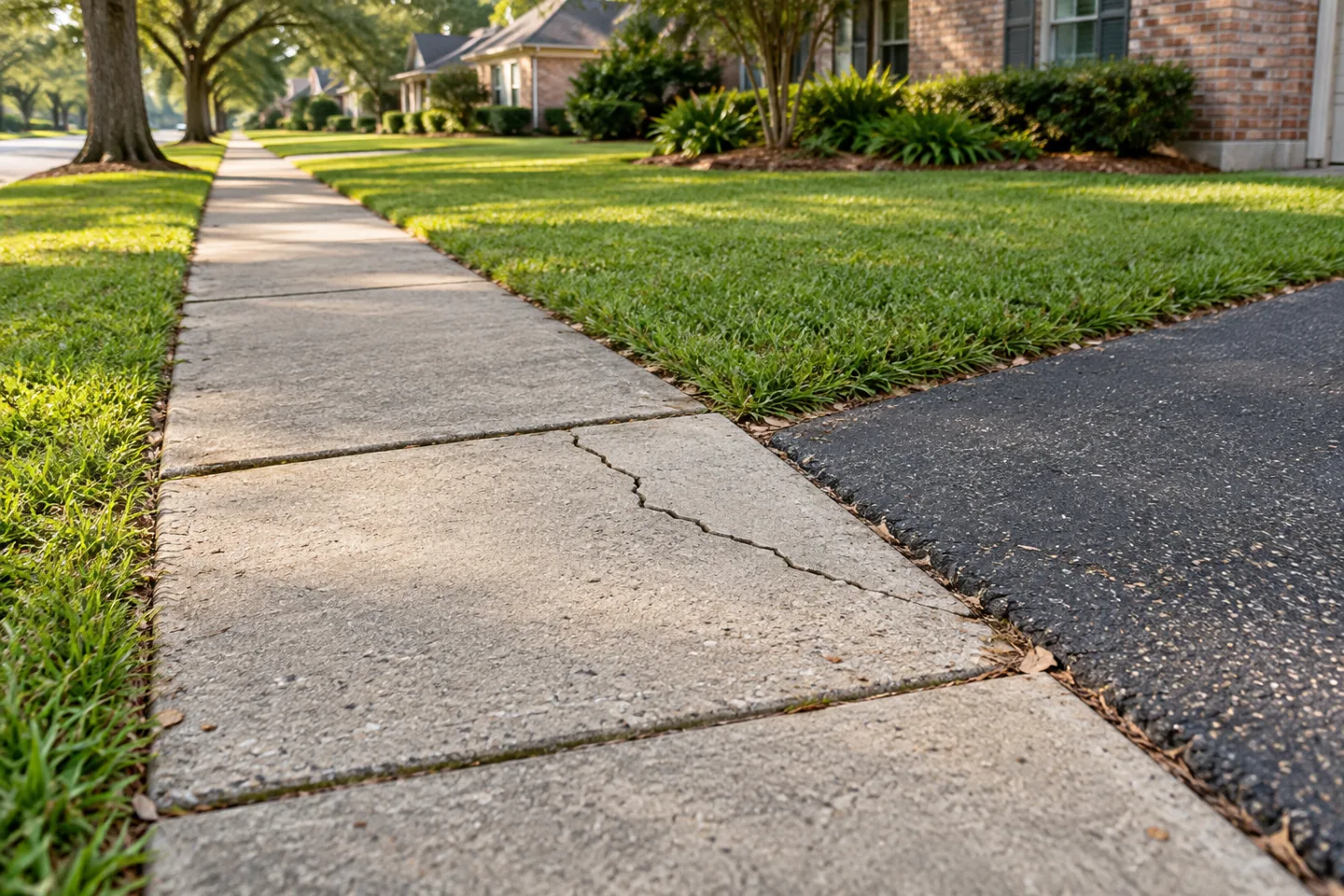
A useful sidewalk inquiry starts with the experience of using the walkway. Explain whether a panel rocks, a joint has developed a raised edge, the surface is breaking apart or water collects where people step. Identify who uses the route and where it leads. A walkway between a parking area and a business entrance creates different access concerns from an occasional garden path. Mark the damaged location on an overview photograph rather than sending only a close-up that removes the surrounding context. If the condition appears to change after rain, document that observation without assuming that the visible crack reveals the entire cause.
Take photographs from both directions along the path and include its connections to doors, ramps, driveways and retained pavement. Keep the camera work within a safe area. You do not need to put a person on a damaged panel to demonstrate the problem. Note approximately when the concern became noticeable and whether nearby work, deliveries or changes in landscaping occurred around that time. Those facts help shape the site conversation, while the contractor still needs to review what is actually present.
Agree on which panels are included
Use a sketch or marked photograph to distinguish the proposed repair from the walkway that will remain. A quote for one broken panel should not be confused with replacing the full route. Ask how the proposed boundaries will connect to existing joints and whether the retained sections are in a condition that supports the intended result. If several panels show different problems, identify them individually. A list that separates a raised corner, a cracked center and a settled connection is more informative than calling the whole path damaged.
Discuss what happens if removal exposes conditions that were not visible during the estimate. Ask how the contractor will document the finding, describe the additional work and obtain approval. Keep that change procedure understandable to the person authorizing payment. If adjoining work is optional, ask for it to be separated in the proposal. This lets you decide whether a larger repair solves an actual continuity problem or simply adds work you had not requested.
Clarify ownership and approval questions
The party responsible for a sidewalk is not always obvious from where the concrete lies. A walkway next to a street, through a shared development or across a leased commercial property may involve responsibilities outside the person requesting the quote. Share a survey, property-management agreement or existing written guidance if you have it. Do not assume that a prior repair on the same block establishes the requirements for your proposed work. Identify who will confirm ownership, approvals and any applicable project requirements before the scope is finalized.
For a business entrance or shared route, involve the person responsible for the property's access obligations. A paving conversation should not be treated as a substitute for required design or compliance review. Ask which responsibilities belong to the owner, contractor or another professional, and record the answer in the proposal. This is especially useful when a property manager collects the estimate but a different owner approves it. Clear responsibility prevents a repair from being ordered before the necessary questions have been answered.
Plan the pedestrian route during work
Before removal begins, determine how people will reach the destination served by the walkway. A route through active construction or across an unprepared lawn may not be a suitable alternative. Describe the users, including customers, employees, residents and delivery personnel. Identify other entrances and confirm whether they can actually remain available. Where the walkway is part of a business access route, coordinate the temporary arrangement with the person responsible for accessibility and property operations rather than leaving it to a sign installed after demolition.
Ask how the closed area will be marked and who will communicate the temporary route. Give the contractor opening hours, scheduled appointments and any event that affects pedestrian traffic. If the work must be divided into stages, request a description of each stage and the connections that remain usable. The goal is a practical plan that the people using the property can follow. Keep the reopening instructions separate from the estimated construction date because placement and reopening are different decisions.
Review the surrounding elevations
A repaired panel has to meet the walkway around it and the features beside it. Show the contractor nearby thresholds, curbs, driveway crossings, drain inlets and landscaped edges. Note where water travels after rain and where it remains. Do not choose a new elevation simply because it seems likely to remove a puddle; that change may affect a door connection or move water onto a retained section. Ask how the proposed repair will meet the existing route and what drainage work, if any, is included.
Where the concern is a raised joint, record which side is high and where people normally approach it. Do not assume that the high panel is always the section requiring removal. The actual conditions should be reviewed. If landscaping or roots appear close to the damage, identify them as observations rather than a confirmed cause. Keep the quote focused on the connections that matter so the finished work is evaluated against a defined plan rather than a general expectation of a perfectly level property.
Identify landscaping and utility coordination
List trees, irrigation features, lighting, utility covers and other nearby items that may need protection or coordination. Share the information you have about earlier work, but do not infer buried conditions from the visible surface. Clarify who will arrange the appropriate utility-location process before excavation. If another trade must move a sprinkler or adjust a feature, identify the sequence and the person responsible. Small walkway repairs can still require coordination when equipment access or excavation occurs near existing services.
Do not authorize cutting roots or changing a tree's surrounding grade as an incidental item in a concrete repair. Where tree-related work may be necessary, ask whether an appropriate tree professional needs to be involved. Confirm which landscaping restoration is included and which remains the owner's responsibility. A proposal can clearly distinguish pavement work from landscape work without leaving either undefined. This matters when the owner expects a complete restoration but the contractor has priced only the concrete panel.
Compare the written proposals
Read the estimates for the same panel boundaries, removal, preparation, material, retained connections and disposal arrangements. Ask whether temporary access measures and restoration are included. A lower price may reflect a smaller work area or different assumptions about preparation. Avoid comparing only the line described as concrete repair. If a proposal uses an allowance for concealed conditions, ask what finding would trigger it and how approval would be recorded. You should be able to explain the planned work in ordinary language before approving it.
Keep a marked photograph with the accepted proposal. Record any decision that changes the work boundaries or the pedestrian route. If the property has several decision makers, name the person who can authorize changes during construction. This reduces delays and prevents informal instructions from becoming disputed additions. The comparison process is useful even when you have only one quote because it helps reveal which decisions are settled and which remain open.
Prepare for reopening and future records
Request project-specific instructions before people return to the repaired walkway. Ask whether there are restrictions on foot traffic, carts, deliveries or concentrated loads and who will confirm that the route is ready. Do not use a general waiting period from an unrelated job. Share the instructions with everyone responsible for opening the property. If barriers need to remain after the crew leaves, clarify who will check them and remove them.
After completion, keep the proposal, approved changes, photographs and reopening guidance in the property's records. Photograph the repaired panels and their connections from the same general positions used before the work. These images document the result without implying anything about concealed conditions. Send Asphalt Solutions the exact property address, the main sidewalk concern and useful overview photos to begin the discussion. The Slidell contact location is by appointment only, so arrange contact before an in-person visit.
Questions before you request the estimate
Turn the property facts into a clear next step
Explore the concrete service guide, project planning checklists and photo gallery. Bring the actual property address, useful photographs and access needs to the quote discussion.