
The decision in plain language
Review visible work against the agreed scope and retain questions about hidden conditions for the responsible professional.
The situation to discuss
Use your original defect sketch and dated photos. Describe the specific area or task involved rather than judging solely by the overall color.
Your five-point decision sheet
Use these headings on a simple sketch or in your project notes. Under each one, write the actual property observation, the question you still need answered and the person responsible for the decision. Leave an unknown item marked as a question instead of assuming it is included.
- Which proposal version and changes define the accepted scope?
- What access instruction applies to the owner review?
- Which recognizable views document the completed sections?
- What visible question needs provider clarification without a hidden-condition diagnosis?
- Which instructions, resolved items and deferred decisions belong in the final file?
What not to assume
A uniform appearance is not proof of structural adequacy.
Turn the discussion into a clear work boundary
Keep a copy of the marked site sketch with the estimate. Identify the area being authorized and any adjoining feature that must remain protected or available. If the contractor recommends an investigation or a separate trade, record that next step before treating the proposal as a final solution. A planning guide helps you ask questions; it cannot establish hidden conditions from photographs.
When a decision changes the work, request an updated description showing what was added, removed or deferred. Confirm how any additional quantity will be measured and approved. Make sure the person giving the approval has authority for that part of the property. This prevents a useful site conversation from becoming a different job than the one the owner expected.
Bring the right information to the visit
Send your address, the overall project goal and photos showing this specific connection or operating area. Include a wide view for context and a closer view of the detail under discussion. Describe any timing or access constraint that affects the decision. Avoid placing yourself in traffic or entering inaccessible structures to collect information.
Bring the accepted scope to the review
Begin with the proposal and the revisions that were actually approved. Identify the pavement sections and work items included in that agreement. Keep unselected options, separate provider tasks and deferred areas visible as different categories. A closeout conversation is easier when both parties use the same document instead of remembering different parts of an early estimate. Ask the contractor which completion information is provided for the offered scope. This page helps the owner organize that conversation; it does not create an inspection standard, warranty promise or technical acceptance rule that was not part of the actual project agreement.
Wait for the relevant access instruction
Ask when the responsible provider permits the type of access needed for the owner review. Do not enter a restricted work area merely because activity appears to have stopped. The useful record includes the reopening instruction and the person who communicated it. Identify whether the message applies to the particular use being discussed, such as walking access or vehicle parking. This guide does not prescribe a universal waiting period. Keeping the instruction with the file helps the owner understand the handoff and avoids a closeout photograph becoming an excuse to ignore the conditions established for the actual work.
Photograph recognizable views of each section
Use ordinary photographs showing enough of the property to locate the completed section. A building corner, retained curb or entrance can be a better reference than a parked vehicle that will soon move. Where preparation photographs exist, take a comparable view when the area can be accessed as permitted. Record the date and a plain description of the location. Do not present unmatched views as proof of a before-and-after result. The point is to support the scope discussion and future property record, with the visible work area recognizable even after parking use and everyday surroundings change.
Describe a concern in observable terms
If something needs clarification, state where it is and what can be seen. Describe a mark, boundary, retained feature or difference in appearance without immediately assigning a technical cause. Avoid a message declaring a failed base or missed hidden task when the only information is a surface photo. Ask the contractor to review the concern against the accepted scope and explain the relevant next step. A precise description gives the provider something useful to evaluate. It also keeps the property file from treating an owner's first impression as a confirmed diagnosis or a settled responsibility decision.
Separate appearance from concealed conditions
A surface photograph can document a visible location, but it does not show every condition beneath the pavement or every preparation activity. Ask what records or explanation are available for the included work instead of inventing conclusions from color or texture alone. If the proposal contained a specific documentation item, identify it during the closeout conversation. Keep the provider's response with the related section. This preserves an honest record of what the owner knows and what remains uncertain. It also prevents a general maintenance review from silently becoming a claim that hidden conditions were tested or certified when that was never the offered scope.
Check boundaries against the work map
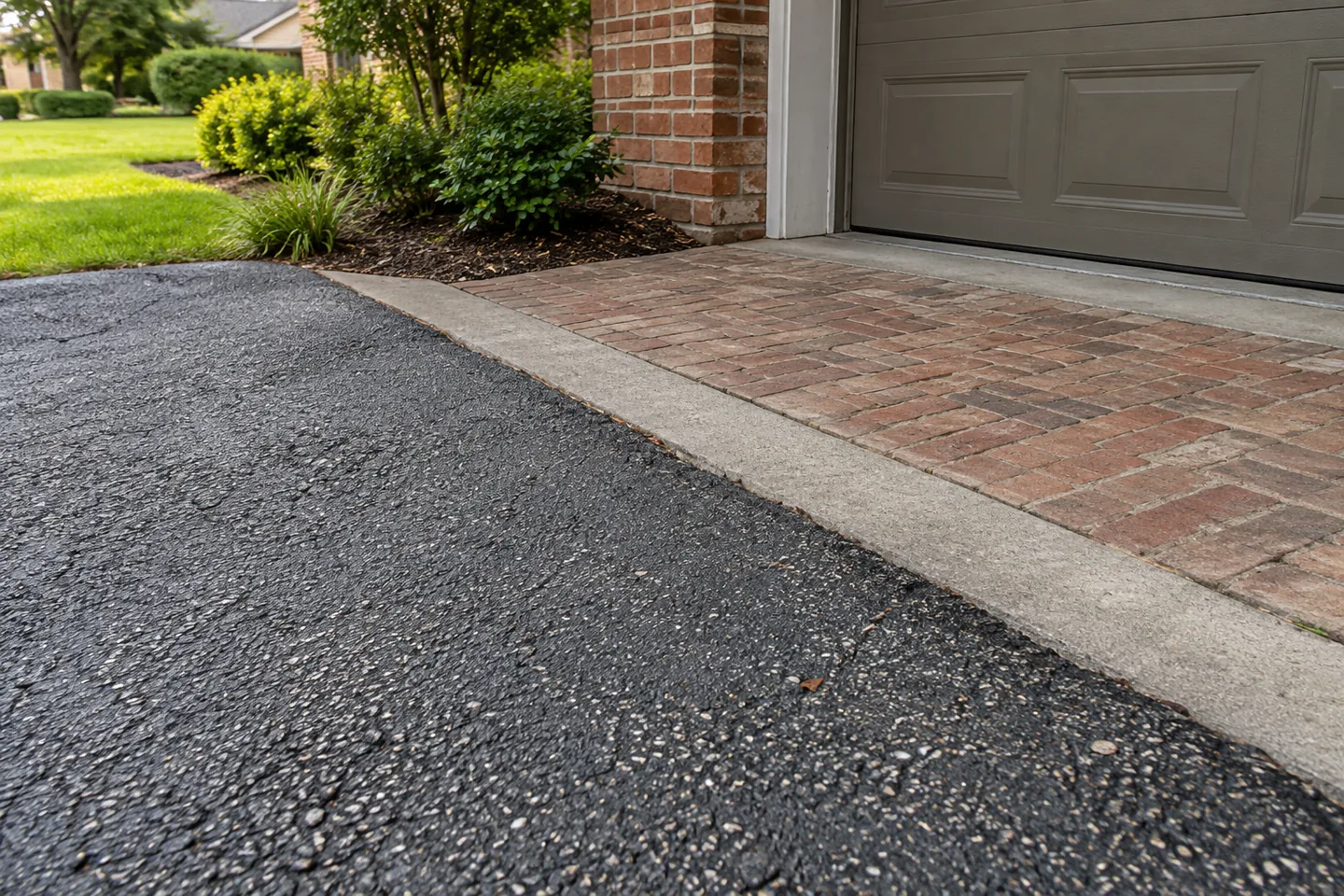
Use the agreed sketch, item description or fixed landmarks to identify where the work starts and ends. Note retained concrete, landscaping, excluded sections and any deliberately phased area. An untreated neighboring surface may be outside the agreement rather than a missed item. If the boundary appears different from the accepted description, show the specific location and ask the contractor to clarify it. Keep the answer with the map or proposal reference. A border-by-border review is more useful than a broad statement that the whole property looks incomplete when the accepted project only covered a defined part of the pavement.
Keep reopening and maintenance instructions together
Save the instructions supplied for the actual completed work and intended property use. Ask a focused question if a direction is unclear or seems to conflict with another provider's instruction. Do not substitute an online rule for the provider's actual material and site information. Identify who at the property passes the current message to tenants, employees or household users. A closeout file should show which instruction was issued, when it was received and who handles updates. This lets the owner communicate the agreed handoff clearly without promising a use or timetable that has not been confirmed for this particular project.
Record remaining items with an assigned next step
Create a short list of anything still requiring clarification, follow-up or a separately approved decision. Give each entry a location, the related scope item and the person expected to respond. Distinguish a contractor follow-up question from work left to another provider or an option the owner chose not to accept. Do not mark an item complete just because it has been mentioned in a message. Add the response and actual resolution when available. This simple tracking method gives the owner a more reliable closeout record than a folder of photos with no explanation of which questions remain open.
Ask about terms using the actual agreement
If the owner has a question about a warranty, payment milestone or another contract term, refer to the accepted document and request clarification from the appropriate party. This worksheet does not establish a new promise or interpret the property's legal rights. Keep the provider's written response with the agreement. A visible concern and a question about contract terms may need different conversations, so make both requests specific. Avoid treating general website copy as a substitute for the actual proposal or using an informal closeout checklist to invent obligations that neither party accepted for the maintenance scope.
Make the future maintenance record useful
Keep the accepted scope, approved changes, identifiable photographs, provided instructions and resolved-item list in a dated property folder. Add a plain note describing which areas were completed and which remain deferred. Do not turn that summary into a prediction that all future problems have been prevented. When a later concern arises, take current photographs and explain what changed and when it was noticed. The earlier file can help locate the prior work and support the next conversation. Its value is clear history, with known observations distinguishable from assumptions about hidden conditions or future service life.
Send a focused closeout question
When contacting Asphalt Solutions about a completed scope, include the property address, proposal reference, specific section and a recognizable photograph if available. State the question plainly, such as asking whether a visible boundary matches the agreed limits or which instruction applies to a particular use. Share the owner's observation without converting it into a diagnosis. Ask for the next step and keep the answer with the file. This helps the discussion stay connected to the actual project instead of requiring the provider to identify the property, locate the concern and reconstruct the accepted work from a vague message.
Questions before you approve the work
Discuss the actual property and work limits
Send the property address, current photographs, intended use and access needs. Keep planning with these related decisions.
Reviewed October 14, 2026. Owner preparation guidance; the accepted proposal defines the actual work.