A practical project scope
Identify where water and wheels meet
Note whether the pothole is near a drain, pavement edge, delivery route, or low spot. Those details help distinguish an isolated surface defect from a recurring structural problem.
Define the repair limits
A repair needs sound surrounding material and a suitable base. The estimate should explain removal limits, preparation, replacement material, and how the joint will be handled.
Watch repaired areas over time
Recurring damage in the same location is a reason to review drainage and supporting material. Keep dated photos and record the vehicle traffic the area receives.
What to share for an estimate
- The property address and approximate area.
- Photos of the surface, edges, and any drainage concerns.
- Vehicle types, access needs, and scheduling constraints.
- Whether you need installation, repair, maintenance, or a comparison of options.
Related services
Explore Louisiana service areas or pavement planning guides.
Plan the work with confidence
Pothole repair starts with the hole and continues into the pavement around and below it. The appropriate scope depends on the surrounding material, traffic, moisture and the intended life of the repair.
In this planning guide
Show the whole failure, not only its center
A close photo can show the depth of a pothole while hiding cracks and settlement around it. Provide a wider view, a close view from a safe location and an approximate size reference when practical. Record whether water stands in the area and what vehicles travel across it. Multiple openings near each other may belong in one condition assessment. Do not step into traffic, excavate material or open a drain to get better pictures. The observations help prepare a site visit; they do not establish underground conditions or a final quantity. Tell us if the defect is changing quickly or affecting the only usable access route.
Ask whether the proposal is interim or longer-term work
Some repairs are intended to restore immediate usability while a larger project is planned. Others include defined removal, supporting-material attention and pavement replacement. The product, preparation and application need to suit the proposed purpose. Ask for that purpose in writing rather than treating all patch prices as comparable. If temporary stabilization is proposed, identify the follow-up plan and its limitations. A repair material’s label alone does not establish performance in an unprepared or wet opening. Do not expect a short-term treatment to resolve a continuing support or drainage problem that remains outside the work.
Investigate a hole that comes back in the same place
Recurring damage makes earlier records especially valuable. Show the outline of the previous repair, adjacent cracks and photos from before it failed. Note how soon the condition returned and whether rainfall or vehicle use changed. The failing area may extend beyond the prior boundary, or underlying conditions may remain. Ask how the new scope differs from the previous one and what evidence supports that difference. Repeating an identical repair without reviewing the history can leave the same uncertainties in place. A new proposal should distinguish what can be confirmed at the visit from discoveries that require removal.
Define removal, support and the patch connection
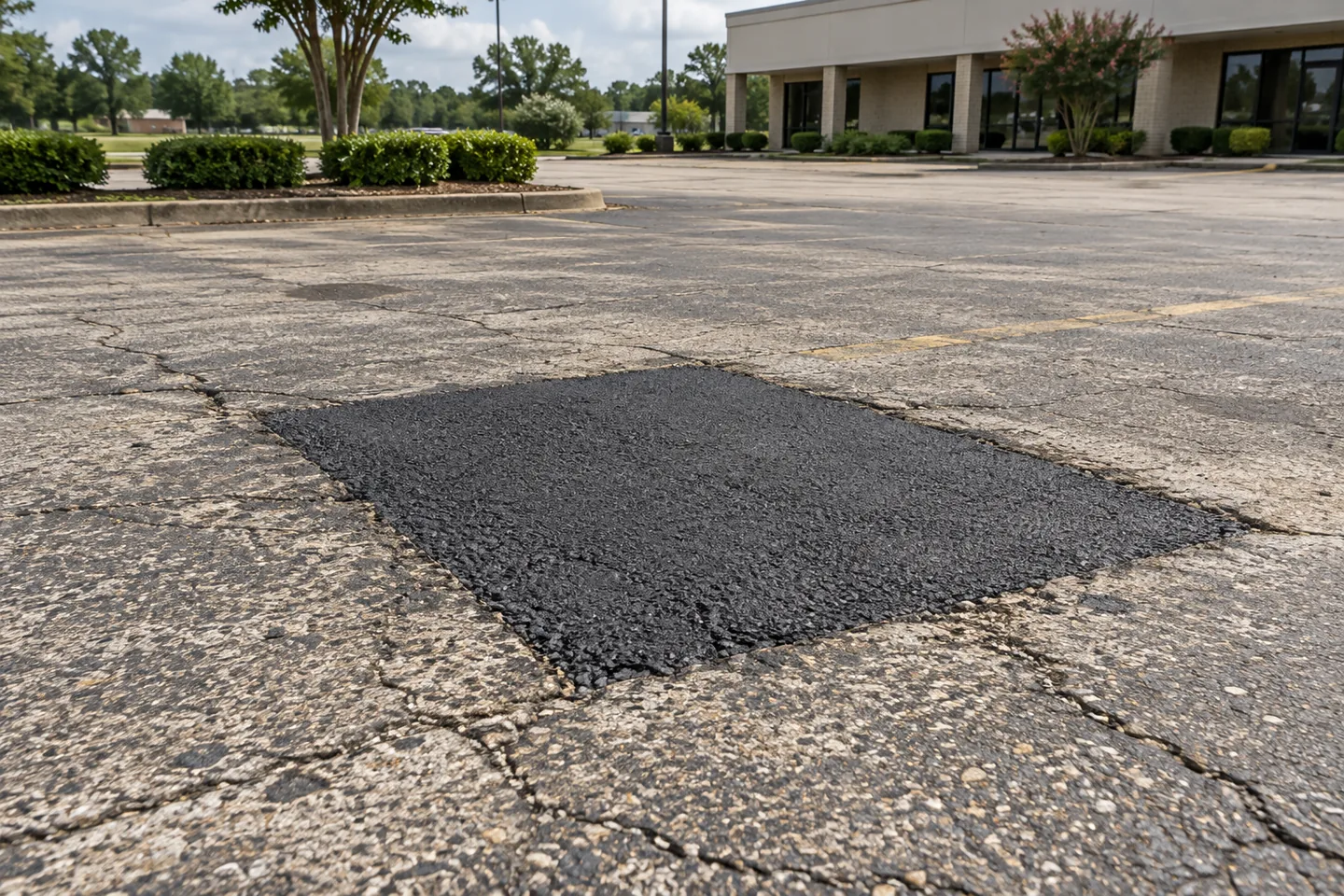
Where removal is part of the repair, identify the proposed boundary, depth assumptions and support work. Ask how unsuitable conditions will be documented before extra work is approved. Preparation and compaction matter inside a small patch, and the connection to retained pavement needs attention. Nearby drains, utilities or edges can constrain the method. The estimate should make these limitations understandable. A rectangular saw cut is a boundary detail, not a complete repair specification. Retain the agreed scope and preparation records so the work can later be distinguished from neighboring deterioration or a different defect.
Coordinate safe access and reopening
Mark the area for appropriate property management and discuss whether an entrance, lane or walking route needs temporary closure. A commercial owner should coordinate notices with tenants, delivery providers and waste collection. For a driveway, decide where vehicles will stay during work. Obtain reopening guidance specific to the repair and intended vehicles; a surface that looks filled is not automatically ready for every load or turning movement. Review the finished elevation and transition as well as the center of the patch. Keep dated photos and the repair location in the maintenance record, especially where prior potholes have recurred.
What changes the price?
The visible hole size is only one factor. Failure depth, nearby damaged material, water, support repairs, quantity of scattered areas and construction access can change the scope and price.
Request a written, property-specific proposal. A photo inquiry starts an assessment conversation; it is not a fixed price, confirmed construction date or final engineering specification.
A practical sequence for the project
- Document the hole and surrounding condition
- Explain urgency, traffic and history
- Review interim versus longer-term repair
- Agree on removal and support assumptions
- Arrange work-zone access
- Follow written reopening instructions.
Prepare your inquiry
Send the property address, a wide view of the area, close photos of relevant defects and the result you want. Include vehicle types, water observations, prior repairs and access restrictions. State whether your main concern is usability, maintenance, drainage, layout or appearance so the discussion starts with your priority.
Want to start with a text?
Text the property details to (985) 788-0493 or use the quote form. For a larger business property, include the person coordinating access and the operating schedule. Avoid putting confidential tenant or customer information in photos.
Useful questions before approving the work
| Ask about | Get clear in the proposal |
|---|---|
| Work boundaries | Included areas, excluded areas and connections to pavement that remains |
| Hidden conditions | Assumptions, documentation and approval before additional work |
| Property operations | Closures, pedestrian routes, vehicle storage and communication |
| Finishing and care | Cleanup, agreed finishing work, reopening guidance and follow-up responsibilities |
Continue with the details that fit your property
Planning guidance reviewed October 6, 2026. This guide helps organize a contractor conversation; final quantities, materials and construction details depend on the property. Read our guidance and source policy.
Document the pothole and the route around it
For a pothole repair request, photograph the damaged location from a safe position and include a wide view showing its place in the driveway or lot. Describe whether it lies in an entrance, turning area, parking bay or pedestrian route. Note if the opening is obscured by water when observed, without entering traffic or attempting an unsafe measurement. The purpose is to help locate and assess the concern, not to establish concealed depth, pavement structure or the reason the material broke away.
If there are several potholes, label them separately on a simple property sketch. Include nearby patches and visible cracking so the contractor can discuss whether the request concerns individual spots or a broader area. Ask the proposal to identify the included locations and how repair boundaries are selected. Counting holes alone may not define the eventual work footprint. Compare the written scope rather than assuming that two offers using the same pothole-repair label cover equal preparation, area and retained connections.
Distinguish the visible opening from the repair decision
Tell the contractor what you know about previous work at that location and provide records where available. A hole that reappeared after a previous patch deserves discussion, but recurrence alone does not reveal the hidden cause. Ask what will be assessed before the method is finalized and how unexpected conditions will be communicated. The proposal should explain whether any additional work requires approval. Avoid treating a surface photograph or an reference image as proof that one repair method is suitable for every opening.
Water near the damaged area should be described as a separate observation. Record the weather context, whether the location was wet or dry and how the water affected access. Show adjacent inlets, edges or retained surfaces in the wide view. Ask whether the proposed repair addresses only the damaged pavement or includes any related drainage work. If the latter is excluded, retain that unanswered question in the property record rather than assuming the filled opening resolves every concern in the surrounding area.
Organize access and follow-up for the actual location
Even a small pothole repair may temporarily affect the only entrance or the space used by deliveries. Tell the contractor which movements depend on that location and ask how the work area will be identified. Where a property manager is involved, choose one contact to approve changes and distribute access information. Do not arrange an improvised route over neighboring property or assume an occupied building can operate normally without discussing pedestrian access and the actual agreed work sequence.
When the work is handed back, review the named repair locations against the proposal and retain the instructions for vehicle return. Photograph the completed areas with enough background to locate them later. Keep the scope, approved changes and follow-up contact together. If a concern develops, record what is visible and when it was observed. This is more useful than guessing that a different surface color, a nearby crack or a later wet spot proves an unverified hidden failure or an outcome the contractor never promised.