
Clarify what the term means in the proposal
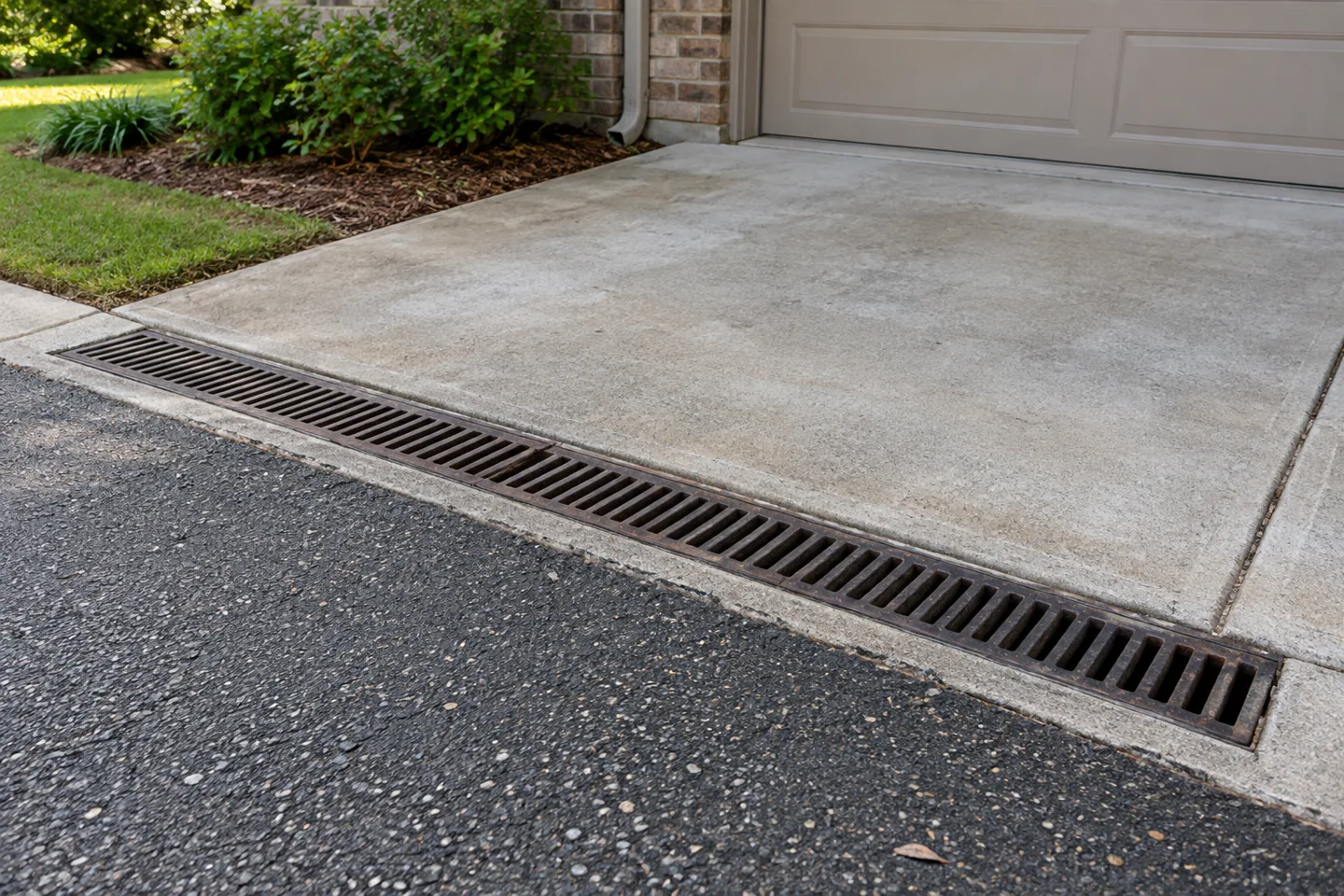
In many residential and commercial conversations, a trench drain means a linear surface channel, often with a grate, that collects water along its length. Manufacturers describe channel systems that collect and convey surface water to connected drainage routes. Technical documents can use related trench terminology differently, so the quote should identify the actual feature rather than rely on its name alone.
Ask the contractor to explain whether the proposal concerns a surface channel, another drainage arrangement or pavement work around an existing feature. Keep the description tied to the property and intended task. A channel product is a component in an arrangement; its presence does not by itself establish the route, destination or suitability of the complete system.
Start with the water observation and location
Describe where water appears, when it is observed and what property use it affects. Include overview photos, visible drainage connections and an exact address. A request for a trench drain can otherwise begin with a chosen product before the actual concern is understood. The owner does not need to diagnose the problem to provide useful information.
Use stable references on a sketch and the photos. Mark the area proposed for work and the retained surfaces. Keep suspected causes separate from observations. If a garage entrance, pedestrian route or provider lane is involved, explain that operation. A well-prepared request identifies the decision needing review instead of treating a product name as a completed construction plan.
Distinguish surface collection from other drainage questions
Ask which water the proposed channel is intended to collect and how it relates to the surrounding pavement. Surface collection is a different discussion from every possible supporting-ground or concealed-system concern. Do not assume a channel automatically addresses water below the pavement or a problem controlled by a separate structure.
If another drainage review is needed, identify who arranges it before the scope is approved. General product information can explain how a channel component works, but it does not design the actual property arrangement. The owner should understand the intended task, retained connections and remaining questions. Keep those distinctions visible when comparing a channel proposal with another type of work.
Review the route beyond the visible channel
Ask where the collected water is intended to go and what connection work is included. A visible channel without an identified drainage route is not a complete scope description. Share known records of existing pipes or other features, but label unconfirmed routes and dimensions as unknown. A surface photograph cannot establish every concealed connection.
Identify ownership, permission and review responsibilities for the destination or retained system. Do not assume a neighboring, shared or public feature can be altered because it is nearby. Keep the proposed route and responsible parties with the accepted plan. If a separate contractor handles the connection, record that task and its place in the construction sequence.
Discuss pavement elevations and retained transitions
Photograph the surfaces around the proposed channel, including thresholds, walkways, curbs and retained pavement. Ask how the work meets those features and which elevation decisions require review. A channel location should not be selected from a close-up alone while ignoring the surrounding surface and intended flow.
If another trade will change a threshold or adjoining feature, share the current plan before the pavement work is finalized. Ask for a revised proposal if the retained connection changes. Keep work limits and optional surrounding areas clear. The contractor and owner should be working from the same finished arrangement rather than different assumptions about where the channel and pavement will meet.
Identify vehicle and pedestrian use
Describe the users and movements at the proposed feature, including normal cars, trailers, deliveries and collection equipment. Ask which product and installation requirements apply to that actual use. Do not infer suitability from the grate's appearance or a different property's installation.
For a business or shared route, involve the person responsible for access requirements where the feature affects an entrance or pedestrian surface. Keep the temporary construction route practical and assigned. A product description does not automatically settle the property's access questions. The owner provides confirmed operations and asks the appropriate parties to establish the relevant requirements.
Clarify the product and installation responsibilities
Ask the proposal to identify the intended system or applicable requirements rather than only a generic channel label. Where manufacturer details govern installation, ask how those requirements fit the actual project and who is responsible for following them. The owner should not choose a construction detail from a catalog without its application context.
Keep material, connection and surrounding-pavement responsibilities explicit. If a substitution is proposed, document the reason and authorization. A delivered component should not silently replace an accepted specification. Where professional design input is required, identify that responsibility. The goal is an understandable scope with a product suited to the reviewed arrangement, not an owner-selected device assumed to solve the whole property.
Plan for excavation, access and exposed conditions
Show the equipment approach and retained features near the work. Clarify the appropriate utility-location process before excavation and who arranges it. Existing plans can help but do not reveal every buried condition. If a conflict is encountered, use an agreed documentation and review process before additional work proceeds.
Name the authorized contact and backup where needed. Ask how a revised connection, work limit or sequence would be approved. Keep provider arrangements and temporary access with the plan. A channel project can affect more area during construction than its finished visible footprint. The property should know what must be moved and which routes close before the crew arrives.
Include maintenance access in the handoff
Ask what access and maintenance information will be supplied for the installed feature. The person operating the property should know whom to contact and which responsibilities remain ongoing. Do not assume installation ends every drainage maintenance question or that an opening requires no future attention.
Keep relevant product information and confirmed system records with the project folder. If a later water concern arises, document the location, timing and visible condition without declaring the cause from appearance alone. Follow-up should be connected to the accepted scope and actual guidance. A useful record helps distinguish a component question, a retained-system issue and a new property change.
Compare the complete scope and begin the inquiry
Compare proposals for the same work limits, channel description, connection route, retained elevations, preparation, access plan, maintenance handoff and exclusions. Ask which review questions remain open before approval. A lower price may omit a connection or surrounding task included elsewhere.
Send Asphalt Solutions the exact address, visible pavement concern, useful overview images and known access requirements. The company serves Greater New Orleans and the Northshore; the Slidell contact location is by appointment only. Call or text before arranging a visit. General manufacturer channel information explains a component's function, while the actual private-property arrangement and responsibilities require their own review.
Compare the components as well as the line item
A channel proposal can involve the channel body, surface opening or grate, connections and the receiving drainage route. Ask which parts are new, which remain and which another party handles. A quote that names a complete kit may still need clarification about the surrounding pavement and the connection beyond the visible feature. The owner should be able to locate those responsibilities on the current plan.
As a comparison example, replacing a damaged grate is not the same purchase as installing a channel and a new outlet connection. Both may be described casually as trench-drain work, but their limits and review needs differ. Ask for the actual task to be written clearly before approving the total. Do not infer system capacity or suitability from a product's length or appearance.
Keep any identified product documentation with the specific location and accepted scope. If a part is substituted, preserve the authorized description and the applicable responsibilities. A future property contact can then distinguish an issue with a visible component from a question about retained connections or surrounding pavement without guessing what was originally installed.
Questions before you request the estimate
Turn the property facts into a clear next step
Explore the asphalt repair service guide, project planning checklists and photo gallery. Bring the actual property address, useful photographs and access needs to the quote discussion.