
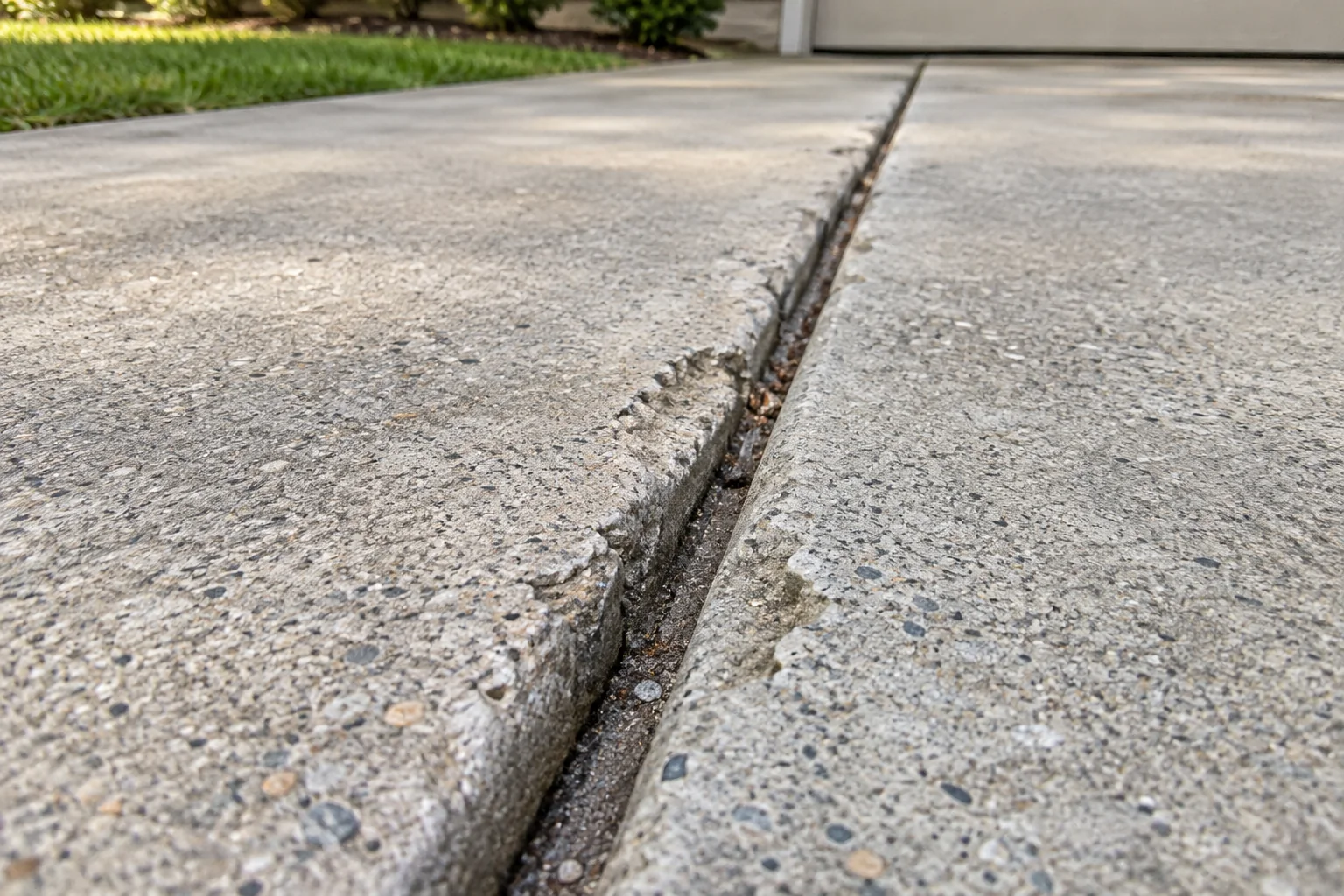
Look at the joint and the damaged concrete together
Concrete damage beside a joint can appear as chipped edges, loose pieces or localized breakup. Begin by identifying the joint and showing both sides of it. The repair question involves the surrounding concrete and the role of the joint, not only the visible missing material. A photograph alone does not establish the depth or extent of deterioration.
NRMCA's joint guidance distinguishes contraction, isolation and construction joints by their purpose. That background helps explain why an owner should ask what the joint is intended to do before accepting a generic covering or repair description. The glossary terms are useful context, but the actual connection and proposed work need property-specific review.
Tell the contractor what prompted the request: loose edges, an uncomfortable crossing, observed change or another concern. Identify whether the location is a driveway, garage approach, walkway or parking area. The intended use and retained features help frame the evaluation without requiring the owner to choose a construction detail before the site is reviewed.
Photograph both sides and the wider crossing
Provide a wide view of the joint in relation to the panels and approach. Add close images of the damaged edges when safe. If the concern crosses a normal walking or vehicle route, show that context. A close fragment image may explain missing material but leave the contractor unable to locate the area or understand how it is used.
Record whether loose material or visible damage appears to be increasing. If you have authentic earlier images, retain their dates and location. Describe an observed difference in level or changing gap without claiming to know the hidden cause. The evaluator can identify what measurements or additional information are needed.
Do not pull out pieces, widen the opening or bridge it with an improvised material to test the response. Such activity can alter the condition and interfere with an appropriate review. Follow any existing project restrictions and request interim access instructions if the location concerns you. The initial record should show what was observed rather than a staged demonstration.
Keep the joint purpose in the repair discussion
Ask the contractor to explain the relevant joint type and what the proposed repair must preserve. Different joint roles can create different questions about movement and retained connections. The owner should not infer a joint's full function from its appearance or assume that making a line less visible is the only objective.
The existing short FAQ warns that a surface covering may leave movement or damaged edges unresolved. Use that as a scope question, not a diagnosis. Ask whether the proposed activity addresses the joint area, the deteriorated concrete and any reported movement. A cosmetic result and a condition-based repair may have different purposes and limitations.
If another professional supplies design information or evaluates a broader panel issue, clarify that responsibility and make the relevant record available. A local repair quote should not be interpreted as a full structural or site review unless that service is actually included. Keep the evaluation and construction tasks identifiable while showing how one depends on the other.
Include use, water and known work history
Describe vehicles or carts crossing the joint and any repeated activity near the damaged edge. If the use has changed, tell the evaluator before the scope is chosen. The history helps explain the setting, but it does not prove that one vehicle or activity caused the damage. Avoid conducting a load test with the owner's vehicle.
Water observations can also matter. Note collection near the joint or changes after nearby surface work, with safe photographs if available. Ask whether the proposed scope evaluates the water concern or addresses the damaged concrete only. A joint-area repair should not automatically be treated as a correction of every nearby drainage issue.
Provide known concrete, repair or adjacent-work records. If the history is uncertain, identify the gap. The contractor should understand which features are documented and which retained conditions are assumptions. This avoids assigning a joint purpose, repair method or construction date solely from surface appearance.
Read the repair boundary and preparation carefully
Ask which damaged area is included and how the boundary was selected. A localized repair may be appropriate for one evaluated condition while another area needs separate attention. The owner should understand what remains, what is removed or prepared and what the intended result addresses. A measured length of joint does not by itself explain the complete work.
Clarify preparation and any assumed condition of retained concrete. If further deterioration may be exposed, agree on how findings are documented and how a revised response is approved. Do not prescribe a universal repair depth or material from an internet image. The relevant construction detail needs to fit the evaluated property and actual joint.
Identify disposal, cleanup and restoration beside the work. Retained panels, aprons or adjacent asphalt may create a connection question. Keep those responsibilities with the location description rather than assume a general concrete-repair line includes every nearby feature. The completion discussion can then compare the result with an understandable agreed boundary.
Compare the same outcome and plan access
Give contractors the same location record, use description and known history. Ask each to explain the activity proposed, why it fits the condition and what limitation remains. A covering, localized edge repair and broader panel work are not automatically alternative prices for identical scope. Compare preparation, retained features and reasoning before totals.
The joint may lie at an essential crossing. Explain the driveway, doorway or walking approach affected by work and ask how access is managed. If another trade is involved, identify the handoff and who confirms readiness. The owner should know who communicates restrictions and any change in sequence to occupants.
Follow the project's reopening and use instructions. A filled-looking line or completion of one task is not an independent release for every activity. Retain the actual scope, approved changes and continuing limitations. If another joint or panel remained outside the work, record it plainly so a later maintenance review starts with accurate information.
Prepare a useful joint-damage request
Send the job-site address, views of both sides of the joint, close damage images and a wider route photograph. Describe observed change, crossings, water and known work history. Ask what the evaluation should establish and which construction responsibilities follow from it. The request can be clear without the owner diagnosing hidden deterioration or selecting the repair detail.
Call or text Asphalt Solutions to discuss the property. Most work occurs at customer job sites. Visits to the Slidell contact location are by appointment, and phone availability is separate from construction scheduling.
Keep the joint-area handoff understandable
Imagine a completion record that says only joint fixed. A later owner may not know whether the project treated a localized edge, replaced concrete nearby or addressed another concern. Ask the actual scope and completion notes to identify the location and work performed, along with relevant limitations. This is more useful than a general label that could describe several different activities.
If another trade changes an adjoining surface later, provide that record for context. The new activity may raise a different connection or movement question, and the appropriate person should evaluate it. The earlier repair should not be represented as approval of conditions that did not exist when it was planned. Retain the accepted boundary, the actual response and any unresolved recommendation so future maintenance starts with an accurate understanding.
Questions about concrete damage beside a joint
The direct answer
Breakup along a joint may be localized or part of a wider slab condition. The repair needs to fit the joint’s purpose and the depth of damage.
What to discuss before choosing a repair
Discuss whether the work restores the edge, the joint detail or the affected panel.
What to observe and record
- Photograph both sides of the joint
- Show loose edges
- Note vehicle crossings
A mistake to avoid
Closing a joint indiscriminately may interfere with the intended movement detail.
Continue with the right next step
Property conditions determine the final scope. These planning notes do not replace a site evaluation. How to use our pavement guidance
Background reading: NRMCA CIP 6 on concrete joints. General guidance does not replace evaluation of the actual property.